
Why Civic Engagement Is Hard to See at First Glance
A neighborhood can look connected on the surface — a tidy Facebook group, a few flyers on telephone poles, an annual block party — while the deeper bonds of genuine civic life are missing entirely. Conversely, a block that seems quiet might have a robust network of mutual care operating mostly out of sight.
Understanding what real civic engagement looks like matters whether you're evaluating a neighborhood before a move, assessing your own community's health, or figuring out where to put your energy. For a broader grounding in what civic participation actually means across American life, see our guide on civic participation in America.
The checklist below organizes the markers researchers and community organizers consistently point to — from formal structures to informal human habits.
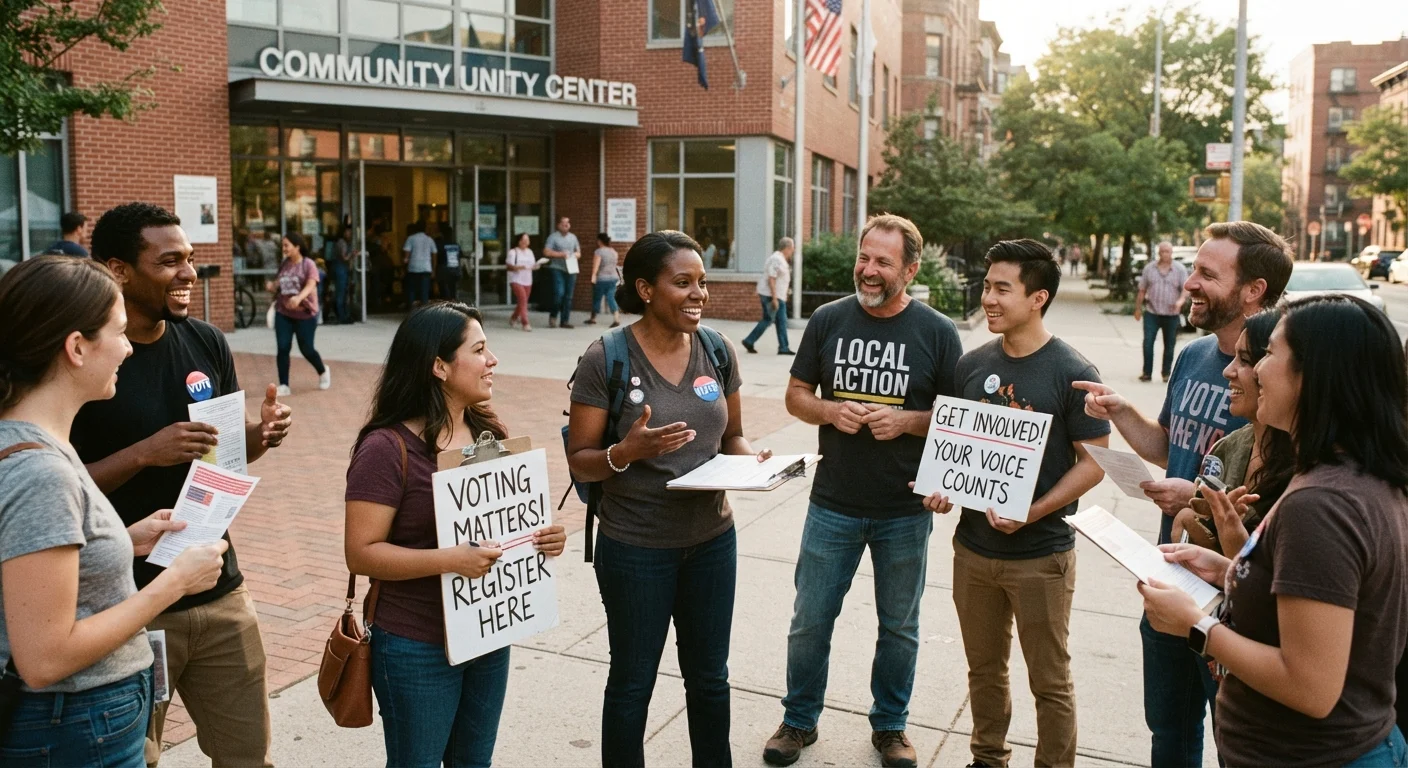
Formal Structures and Organized Activity
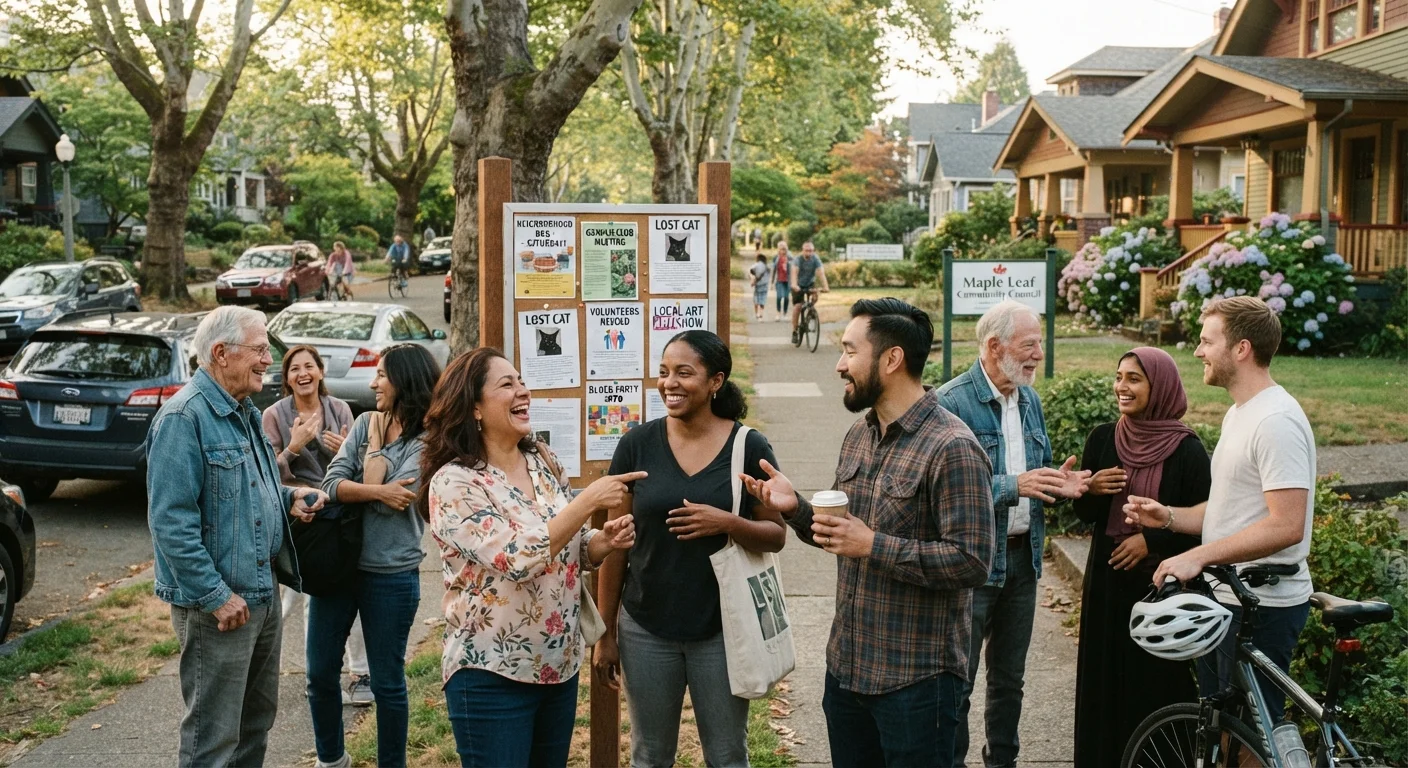
Informal Networks and Mutual Aid
Public Space and Physical Environment
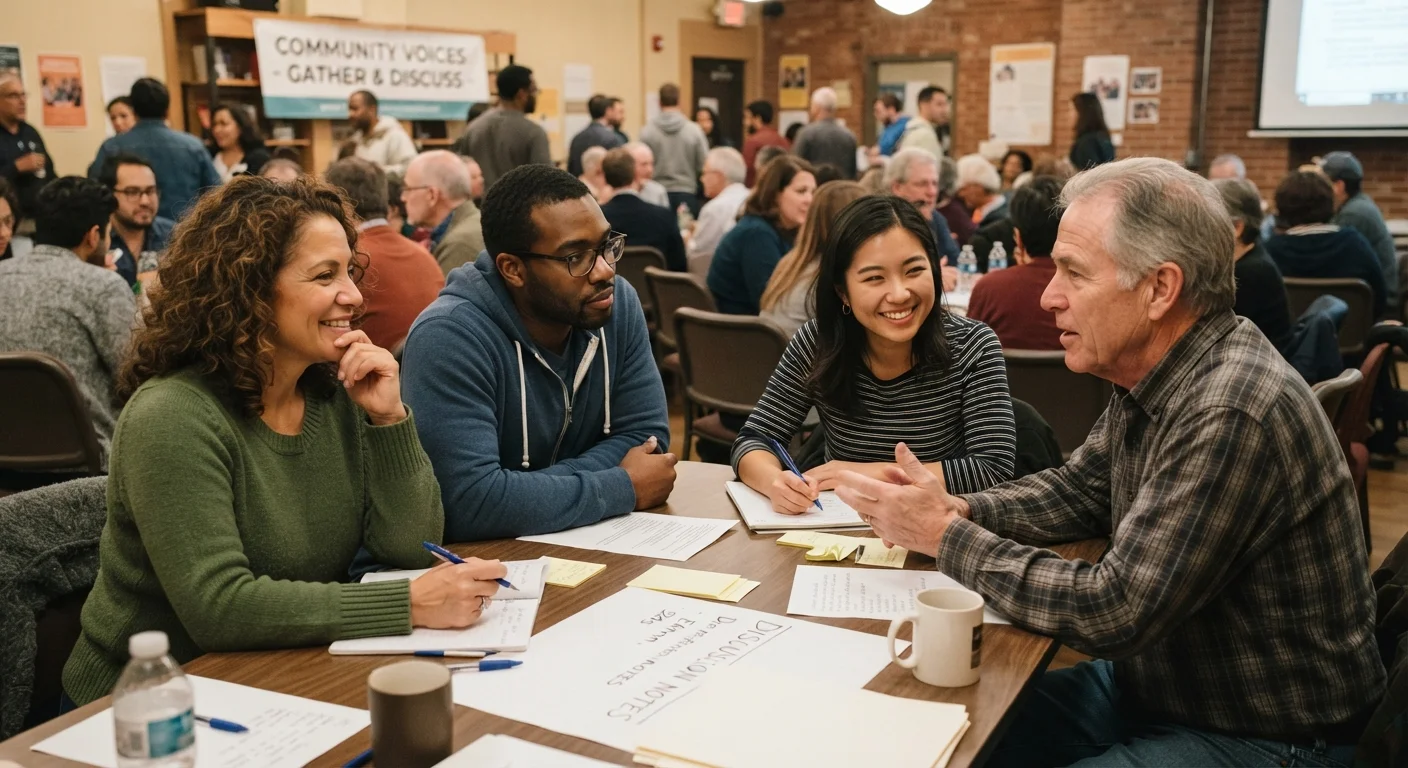
Inclusion, Conflict, and Accountability
Cultural and Social Cohesion
What to Look For — and What to Look Past
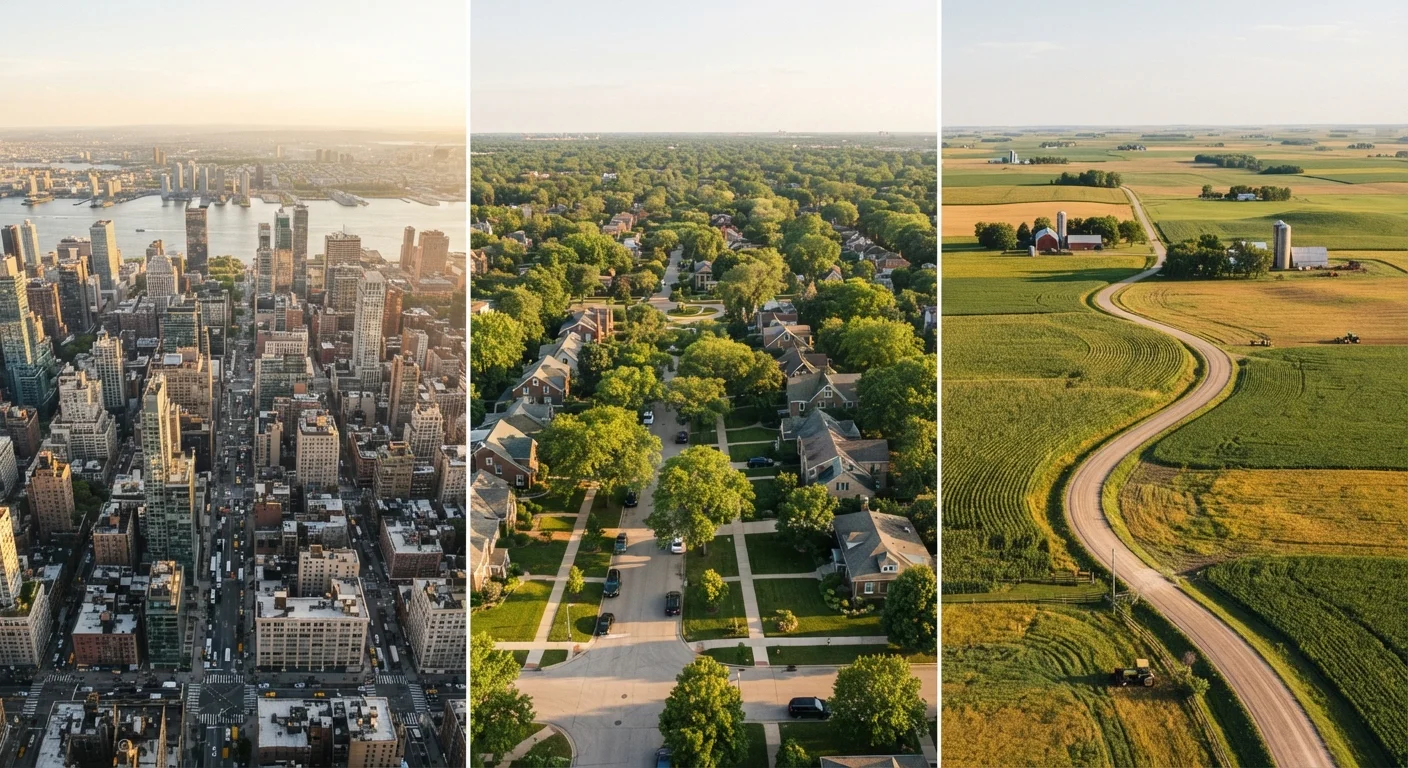
A few cautions before you start: presence of formal organizations doesn't automatically mean engagement, and absence of a neighborhood association doesn't mean disengagement. Context matters. Community looks very different across urban, suburban, and rural settings, so calibrate your expectations accordingly.
Formal Organizations Don't Tell the Whole Story
A neighborhood association with a polished website and active social accounts may still represent only a narrow slice of residents. Look beyond who organizes and toward who actually shows up — and who feels comfortable doing so. A community that looks engaged in its communications but excludes renters, newcomers, or non-English speakers from meaningful participation is not fully civically engaged.
The strongest signal is whether residents feel heard and included — not just whether meetings are scheduled. Pay attention to who's in the room and who's conspicuously absent. Neighborhoods with genuine civic life tend to show engagement across age groups and backgrounds, not just among a motivated few. For a look at how generational perspectives on civic duty diverge, see generational gaps in how Americans view community responsibility.
Also notice the role of informal spaces. Sociologists have long argued that so-called "third places" — coffee shops, barbershops, libraries, parks — are where real community trust is built. Our piece on the slow decline of the third place explores why their disappearance weakens civic fabric in ways that are hard to replace digitally. Speaking of which: online neighborhood groups can supplement in-person engagement, but they rarely replace it. See how online communities compare to neighborhood associations for a more nuanced breakdown.
Civic Engagement Is Not the Same as Civic Harmony
A neighborhood where everyone appears to agree isn't necessarily more engaged than one that argues productively. Genuine civic life involves real disagreement and negotiation — over land use, resources, priorities, and identity. The ability to surface and work through conflict, rather than suppress it, is actually a sign of civic health. Be wary of communities where dissent seems invisible.
Finally, remember that civic engagement isn't a fixed destination — it fluctuates with local leadership changes, demographic shifts, and economic pressures. A neighborhood that scores well today may look different in five years, and one that's struggling may be in the middle of a genuine revival. What you're looking for are patterns and tendencies, not perfection.
Local Government Meeting Records
Review minutes from city council, school board, or planning commission meetings to gauge how often neighborhood voices appear.
Precinct-Level Election Data
Your county or state election authority publishes turnout by precinct — a concrete measure of formal civic participation.
Community Social Media Groups
Neighborhood Facebook groups or Nextdoor pages can reveal the tenor of local conversation — helpful or fractious, inclusive or cliquish.
In-Person Walk-Through
Nothing replaces walking the neighborhood at different times of day to observe public space use, posted notices, and informal social activity.