
More Than a Meal Plan
On the surface, a potluck looks like a practical solution to a logistics problem: how do you feed a crowd without exhausting one host? But underneath that pragmatic exterior lies something much richer. The potluck is one of America's most quietly expressive social institutions — a format that encodes deeply held values about fairness, generosity, and what it means to show up for your people.
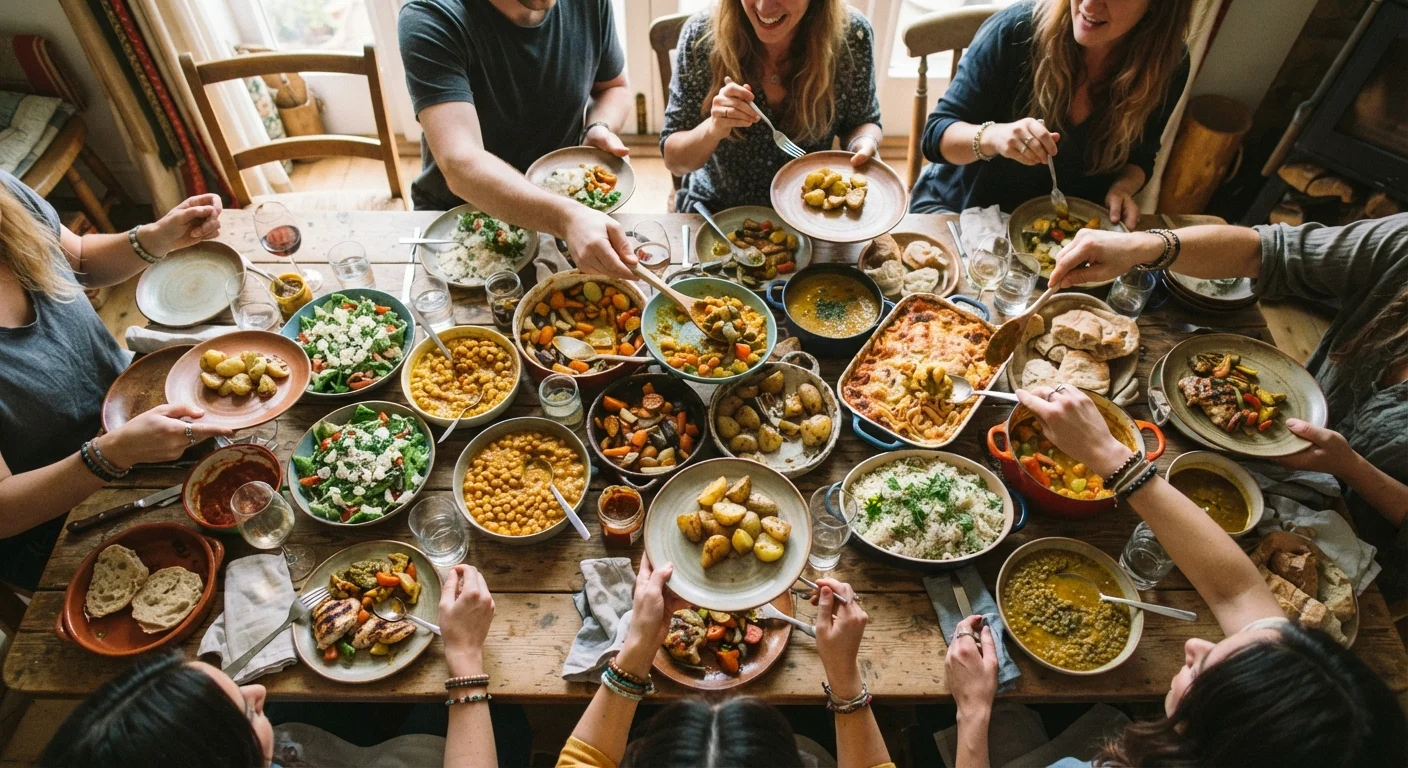
Unlike dining out in America, where a menu and a check structure the social experience, a potluck has no hierarchy of service. Everyone contributes. Everyone partakes. The table is built collectively, and that act of building together is, in many ways, the whole point.
“Food is our common ground, a universal experience. The table is a great leveler.”
— James Beard, American culinary author and food educator
The Historical Roots of Shared Tables
The potluck as Americans know it didn't emerge from a single source. It grew from overlapping traditions: the frontier necessity of neighbors pooling resources, the church fellowship supper that sustained congregation bonds, and the immigrant neighborhood gathering where a family's dish carried their homeland with them to a new place.
In communities where money and time were stretched thin, contributing food was both practical and dignified. No one needed to play host to a meal they couldn't afford alone. Historian accounts of 19th-century American community life frequently describe communal meals at barn raisings, harvest festivals, and religious gatherings as foundational social events — not footnotes to them.
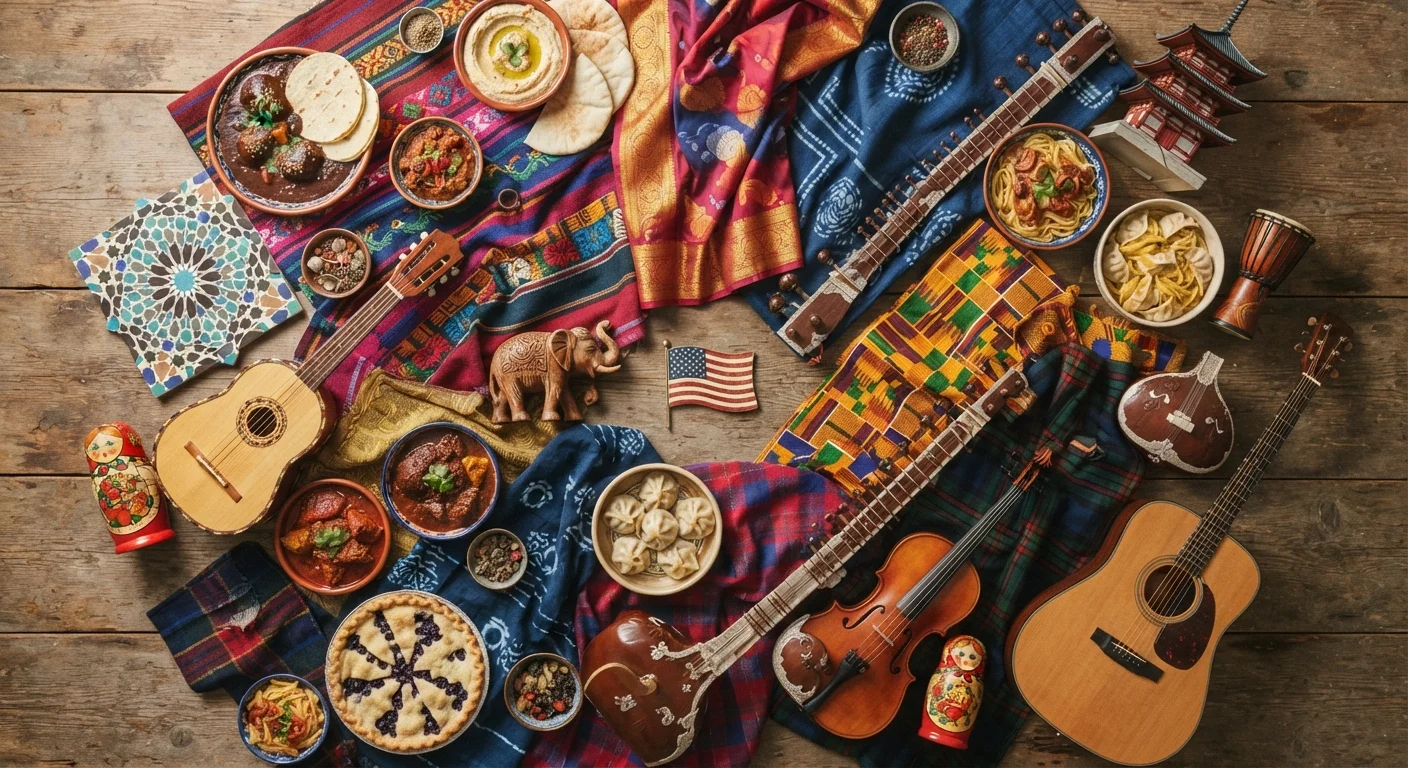
That history still echoes. As explored in how immigrant communities have shaped American cultural identity, food has long been one of the primary ways newcomers participated in — and gradually transformed — the broader culture around them. The potluck table was often where those exchanges happened first.
~77%
Americans who find shared meals meaningful
A Mashed survey of over 600 American adults found that the vast majority view communal eating as an important part of social connection and family tradition.
1 in 3
Americans regularly attending community potlucks
Surveys on American social habits consistently show that communal food events — including potlucks at churches, workplaces, and neighborhoods — are among the most common forms of organized social gathering.
16th century
Origin of the word 'potluck'
The phrase 'pot luck' appears in English texts as early as the 1590s, referring to whatever food was available — though its communal, bring-a-dish meaning became distinctly American over subsequent centuries.
What Your Dish Says About You
At a potluck, what you bring matters. Not in a judgmental sense — no one is grading the casseroles — but in a social one. The dish you carry through the door is a small act of self-disclosure. A family recipe passed down from a grandmother tells a different story than a tray of store-bought cookies, and everyone in the room understands that difference intuitively.
This is part of why potlucks remain powerful in American community life even as social habits shift. The act of cooking something — or choosing something — for a specific group is inherently relational. You're thinking about who will be there, what they might enjoy, what you want to offer them.
Bringing Something Personal Goes a Long Way
If you're attending a potluck and want to make a genuine connection, consider bringing a dish with a story — a family recipe, a regional specialty, or something tied to your own heritage or background. Even a simple note card explaining the dish's origin can turn a bowl of food into a conversation. It signals care, and people remember it.
Regional identity also plays a role. American food culture varies significantly by region, and potluck tables reflect that diversity. A church supper in rural Mississippi looks different from a neighborhood gathering in Minneapolis or a family reunion in Southern California — and that variation is a feature, not a bug.
Reciprocity: The Invisible Engine
Beneath the warm social surface of a potluck runs a clear current of reciprocity. You bring something; you receive something. The social contract is explicit enough that most people feel genuine obligation to contribute — arriving empty-handed carries a mild but real social cost.
Sociologists who study gift exchange and communal ritual often point to this reciprocal structure as central to why shared meals create such durable social bonds. When everyone gives and everyone receives, the meal becomes a visible proof of mutual investment in the group. It's not charity from one person to many — it's a collective act that leaves everyone as both giver and recipient.
That dynamic makes potlucks one of the most democratically structured forms of American hospitality. The home cook with modest means and the experienced entertainer with a full kitchen both occupy the same standing at the table. What matters is showing up and bringing something of yourself.