
The Core Maintenance Tasks Every Car Needs
Scheduled maintenance isn't optional — it's the foundation of a reliable, long-lasting vehicle. While your owner's manual is the definitive authority for your specific make and model, most cars share a common set of recurring services. Understanding what each one does and how often it's needed puts you in control of both your vehicle's health and your ownership costs.
| Oil change interval (synthetic) | Every 5,000–10,000 miles (Varies by manufacturer; consult your owner's manual) |
| Tire rotation interval | Every 5,000–7,500 miles (General industry guidance) |
| Brake pad lifespan | 25,000–70,000 miles (Depends on driving habits, pad compound, and vehicle type) |
| Timing belt replacement | 60,000–100,000 miles (Check owner's manual; not all engines use a belt) |
| Coolant flush interval | Every 30,000–50,000 miles or 2–5 years (Varies by coolant type and manufacturer) |
| Spark plug lifespan | 30,000 miles (copper) to 100,000 miles (iridium/platinum) (Varies by plug material and engine design) |
For a deeper look at how these intervals connect to each other, see Your Car's Maintenance Schedule, Explained.
Oil and Filter Changes
Engine oil lubricates moving parts, reduces friction, and carries heat away from the engine. Over time, oil breaks down and accumulates contaminants. Most modern vehicles with synthetic oil require changes every 5,000–10,000 miles, though some go longer. Older vehicles or those using conventional oil typically need service every 3,000–5,000 miles. Always follow your owner's manual — not the sticker on your windshield. If your driving involves frequent short trips or extreme temperatures, you may fall into a "severe duty" schedule requiring more frequent changes. See why short trips are harder on engines for context.
Tire Rotation and Pressure
Tires wear unevenly depending on their position and drivetrain type. Rotating tires — typically every 5,000–7,500 miles — evens out that wear and extends tire life. Tire pressure should be checked monthly; underinflation reduces fuel economy and handling, while overinflation reduces traction. Use the pressure listed on the door jamb sticker, not the maximum printed on the tire sidewall.
Brake Inspection
Brake pads typically need replacement every 25,000–70,000 miles depending on driving habits, pad material, and vehicle weight. Rotors are inspected at the same time and replaced when worn below minimum thickness. Squealing or grinding sounds, a pulsating pedal, or longer stopping distances are all signs that brakes warrant immediate attention — don't wait for a scheduled interval if you notice these symptoms.
Less Frequent but Critical Services
Some maintenance tasks happen on longer cycles but carry serious consequences if skipped. These are often overlooked because the symptoms of neglect can appear gradually — or all at once as a breakdown.
Synthetic oil
A type of motor oil manufactured through chemical synthesis rather than refined from crude oil. It offers superior performance at temperature extremes and typically allows longer service intervals than conventional oil.
Interference engine
An engine design where the pistons and valves occupy the same space at different points in the cycle. If the timing belt fails, the pistons can collide with open valves, causing severe internal engine damage.
Coolant flush
A service in which old engine coolant is drained, the cooling system is cleaned, and fresh coolant is added. It removes degraded fluid and corrosion buildup that can reduce cooling system efficiency.
Severe duty driving
A classification used by manufacturers to describe operating conditions that accelerate wear — including frequent short trips, towing, extreme temperatures, and stop-and-go traffic. Vehicles driven this way often follow a more frequent maintenance schedule.
Brake rotor
The metal disc that brake pads clamp against to slow the vehicle. Rotors can warp or wear thin over time and are inspected and measured during brake service.
Timing belt
A reinforced rubber belt that synchronizes the rotation of the engine's crankshaft and camshaft(s). It must be replaced on schedule; failure can cause catastrophic engine damage in many engines.
Coolant Flush
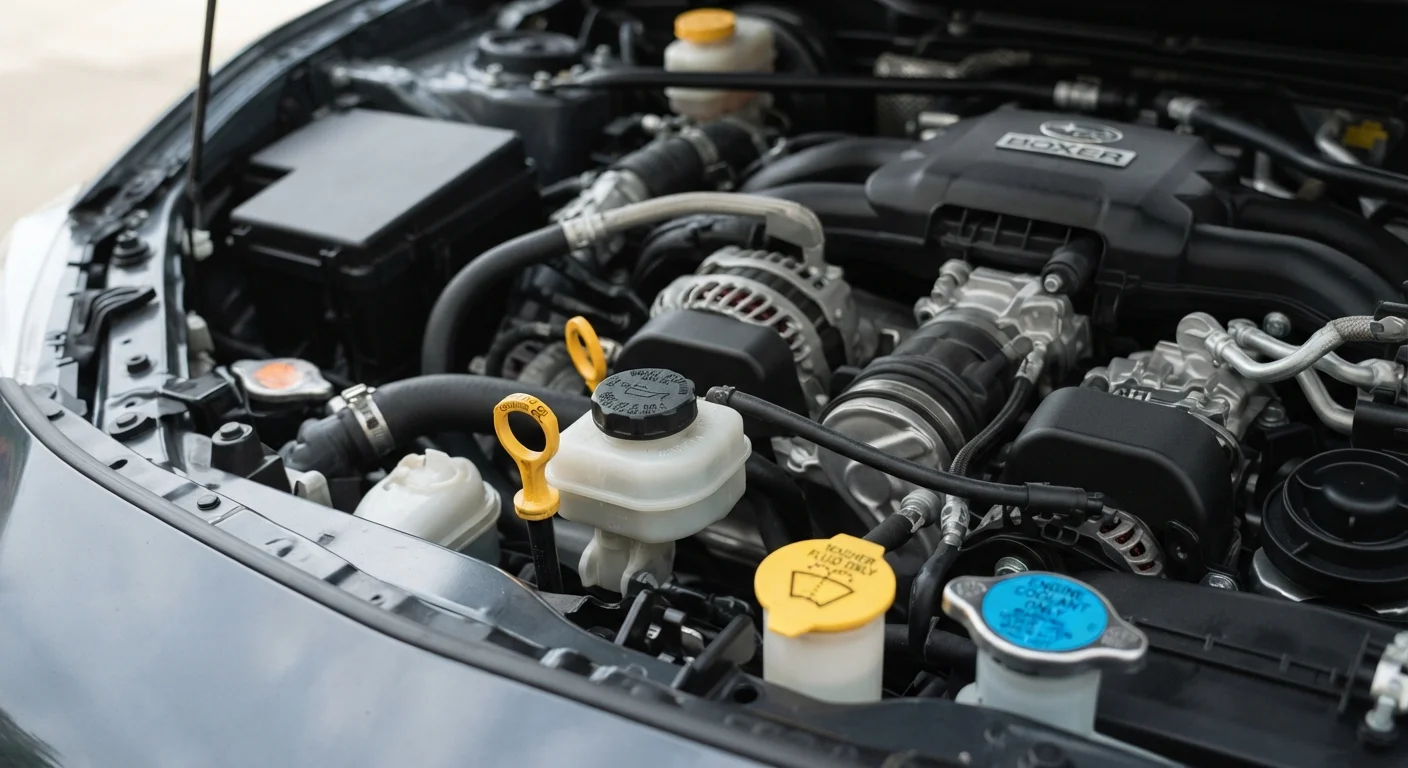
Coolant (also called antifreeze) prevents the engine from overheating in summer and freezing in winter. It also contains corrosion inhibitors that degrade over time. A coolant flush is typically recommended every 30,000–50,000 miles or every 2–5 years. Learn more about every fluid under your hood.
Transmission Service
Automatic transmissions generally require fluid changes every 30,000–60,000 miles; some manufacturers specify longer intervals for "lifetime" fluid, though many mechanics recommend not waiting that long. Manual transmissions vary widely. Skipping this service can lead to rough shifting or, in extreme cases, transmission failure — a repair that can run into thousands of dollars.
Timing Belt or Chain
If your engine uses a timing belt (rather than a chain), its replacement is one of the most critical scheduled services you'll face — typically between 60,000 and 100,000 miles. A snapped belt can cause catastrophic engine damage in interference engines. Chains generally last longer but should still be monitored for noise or slack. Check your owner's manual to determine which your vehicle uses.
Air Filter, Cabin Filter, and Spark Plugs
Engine air filters are typically replaced every 15,000–30,000 miles. Cabin air filters — which affect interior air quality — are often changed every 12,000–15,000 miles. Spark plugs vary widely: standard copper plugs may need replacement around 30,000 miles, while iridium or platinum plugs can last 60,000–100,000 miles. For a breakdown of which tasks you can reasonably do yourself, see DIY tasks vs. jobs for a mechanic.
Your Owner's Manual Is the Final Word
General intervals in guides like this one are useful starting points, but your vehicle's manufacturer specifies exact schedules for your engine, drivetrain, and fluids. If you've misplaced your manual, most automakers make them available as free PDF downloads on their official websites. Some maintenance beliefs that seem well-established are actually outdated — see common car maintenance myths before making decisions based on conventional wisdom alone.
Tracking all of these intervals is easier when you keep a written record. A simple maintenance log protects your warranty and helps at resale.