
Why Night Driving Is Statistically More Dangerous
Most people assume night driving is simply a darker version of day driving. The data tells a different story. According to the National Safety Council, roughly half of all traffic fatalities occur at night, even though far fewer vehicle miles are traveled after dark. That disparity isn't coincidence — it reflects a combination of physiological, environmental, and behavioral factors that compound once the sun goes down.
Human eyes are not well-adapted for high-speed navigation in low light. Peripheral vision narrows, depth perception becomes less reliable, and the ability to distinguish contrast — critical for spotting a pedestrian or a deer at the edge of the road — drops significantly. These aren't driving errors; they're biological limitations every driver shares.
Add to that the higher prevalence of impaired and fatigued drivers after midnight, reduced road maintenance visibility, and the increased likelihood of encountering unlit hazards, and the risk profile of after-dark driving becomes clear. Understanding what you're actually up against is the first step toward managing it. Our guide to defensive driving principles explores how anticipating hazards — rather than just reacting to them — forms the backbone of safer driving in any condition.
~50%
Of fatal crashes occur at night
The National Safety Council estimates roughly half of all traffic fatalities happen at night, despite significantly lower traffic volume after dark.
Up to 80%
Headlight output lost to lens haze
AAA research indicates that severely yellowed or oxidized headlight lenses can reduce forward light output by up to 80 percent.
~175 ft
Distance covered in a 2-second microsleep at 60 mph
At highway speed, a two-second involuntary lapse in consciousness means traveling roughly 175 feet with no driver input — the length of more than half a football field.
Best Practices for Safer Night Driving
The following practices address the specific challenges that darkness creates. These aren't general driving tips restated for nighttime — each targets a known mechanism of after-dark risk.
Reduce your speed enough that you can stop within your headlight range.
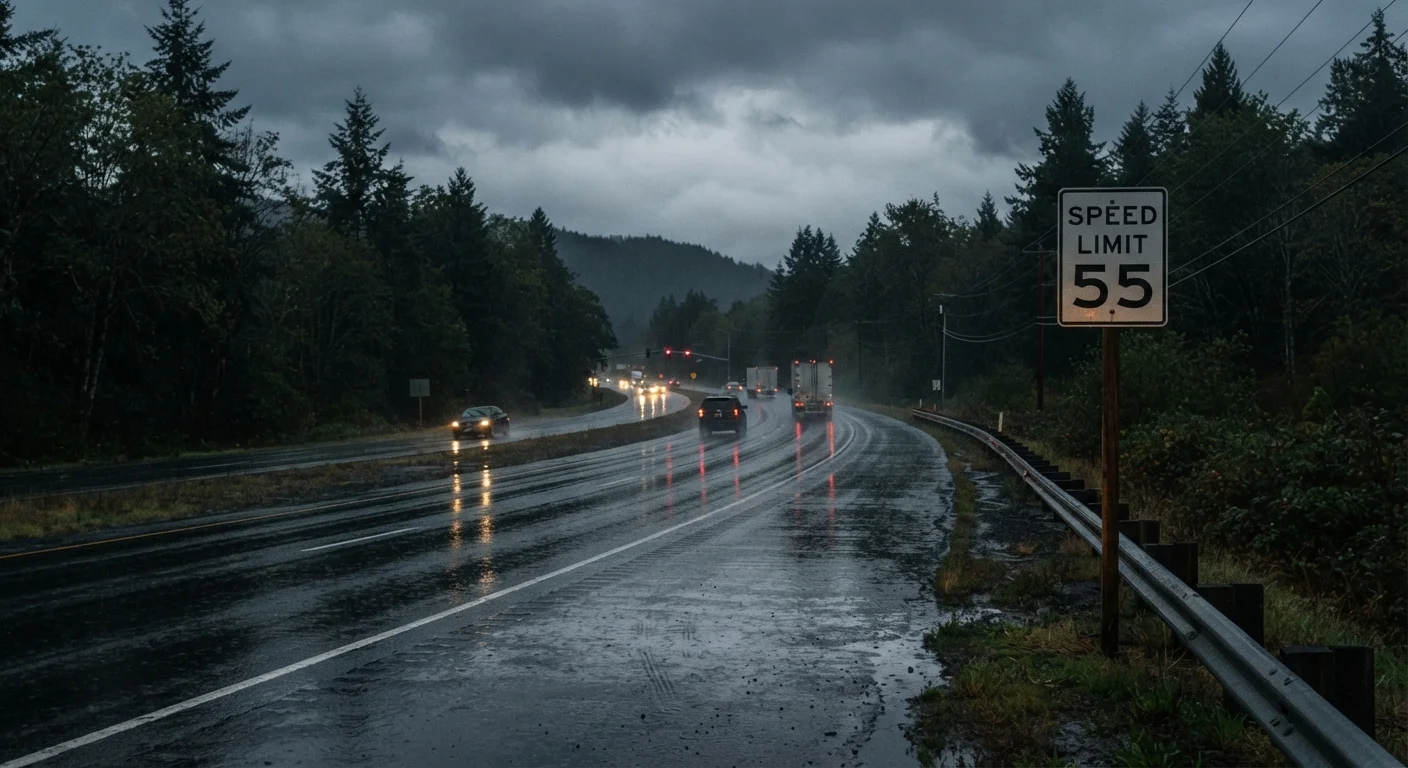
Standard low-beam headlights illuminate roughly 160–200 feet ahead. At 55 mph, stopping distance can exceed 200 feet — meaning you may be traveling faster than your ability to respond to what your lights reveal. This is called 'overdriving your headlights,' and it's a leading contributor to night-time collisions. Speed limits are set for ideal conditions; they are a ceiling, not a target, especially after dark.
Keep your headlights clean, properly aimed, and in good working order.
Yellowed or fogged headlight lenses can reduce light output by up to 80%, according to AAA research. Improperly aimed headlights either blind oncoming drivers or illuminate the wrong part of the road entirely. A few minutes inspecting and cleaning your lights before a night drive is one of the highest-return maintenance acts available.
Increase your following distance beyond the standard two-second gap.
Reaction time doesn't change at night, but your ability to detect a hazard early does — meaning by the time you spot something in your headlights, you may have less time to respond than in daylight. Extending the gap between your vehicle and the one ahead gives you more buffer. Our deeper look at when the two-second rule falls short covers when more distance is warranted.
Dim your dashboard and avoid interior light sources while driving.
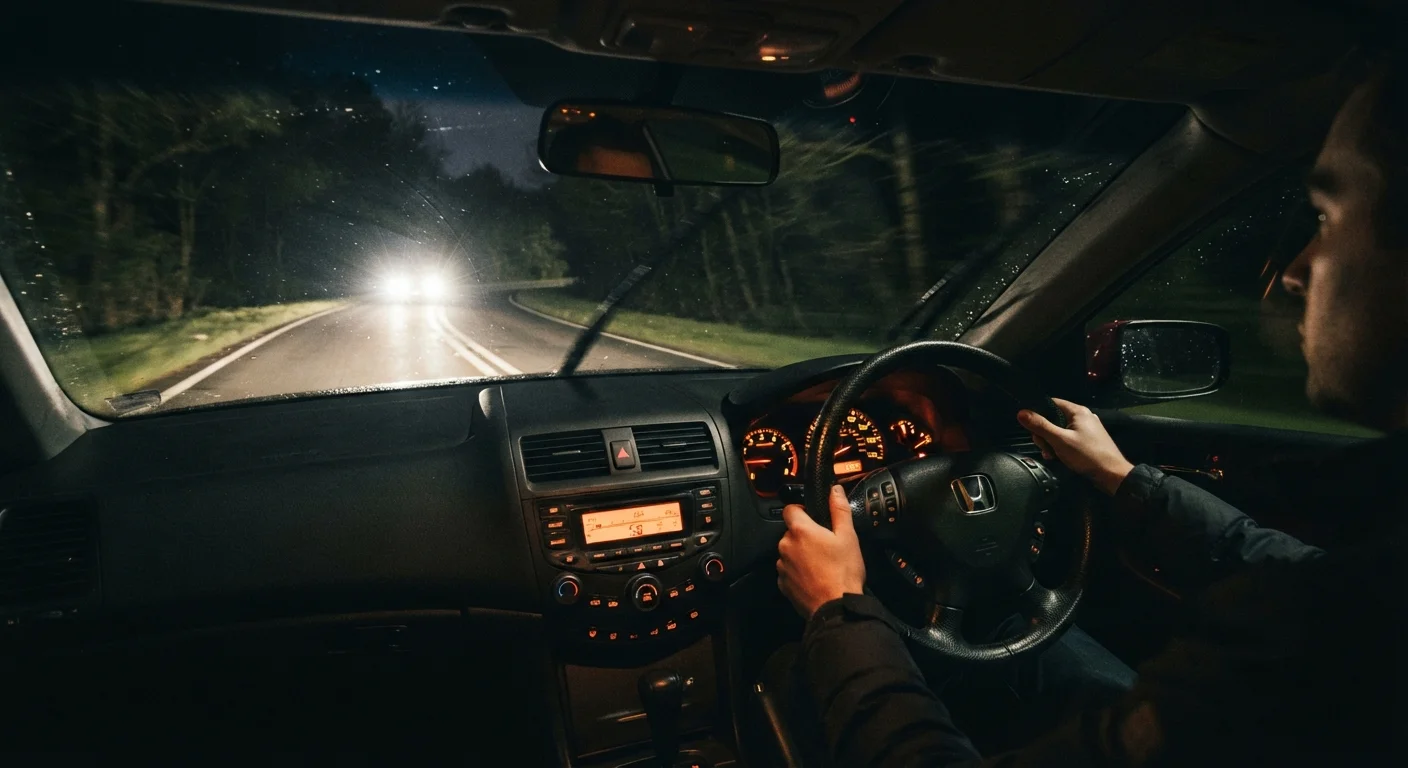
Bright instrument panels or interior lights cause your pupils to constrict, reducing their ability to gather light from the dark environment outside. Lowering dashboard brightness to a comfortable but minimal level helps maintain dark adaptation. Glancing at a brightly lit phone screen has the same effect — and adds a distraction risk on top of the visibility cost.
Look to the right edge of the road when facing oncoming headlights.
Oncoming high beams trigger pupil constriction and temporary visual overload. Staring directly into them while trying to maintain lane position is both uncomfortable and counterproductive. Shifting gaze toward the right road edge lets you track your lane using peripheral vision while protecting your eyes from the worst of the glare.
Scan more deliberately for vulnerable road users and animals.
Pedestrians, cyclists, and animals are far harder to detect in low light and may not be visible until they are within your headlight range. Many pedestrian fatalities at night involve individuals not wearing reflective clothing. Systematically scanning the edges of your headlight beam — not just the center — catches these hazards earlier. Understanding your vehicle's blind spots becomes even more critical when visibility is already reduced.
Quick Actions You Can Take Before Your Next Night Drive
Some of the most effective adjustments take only a few minutes but meaningfully change your visibility and reaction capacity. Start here before your next evening trip.
Fatigue and Night Driving: A Compounding Threat
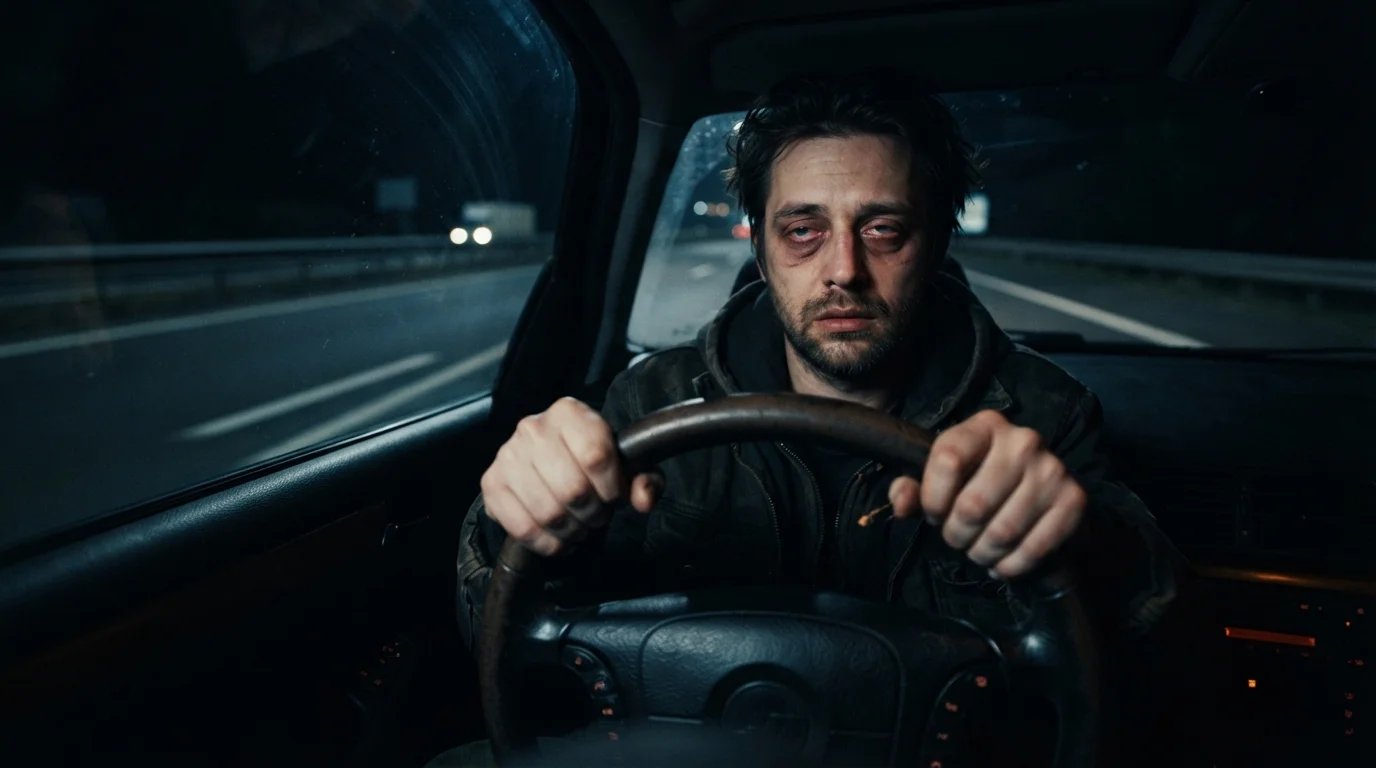
Fatigue deserves its own discussion in the context of night driving because the two risks amplify each other. The body's circadian rhythm produces natural dips in alertness between roughly 2–4 a.m. and again in the early afternoon. Driving during those overnight hours means fighting your own biology, regardless of how rested you feel at the start of a trip.
The insidious quality of drowsy driving is that it often doesn't feel dangerous until it's too late. Microsleeps — involuntary lapses in consciousness lasting just a few seconds — can occur without the driver realizing it. At 60 mph, a two-second microsleep means traveling approximately 175 feet with no driver input whatsoever.
Know the Early Warning Signs of Drowsiness
Heavy eyelids, difficulty focusing, lane drifting, missing turns you know well, and an inability to recall the last few miles are all early indicators that fatigue is impairing your driving. Do not treat these as minor annoyances — they are the same warning signals that precede microsleep events. Pull off the road at the next safe opportunity.
If you notice yourself drifting lanes, missing exits, struggling to recall the last few miles, or experiencing heavy eyelids, these are not signals to push through. They are signals to pull over safely and rest. Our full guide on driver fatigue warning signs and responses walks through what to watch for and what to do.
Caffeine can provide a short-term boost in alertness, but it does not replace sleep, and its effects are unreliable over extended drives. The only reliable countermeasure is rest.