
What Speed Limits Actually Represent
A posted speed limit is a legal maximum — the fastest you may legally travel under ideal conditions on that road. Engineers set those numbers based on roadway geometry, sight lines, and traffic flow studies conducted on dry pavement in good visibility. They do not account for the specific conditions present on any given day you happen to be driving.
This distinction matters enormously. Many drivers treat the posted number as a target to reach and maintain, interpreting anything slower as timid or unnecessary. In reality, most experienced drivers view the limit as a ceiling and actively read conditions to decide where below that ceiling their speed should sit.
Understanding this principle is a foundation of defensive driving — a topic covered more broadly in our guide to habits experienced drivers share.
Myth
If I'm driving at the speed limit, I'm driving safely and legally.
Fact
Driving at the speed limit is only legal — whether it's safe depends entirely on current conditions.
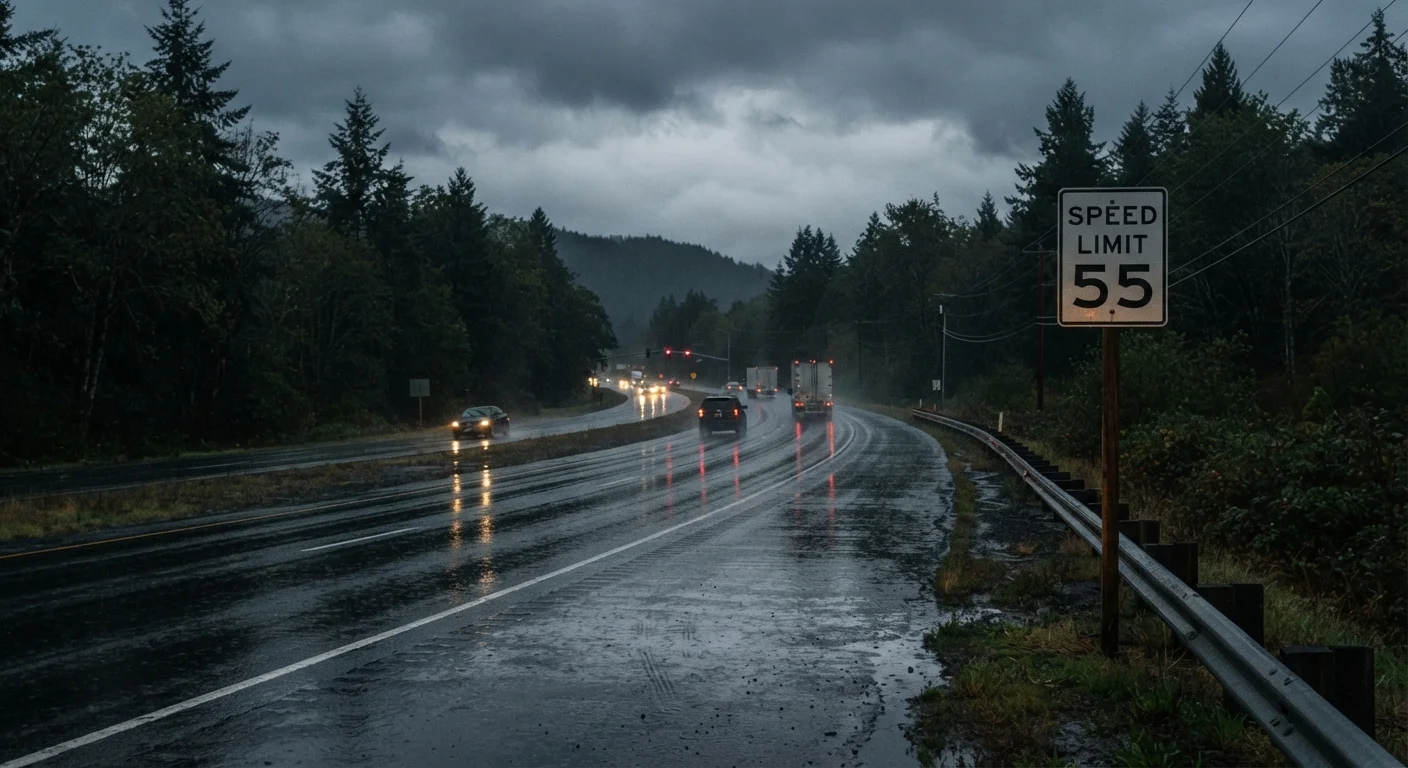
The law in every U.S. state includes a basic speed law: you must drive at a speed that is reasonable and prudent for conditions, regardless of the posted limit. A driver doing exactly 55 mph on an icy highway during a whiteout can be cited and held liable for a crash, even though 55 mph is the posted maximum. Legality and safety are not the same thing.
Myth
Speed limits are set conservatively, so driving a little over is fine.
Fact
Limits are set for ideal conditions and generally reflect engineering standards, not a generous safety buffer you can spend.
Traffic engineers use standardized methods — including the 85th percentile speed of free-flowing traffic — to set limits on many roads. This means the limit is often close to the speed most drivers naturally choose in good conditions. Exceeding it doesn't tap into a built-in cushion; it moves you beyond the conditions the road was evaluated for. On rural interstates with high limits, even small speed increases substantially raise crash severity due to the physics of kinetic energy.
Myth
Slowing down in rain or fog will cause accidents because other drivers won't expect it.
Fact
Adjusting speed to conditions is both legally required and consistently supported by safety research as crash-reducing behavior.
This myth persists partly because of discomfort with being the slower vehicle. In practice, a driver who reduces speed in adverse conditions and maintains proper following distance gives themselves — and others around them — more time and space to respond. Hazard lights can signal unusually reduced speed to following traffic. The real danger is the uniformity of overconfidence: multiple vehicles all traveling too fast for wet roads in a line leaves no one with an adequate stopping margin.
Myth
Posted school zone and work zone limits are overly cautious and usually unnecessary.
Fact
These reduced limits reflect verified higher-risk environments with vulnerable road users and unpredictable hazards.
School zone limits exist because children are less predictable pedestrians and have limited ability to judge vehicle speeds and gaps. Work zones introduce lane shifts, reduced shoulders, workers on foot near traffic, and uneven pavement — all at reduced sight distances. Crash data consistently shows that speed-related work zone fatalities are a documented problem on U.S. roads. These limits are set deliberately and carry elevated fines in most states for a reason.
When the Limit Is Too Fast for Conditions
Several common driving environments make the posted limit genuinely unsafe, even when traffic appears light:
- Wet or icy pavement: Tire grip drops significantly on wet roads and can fall to a fraction of dry-road levels on ice. Braking distances extend dramatically — sometimes two to four times longer than on dry asphalt. Our detailed explainer on stopping distance and why drivers underestimate it covers the physics in full.
- Reduced visibility: Fog, heavy rain, and darkness shrink the distance at which you can detect hazards. If you cannot stop within the distance you can see, you are effectively driving blind. Night driving compounds this risk, as explored in what changes after dark.
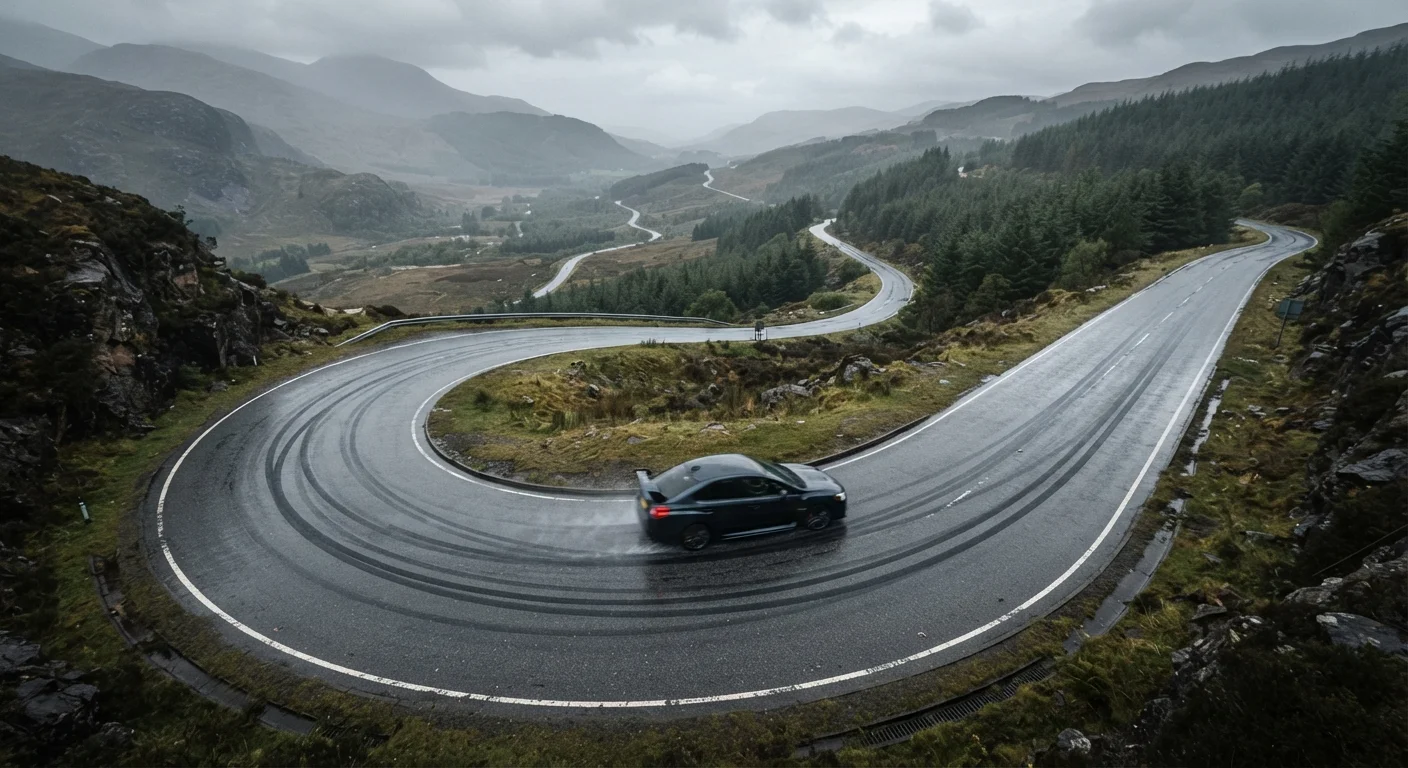
- Curves and hills: Limits on straight sections don't necessarily account for every curve on a route. Sharp bends, crests that obscure oncoming hazards, and banked roads all warrant reduced speeds.
- Heavy traffic or pedestrians: A 45 mph zone becomes dangerous at 45 mph when vehicles are merging, pedestrians are present, or a school zone is active.
2–4×
Stopping distance increase on wet vs. dry roads
Transportation safety research consistently shows that wet pavement can double to quadruple the distance required to stop from highway speeds compared to dry conditions.
~40%
Of speeding-related fatal crashes occur on roads with limits of 55 mph or higher
According to NHTSA crash data, a significant share of speed-related fatalities occur on higher-speed roadways, underscoring that higher limits do not inherently mean greater safety margins.
Fatigue also affects speed judgment. A tired driver's perception of their own speed is unreliable — see how fatigue impairs driving for a full picture.
Speed, Gaps, and the Bigger Picture
Speed doesn't operate in isolation. It interacts directly with following distance, reaction time, and the margin of error available if something goes wrong ahead of you. The faster you travel, the less time you have to identify a hazard and react — and the more distance you cover during that reaction window before braking even begins.
This relationship is why the two-second following rule breaks down at higher speeds and in adverse conditions. Slowing by even 5–10 mph below the posted limit in rain or low visibility doesn't just give you a modest safety cushion — it measurably expands your available response time and shortens the worst-case stopping scenario.
Speed Multiplies Crash Severity Rapidly
Kinetic energy increases with the square of speed — meaning a 20% increase in speed roughly doubles the energy involved in a crash. This is not a linear relationship, and it's why even modest speed reductions in hazardous conditions can meaningfully reduce injury severity. A crash at 40 mph is significantly more survivable than one at 55 mph, all else being equal.
The practical takeaway is straightforward: before you reach highway speed, ask whether conditions actually permit it. If the answer requires any hesitation, it's a reasonable prompt to ease off.