
Two Distances, Not One
Most drivers, when they think about stopping, picture braking — the pedal going down, the car slowing. But the full stopping process begins well before that, the instant a hazard enters your field of vision. Traffic safety researchers divide total stopping distance into two distinct phases:
- Reaction distance: The distance your vehicle covers while your brain processes the threat and your foot moves to the brake pedal.
- Braking distance: The distance covered from the moment the brakes engage to the moment the vehicle stops completely.
Both are real, and both must be accounted for whenever you decide how much space to leave ahead. The common mistake is thinking only about braking, effectively erasing the reaction distance from the mental calculation — and in many crash scenarios, that gap is where collisions happen.
The Physics of Reaction Time
Human reaction time under alert, undistracted conditions averages roughly 1.5 seconds, though the range among individuals is wide, and factors like fatigue, distraction, alcohol, and age can push it meaningfully higher. At 60 mph, a vehicle travels 88 feet per second. That means a 1.5-second reaction time alone adds approximately 132 feet of travel before a single pound of brake force is applied.
132 ft
Distance traveled during reaction time at 60 mph
Based on average 1.5-second human reaction time; actual distance varies with individual response speed and alertness level.
4×
Braking distance multiplier when speed doubles
Because kinetic energy scales with the square of velocity, doubling speed roughly quadruples the distance needed to brake to a stop.
50%+
Increase in stopping distance on wet roads
Wet pavement significantly reduces tire-road friction; the actual increase depends on tire condition, speed, and water depth.
Distraction compounds this. Research consistently shows that cognitive distraction — even hands-free phone conversations — degrades hazard perception and slows response. Experienced drivers tend to scan farther ahead precisely because they intuitively account for this lag, building time into their perception-response chain.
Why Speed Is Not Proportional to Risk
Here is the relationship that surprises most drivers: braking distance does not double when speed doubles — it quadruples. This is because kinetic energy (the energy a vehicle must shed to stop) increases with the square of velocity. Doubling from 30 mph to 60 mph does not double your braking distance; it multiplies it by roughly four.
The practical implication is stark. A small increase in speed at the upper end of the range — say, from 60 to 70 mph — produces a far larger jump in stopping distance than the same 10 mph increase at lower speeds. This is a central argument behind speed limits on roads with limited sight lines, heavy pedestrian activity, or complex intersections.
Adjust Your Speed Before the Conditions Change
Rather than reacting to worsening road conditions after they arrive, reduce speed proactively when you see rain beginning, pavement transitions, or congestion ahead. This approach gives you a larger stopping-distance buffer before the situation demands it. A modest speed reduction — even 5–10 mph — produces a meaningful improvement in available stopping distance.
For a thorough look at how these principles integrate with broader safe driving strategy, see our guide to defensive driving.
Road Conditions Change Everything
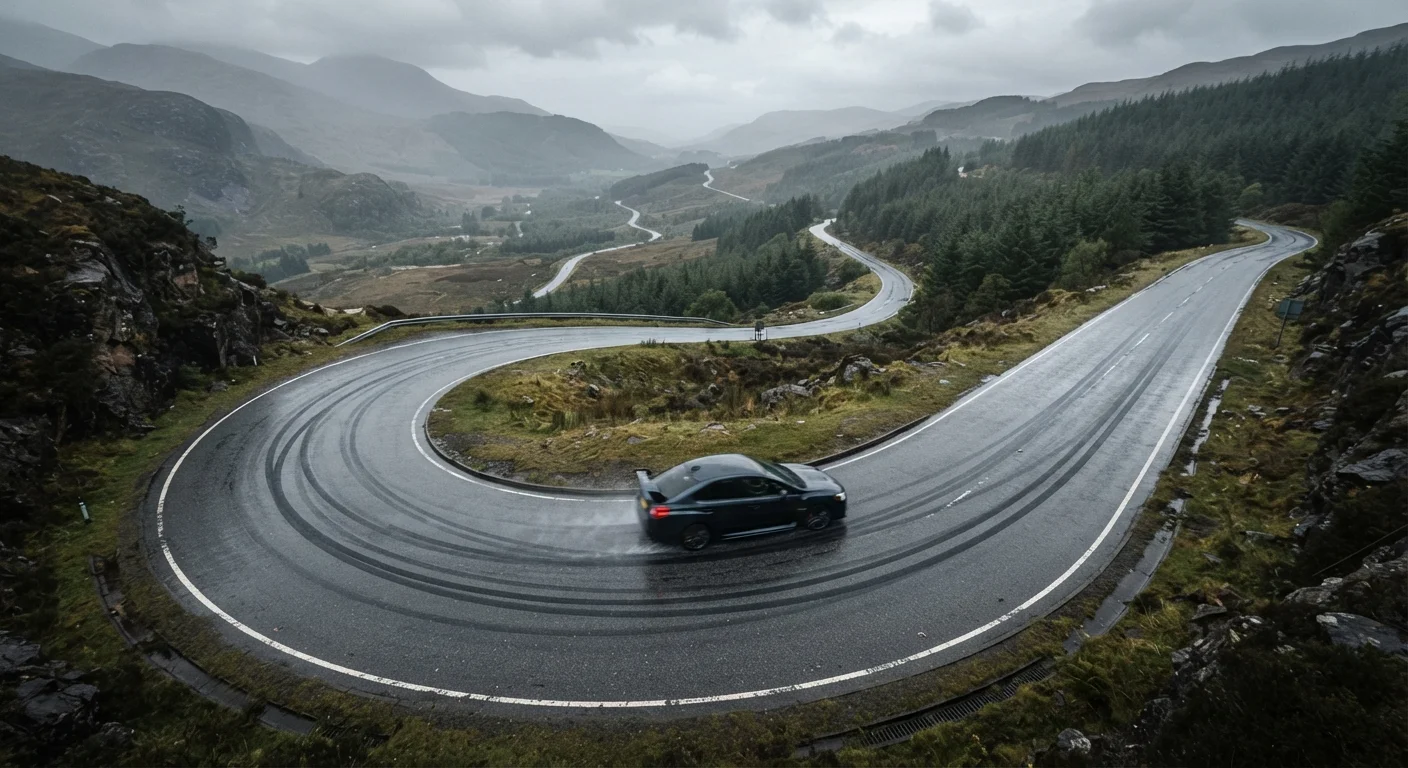
The braking distance formula depends heavily on friction between your tires and the road surface. On dry asphalt with tires in good condition, friction is relatively high. Introduce rain, and friction drops — many estimates put wet-road stopping distances at 50% longer than dry. Ice can reduce friction to a fraction of dry values, extending stopping distances by three to ten times depending on conditions.
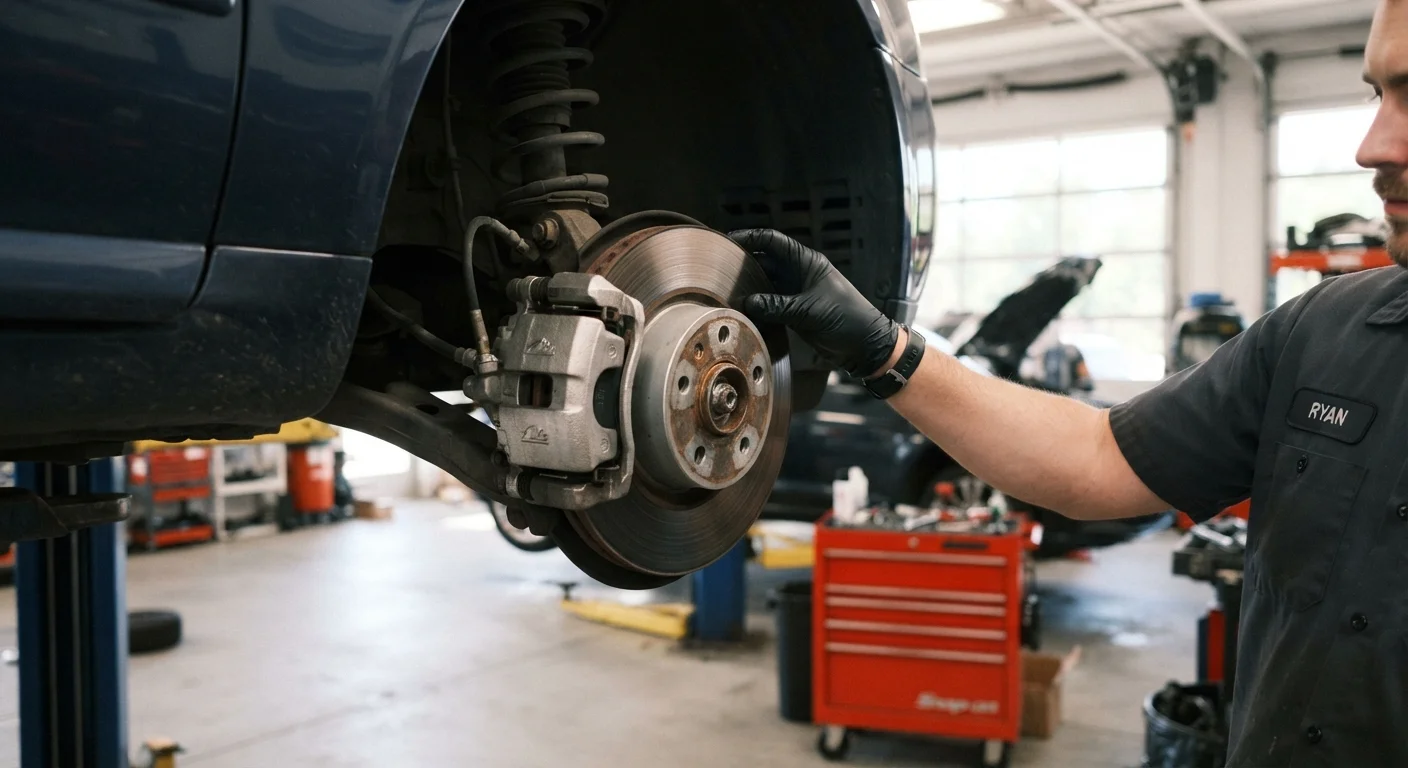
Tire condition matters just as much as weather. Worn tread cannot channel water away from the contact patch efficiently, dramatically worsening wet-road grip. Tire inflation also plays a role; significantly under-inflated tires deform under load and reduce effective contact area. For a driver-level breakdown of how brake hardware affects all of this, our piece on brake maintenance covers the key indicators of brake health and when to have a qualified mechanic take a look.
ABS Does Not Shorten Dry-Road Stopping Distance
Anti-lock braking systems are widely misunderstood. ABS prevents wheel lockup to preserve steering control during hard braking — it does not automatically shorten your stopping distance on dry pavement. On loose gravel or slippery surfaces, ABS can reduce stopping distance, but the primary benefit in most scenarios is the ability to steer while braking hard, not shorter stops.
What This Means for Following Distance
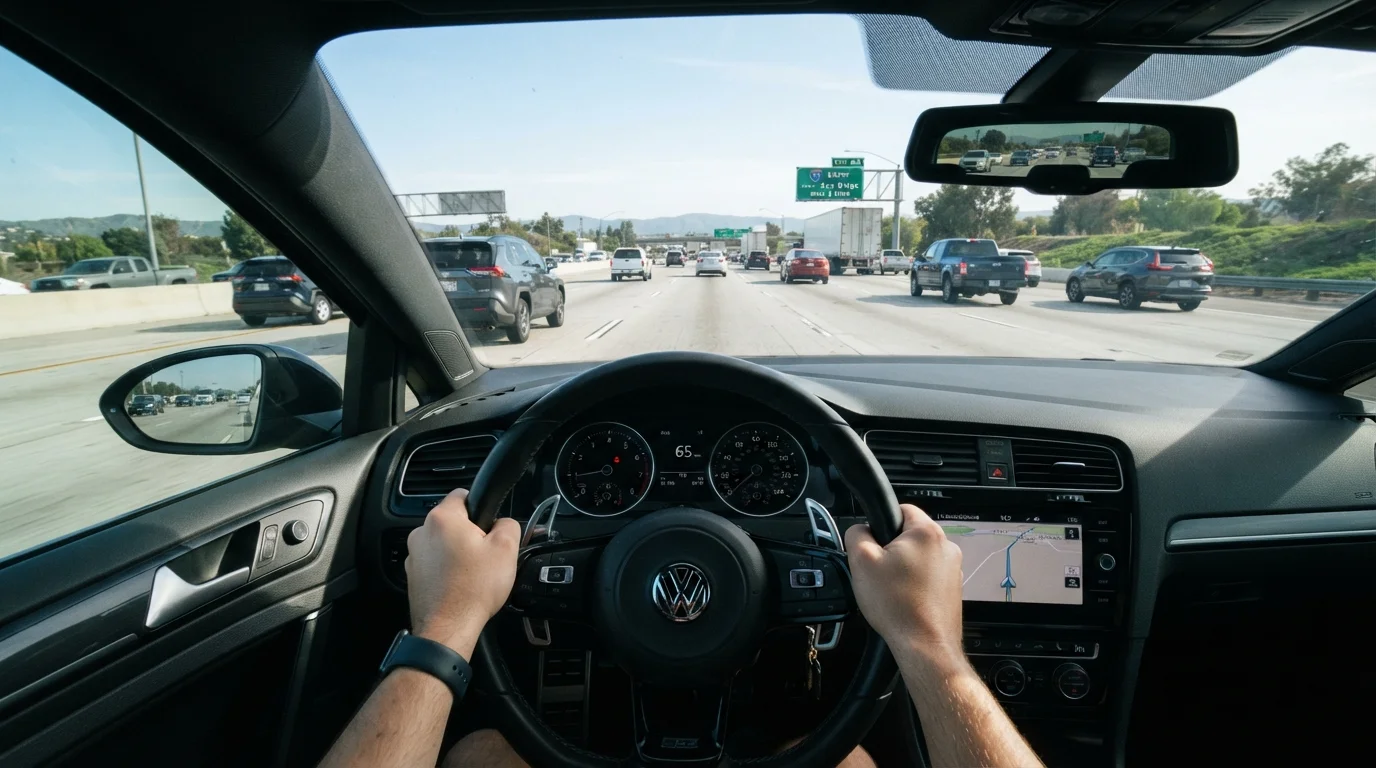
Understanding stopping distance reframes the tailgating problem. A driver following one car length behind at 65 mph has left themselves roughly 15–20 feet of buffer. Their total stopping distance, under good conditions, is likely 250–300 feet. The math requires no elaboration.
The two-second rule is a widely taught baseline, but it represents a minimum under ideal conditions. Rain, reduced visibility, fatigue, and higher speeds all argue for extending that gap. At night — when hazard detection is delayed further by reduced visibility — the case for additional space becomes even stronger. Our guide to night driving explains how after-dark conditions affect perception and response in ways that compound stopping distance risk.
Stopping distance physics does not negotiate. Building the habit of maintaining adequate space ahead — and recognizing the full stopping distance your vehicle actually needs — is one of the most evidence-backed adjustments any driver can make.