

What Separates Safe Drivers from the Rest
Most drivers believe they're above average behind the wheel. Research consistently shows that's statistically impossible — and that self-assessment of driving skill tends to be unreliable. What genuinely separates lower-risk drivers isn't raw talent or years logged on the road. It's a set of deliberate, repeatable habits that reduce exposure to hazardous situations and sharpen response when those situations arise anyway.
These habits aren't secret knowledge. But they require intention. Many are the direct opposite of what stress, distraction, or overconfidence nudges drivers toward. Understanding what experienced drivers actually do — rather than what they say they do — is the starting point for building a safer approach at any experience level.
For a broader foundation, see the complete overview of safe driving covering road rules, hazard management, and confident technique.
Maintain a generous following distance
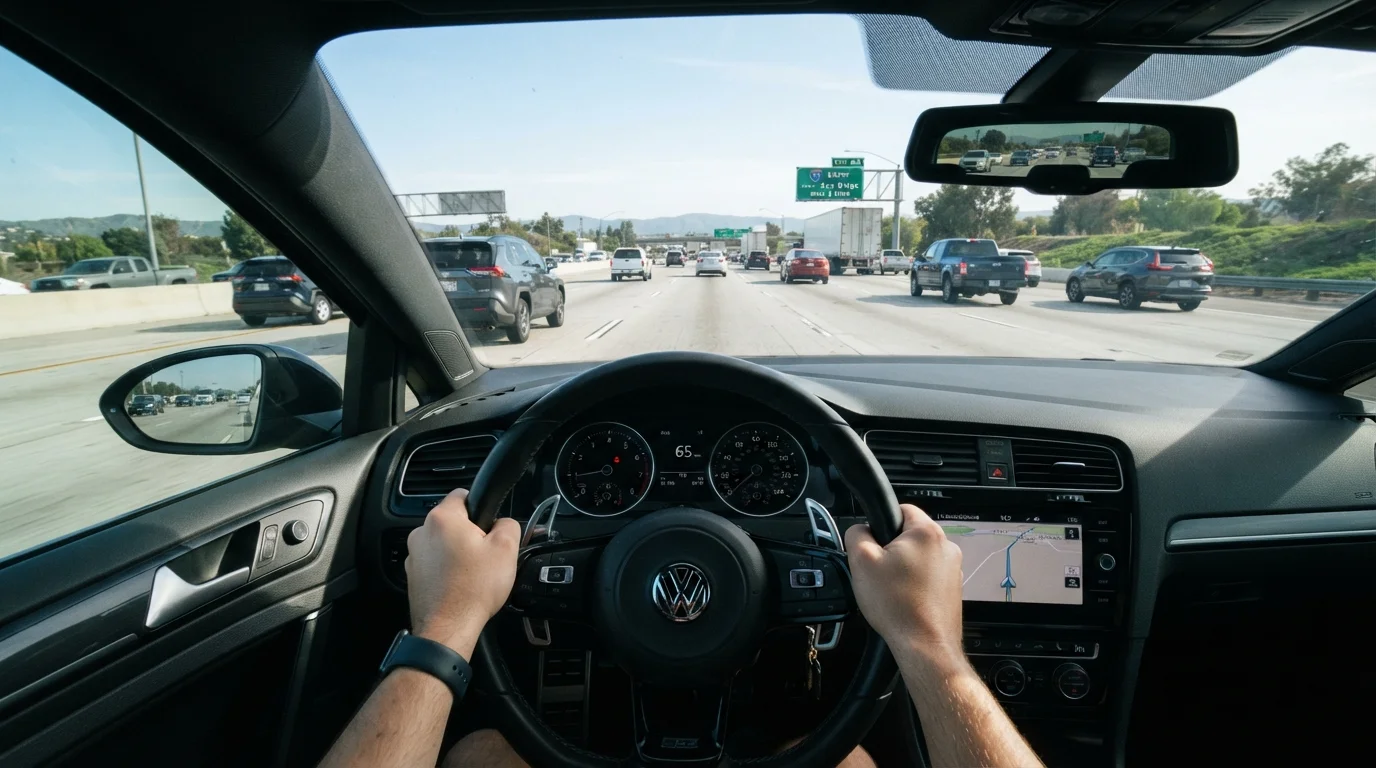
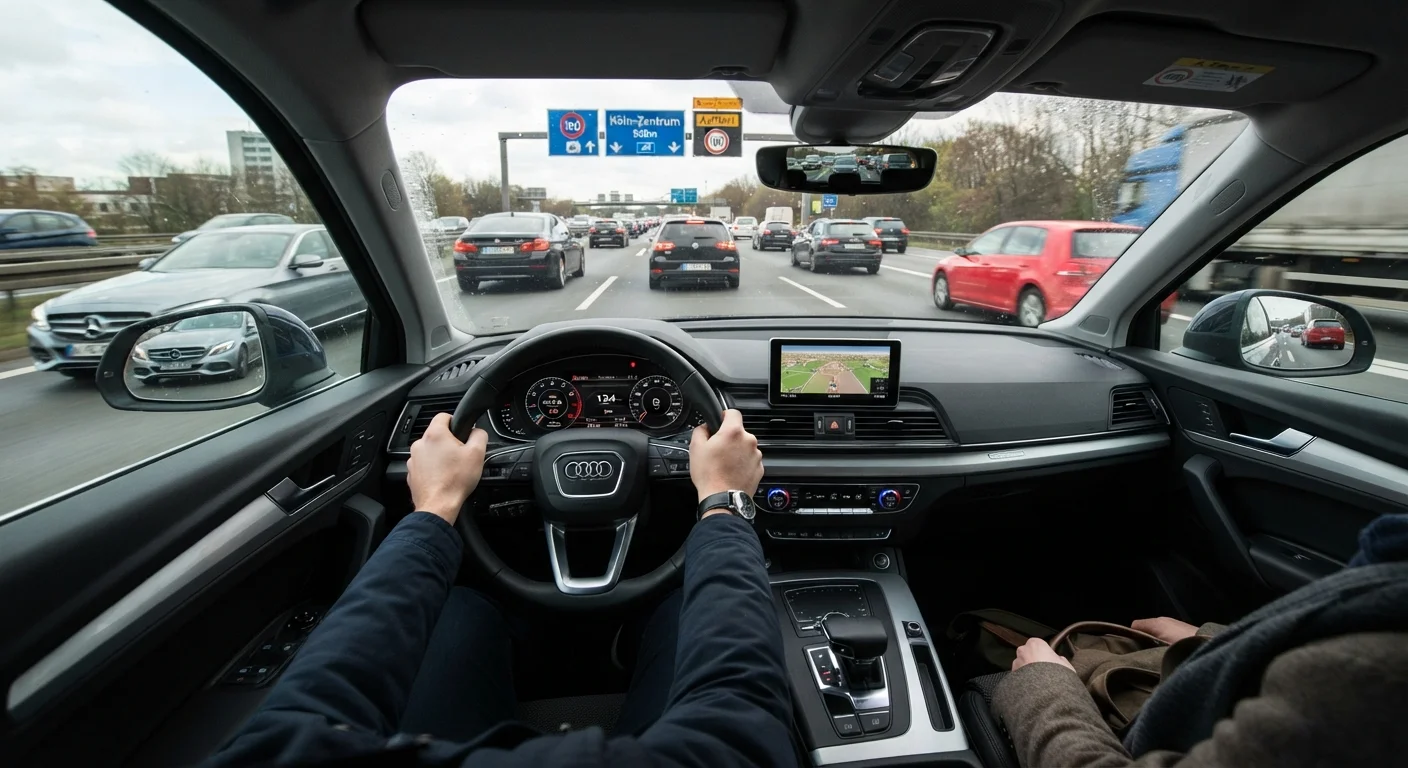
Experienced drivers keep more space in front of them than most traffic flows suggest is necessary. The commonly cited three-second rule — measuring the gap between your front bumper and the vehicle ahead — provides a minimum buffer under ideal conditions. Many skilled drivers extend this to four or five seconds on highways or in poor visibility.
More space means more time to react. It also reduces the pressure to brake sharply, which lowers the risk of being rear-ended. In heavy traffic, maintaining this gap can feel socially awkward — other drivers may fill it. That's a reason to ease back slightly, not to close the gap and accept less margin.
Space in front of you is time — and time is what prevents crashes.
Scan far ahead, not just immediately in front
Novice drivers tend to fix their gaze on the vehicle directly ahead. Experienced drivers continuously scan the road 10–15 seconds ahead — roughly a quarter mile at highway speeds — watching for brake lights, merging vehicles, pedestrians, and changing conditions before they become immediate problems.
This habit also includes regular mirror checks. A complete picture of what's happening around the vehicle — not just in front — allows for smoother lane changes, earlier braking decisions, and awareness of vehicles approaching from blind angles. See the guide on managing blind spots for specific techniques.
Scanning far ahead converts potential hazards into manageable situations.
Treat distraction as an active threat, not a background risk
Distracted driving is frequently framed as a phone problem, but experienced drivers understand it more broadly: any cognitive or visual demand that pulls attention from the driving task is a hazard. That includes adjusting the radio, reaching for food, or extended conversations with passengers.
The practical habit is pre-trip preparation — setting navigation, adjusting mirrors, and handling anything requiring attention before moving. When something demands attention mid-trip, pulling over safely is the appropriate response, not multitasking. Distracted driving and impaired driving share consequences even when the causes differ.
Distraction management is a decision made before the trip starts, not during it.
Adjust speed and behavior for conditions, not just the speed limit
Posted speed limits reflect safe conditions on a dry, well-lit road with normal traffic. Rain, fog, snow, ice, heavy traffic, and reduced visibility all change the calculus. Experienced drivers treat speed limits as a ceiling under ideal conditions, not a target regardless of what's happening around them.
Wet roads can double stopping distances. Ice can multiply them further. Reducing speed before entering a curve, increasing following distance in rain, and dropping speed in reduced-visibility conditions are concrete expressions of this habit. The guide to driving in rain, snow, and ice covers the specific adjustments each condition requires.
The speed limit is a ceiling in ideal conditions — not a default for all conditions.
Recognize and respond to fatigue before it takes over
Driver fatigue impairs reaction time, judgment, and awareness in ways that are measurable and serious — comparable in some research to alcohol impairment at sufficient levels of sleep deprivation. The dangerous quality of fatigue is that it degrades the ability to accurately assess how impaired you are.
Experienced drivers watch for early indicators: difficulty focusing, yawning frequently, drifting within lanes, or missing exits. The appropriate response is stopping — not pushing through with caffeine or willpower alone. Driver fatigue is one of the most underestimated risks on the road.
Fatigue impairs the very judgment needed to recognize how impaired you are.
Check the vehicle before driving, not after a problem appears
A quick walk-around before a trip catches issues — a low tire, a cracked light, fluid on the driveway — before they become roadside emergencies. Experienced drivers build this into their routine without viewing it as burdensome. It takes under two minutes and can prevent breakdowns or accidents caused by mechanical failure.
Beyond visual checks, keeping up with scheduled maintenance means the vehicle responds predictably under load. Brakes, tires, and steering in good condition are fundamental to every safe-driving habit listed here. A pre-trip vehicle safety checklist can help build this habit systematically.
A two-minute walk-around can prevent the breakdown or accident you never saw coming.
Drive differently at night
Night driving reduces visibility, increases the likelihood of encountering fatigued or impaired drivers, and changes how hazards appear. Experienced drivers recognize nighttime as a genuinely different operating environment — not just the same roads with the lights off.
Practical adjustments include reducing speed to stay within the range where headlights illuminate the road ahead, increasing following distance, and being especially cautious at intersections. Glare from oncoming headlights is managed by looking toward the right edge of the road rather than at approaching lights. Night driving demands specific adjustments that many drivers skip.
Night driving is a different environment — experienced drivers adjust accordingly.
Making These Habits Stick
Knowing a habit is valuable and consistently executing it under real driving conditions are two different things. The most reliable way to build these behaviors is to focus on one at a time — practicing deliberate scanning on your commute for a week, then layering in following-distance discipline the next. Incremental reinforcement is more durable than trying to overhaul everything at once.
Practice One Habit at a Time
Rather than trying to change everything at once, choose a single habit — like scanning farther ahead or adding a pre-trip check — and focus on it consistently for one to two weeks. Once it feels automatic, layer in the next. This approach builds durable behavior more reliably than wholesale changes that fade under pressure.
It's also worth recognizing that safe driving doesn't end when you park. Regular vehicle maintenance — tires, brakes, lights, fluids — ensures your car can actually perform the way you're counting on it to. Skill and preparation work together.
For a deeper look at the principles underlying these habits, the defensive driving guide walks through the everyday practices that genuinely reduce crash risk.