

Why Safe Driving Starts Before You Turn the Key
Safe driving isn't a switch you flip once you pass a road test. It's a discipline that begins with preparation — both of the vehicle and the person behind the wheel. Research from the National Highway Traffic Safety Administration (NHTSA) consistently identifies driver behavior as the leading factor in most crashes, which means the choices made before and during every trip matter enormously.
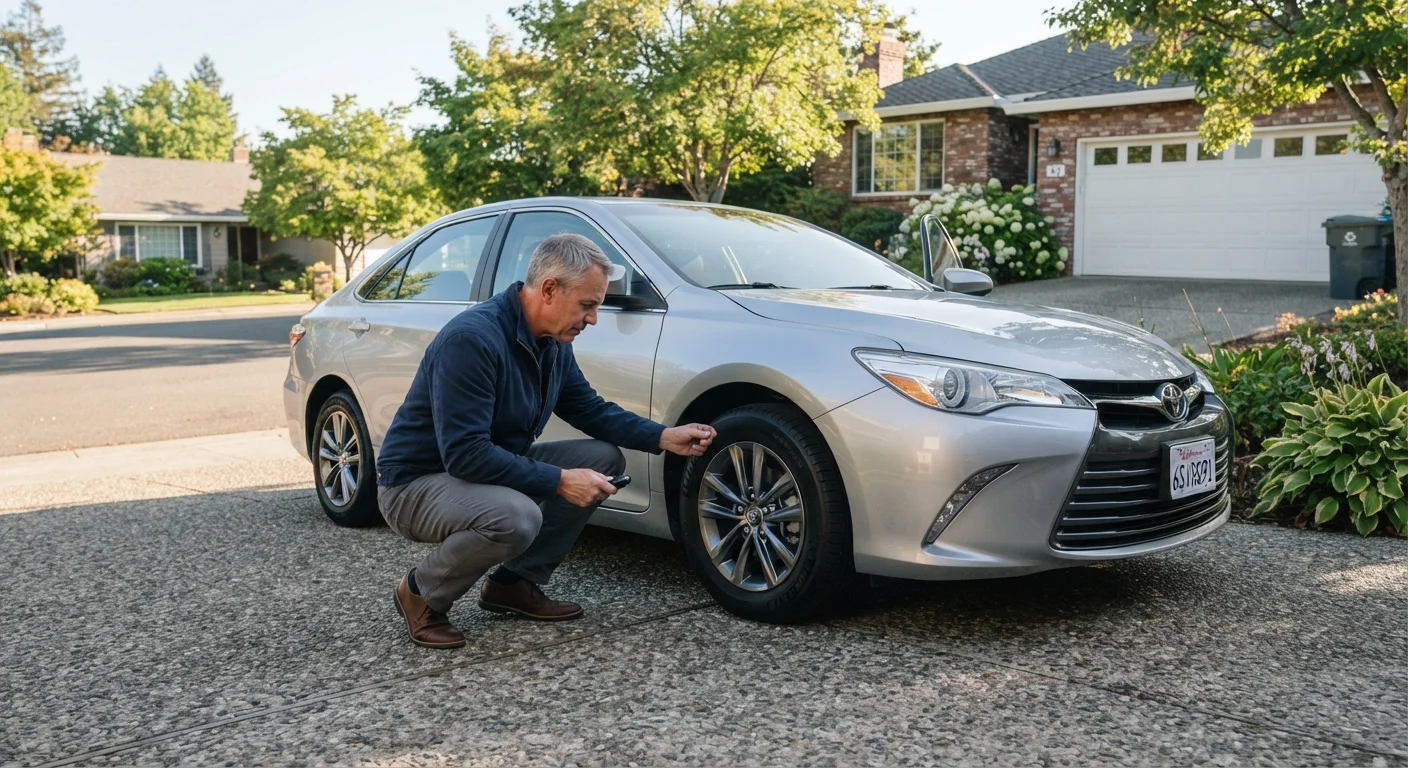
Before pulling out, a quick vehicle walk-around can catch problems that lead to accidents or breakdowns. See our pre-trip vehicle safety checklist for a practical habit to build into your routine. Equally important is your own readiness: fatigue, stress, and distraction impair judgment in ways that compound with every mile.
Make Pre-Trip Checks a Daily Habit
Before every drive, take 60 seconds to check your mirrors, confirm your seatbelt works, and glance at your fuel and warning lights. Most mechanical surprises that create dangerous situations on the road could be caught in this brief window. Consistency matters more than thoroughness on any single check.
Understanding Road Rules and Traffic Laws
Traffic laws aren't arbitrary — they encode decades of crash data, engineering principles, and human behavior research. Understanding why a rule exists helps drivers apply it correctly in situations the written test never covers.
- Right-of-way rules prevent intersection conflicts that account for a large share of urban crashes.
- Speed limits are set based on road geometry, pedestrian activity, and sight-distance calculations — not guesswork.
- Following distance requirements give drivers reaction time that physics demands, not just courtesy.
Laws vary by state, so drivers who relocate or frequently cross state lines should verify local regulations. Ignorance of a law is not a legal defense and rarely a physical one either.
Traffic Laws Vary by State
While federal guidelines influence road design and safety standards, traffic laws — including speed limits, handheld device rules, and right-of-way conventions — are set at the state level. If you've recently moved or regularly drive across state lines, check the relevant state DMV resources to confirm local requirements.
Defensive Driving: Your Core Strategy
Defensive driving is the practice of anticipating hazards before they become emergencies — managing your speed, position, and attention so that another driver's mistake doesn't become your crash. It's a mindset as much as a skill set.
Core principles include scanning intersections before entering, maintaining a buffer zone around your vehicle, and never assuming another driver will behave predictably. Our in-depth guide to defensive driving principles and everyday habits explains how to apply these strategies across different road environments.
94%
Crashes involving driver behavior
According to NHTSA research, approximately 94% of serious crashes involve driver choice or error as a critical factor.
3x
Crash risk for teen drivers vs. adults
The CDC reports that teen drivers ages 16–19 are nearly three times more likely to be involved in a fatal crash per mile driven than drivers aged 20 and older.
17%
Crash involvement linked to distraction
NHTSA data indicates distraction is reported as a factor in a significant share of all police-reported crashes annually.
Managing Real-World Hazards
Roads present dynamic conditions that no training course can fully replicate. Effective hazard management requires recognizing categories of risk and having a practiced response for each.
- Distraction
- Visual, manual, and cognitive distractions all degrade reaction time. Hands-free does not mean risk-free — cognitive load from a phone conversation remains significant even without holding the device.
- Fatigue
- Driving while sleep-deprived impairs judgment in ways comparable to alcohol impairment, yet many drivers underestimate how impaired they actually are. Learn the warning signs with our guide to driver fatigue and how to respond safely.
- Weather and Road Conditions
- Rain, ice, and fog require reduced speeds and increased following distances beyond what most drivers intuitively apply. The posted speed limit is a maximum for ideal conditions, not a target for all conditions.
Never Underestimate Fatigue Behind the Wheel
Studies have shown that going 20+ hours without sleep produces impairment comparable to a blood alcohol concentration of 0.08% — the legal limit in every U.S. state. Drowsiness warning signs include drifting lanes, missing exits, and difficulty keeping your eyes open. If any of these occur, pull over safely and rest before continuing.
New and Teen Drivers: Building the Right Foundation
Crash rates are highest among drivers ages 16–19, a pattern that reflects inexperience rather than recklessness alone. New drivers haven't yet automated the basic vehicle-control tasks that free up mental bandwidth for hazard scanning.
Graduated Driver Licensing (GDL) systems, now standard across all U.S. states, address this through staged restrictions — limiting nighttime driving, passenger counts, and phone use during the highest-risk learning period. Parents play a direct role in how well these restrictions translate into safer habits. Our guide on teen drivers and the graduated license system covers what families need to know.
During supervised practice with a new driver, narrate your own decision-making out loud — explaining why you're slowing early or checking mirrors at intervals helps transfer the invisible mental habits that experience builds.
New drivers often have the mechanical skills to operate a vehicle before they develop the situational awareness to anticipate hazards; verbalized coaching accelerates that development.
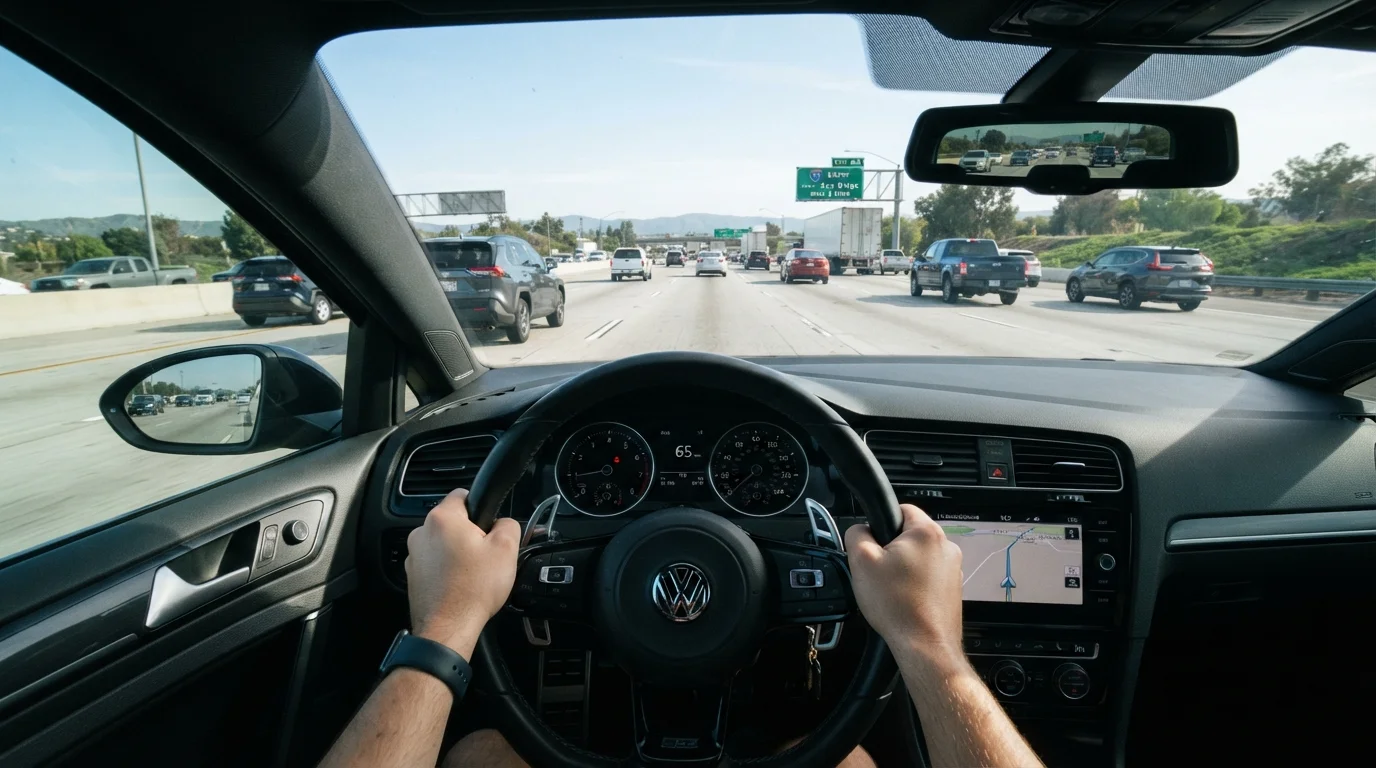
Apply the two-second following distance rule as a minimum in ideal conditions, and double it on wet roads — use a fixed landmark to count the gap after the car ahead passes it.
Reaction time plus braking distance at highway speeds routinely exceeds what most drivers estimate; a measurable, repeatable method makes the habit stick.
Vehicle Condition and Driver Readiness
A well-maintained vehicle is a safety asset. Worn tires reduce traction in emergencies; degraded brakes extend stopping distances; inoperative lights make you invisible to other drivers. Routine car maintenance isn't just about avoiding breakdowns — it directly affects your ability to respond when something unexpected happens.
Driver readiness is equally critical. Never drive under the influence of alcohol, cannabis, prescription medications that impair cognition, or any combination thereof. If you're unsure whether a medication affects driving, consult your pharmacist or prescribing physician before getting behind the wheel.
This article is for general informational purposes only. For medical questions about medication effects on driving ability, consult a qualified healthcare professional.
Developing Habits That Last a Lifetime
The difference between a safe driver and an average one often comes down to consistency. Experienced drivers who maintain low crash rates over decades share a set of behaviors: they buckle up every trip, they adjust to conditions rather than fighting them, and they treat driving as a primary task — not a background activity.
Our article on what experienced drivers do differently details the specific behaviors worth internalizing. And as you move into full vehicle ownership, understanding the responsibilities of car ownership — including insurance, legal obligations, and ongoing costs — rounds out the picture of what it means to be a fully prepared driver.
“The goal of driver education isn't just to produce licensed drivers — it's to produce drivers who understand why the rules exist and can adapt them to conditions no textbook ever described.”
— Traffic Safety Research Perspective, Driver Education and Behavioral Research Field