
What Defensive Driving Actually Means
Defensive driving is often described in vague terms — "stay alert" or "drive carefully" — but the concept is more specific and actionable than those phrases suggest. At its core, defensive driving means operating your vehicle with the assumption that other road users may make mistakes, and positioning yourself to respond safely when they do.
The word defensive is intentional. You're not just reacting to hazards; you're anticipating them before they fully materialize. That distinction matters because reaction time alone is rarely enough. By the time a hazard becomes obvious, your window to respond safely has already shrunk.
Defensive driving is part of a broader framework of safe road behavior. For a comprehensive introduction to that landscape, see our complete safe driving overview.
Following distance
The gap between your vehicle and the one ahead. A larger gap gives you more time and space to brake or maneuver if the car in front stops suddenly.
Hazard perception
The ability to identify road conditions, driver behaviors, or situations that could develop into a crash — ideally before they become immediate threats.
Scanning
Actively moving your eyes across the full driving environment — ahead, to the sides, and in mirrors — rather than fixating on a single point.
Blind spot
An area around your vehicle that your mirrors don't cover and that you can't see without turning your head. Every vehicle has them; large trucks have significantly larger ones.
Right of way
The legal or situational priority one driver has to proceed before another. Having the right of way doesn't guarantee safety — defensive drivers verify that others are yielding before proceeding.
Space cushion
The buffer of open space you maintain around your vehicle on all sides. A larger cushion means more time and room to react to sudden changes.
The Core Principles Behind the Practice
Several well-established principles anchor defensive driving. Understanding them as a connected system — rather than a checklist — is what makes the approach effective.
- Scanning ahead continuously: Effective drivers look 12–15 seconds down the road, not just at the bumper in front of them. This gives you time to process developing situations — merging vehicles, slowing traffic, debris — before they become urgent.
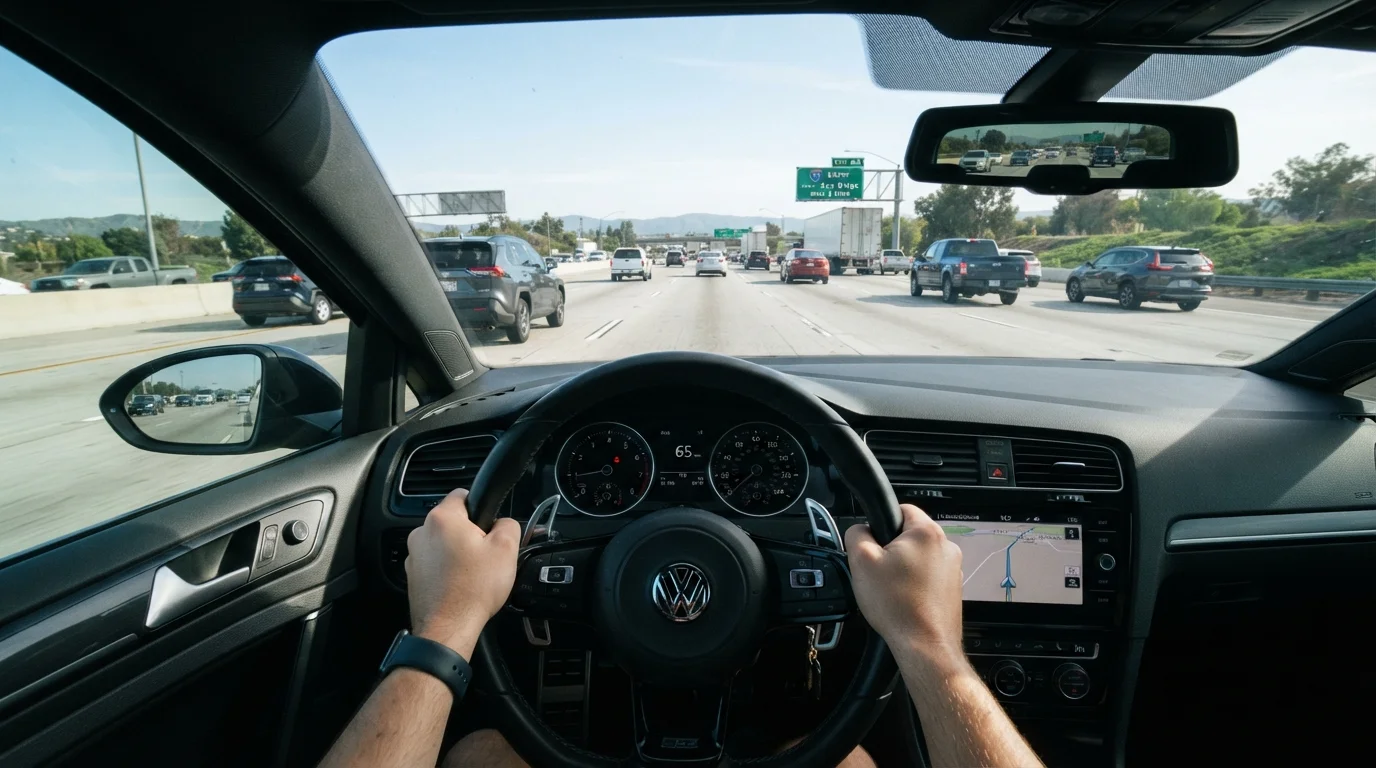
- Managing space: Keeping a safe following distance, leaving room to the sides, and avoiding blind spot positions all create a buffer that gives you options. The three-second following distance rule is a practical starting point; in poor conditions, extend it further.
- Expecting the unexpected: Treat intersections, driveways, and on-ramps as potential conflict points, even when you have the right of way. Yielding a second of time costs little; a collision costs far more.
- Controlling your own behavior: Defensive driving isn't only about what other drivers do. Speed, attention, and sobriety are fully within your control — and each directly determines how well you can execute the other principles.
Use the Three-Second Rule Consistently
Pick a stationary object — a sign, a bridge, a lane marker — and count the seconds between when the car ahead passes it and when you do. Three seconds is the minimum in good conditions. Rain, fog, or heavy loads call for four to five seconds. Making this a reflex rather than an occasional check is what makes it effective.
Everyday Habits That Put It Into Practice
Principles become protection only when they're built into daily driving habits. Here's how the core ideas translate into concrete, repeatable behaviors:
- Adjust your mirrors before every trip — eliminating blind spots takes seconds and pays off continuously.
- Signal every lane change and turn — communicating your intent gives other drivers time to adjust, reducing conflict.
- Cover the brake in ambiguous situations — hovering your foot near the brake pedal (without pressing) reduces reaction time when you sense a hazard forming.
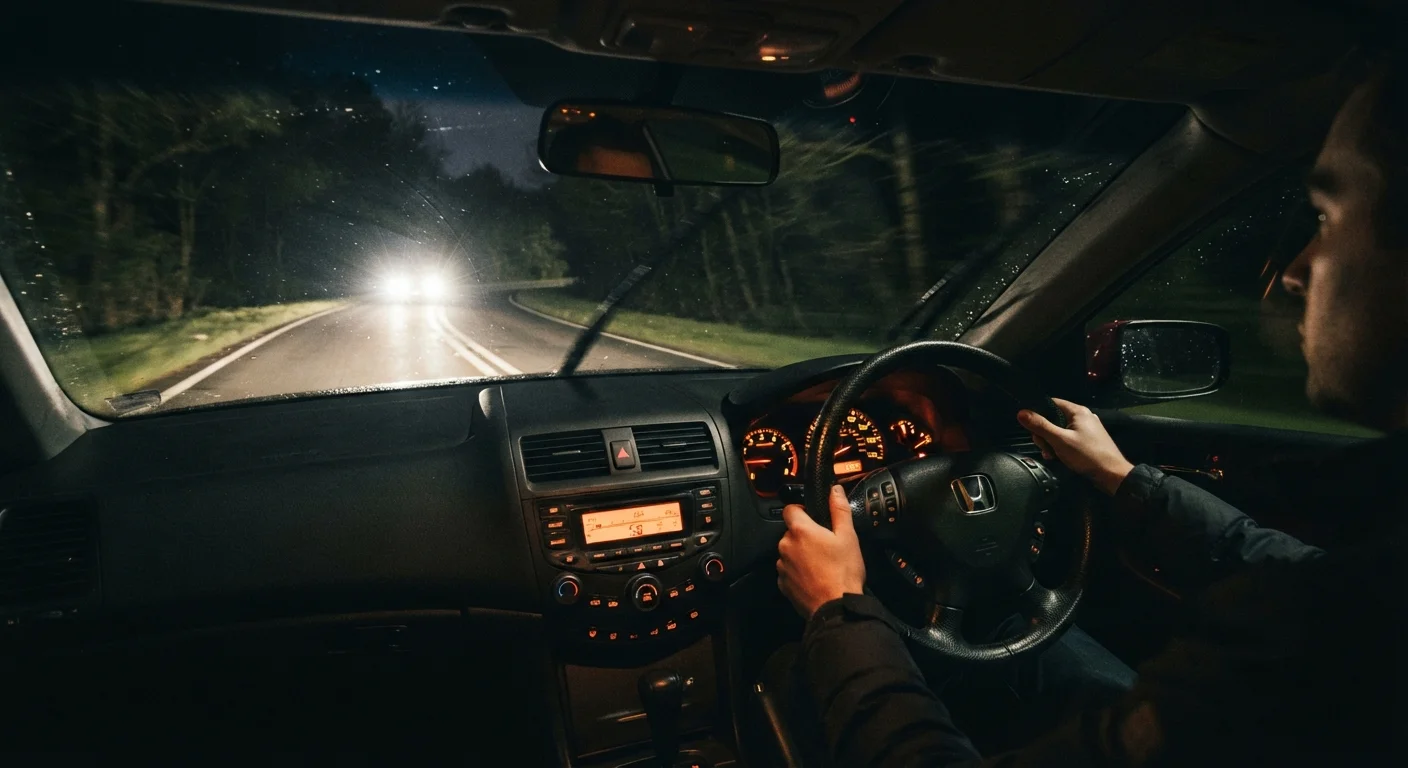
- Reduce speed proactively in poor conditions — rain, fog, and darkness all increase stopping distances. Speed limits reflect ideal conditions, not impaired ones. Our guide on night driving hazards and adjustments covers how conditions change after dark.
- Stay out of other drivers' blind spots — especially around large trucks. If you can't see the driver's mirrors, they can't see you.
National Safety Council Defensive Driving Courses
The NSC offers recognized defensive driving and driver improvement programs used by employers, courts, and individuals. Their materials cover hazard recognition and risk management grounded in safety research.
NHTSA Driver Safety Resources
The National Highway Traffic Safety Administration publishes data-backed guidance on safe driving practices, distraction, impairment, and crash prevention — useful for understanding the real-world risk landscape.
Common Mistakes That Undermine Defensive Driving
Even drivers who understand defensive principles can undercut them through habitual errors. The most common:
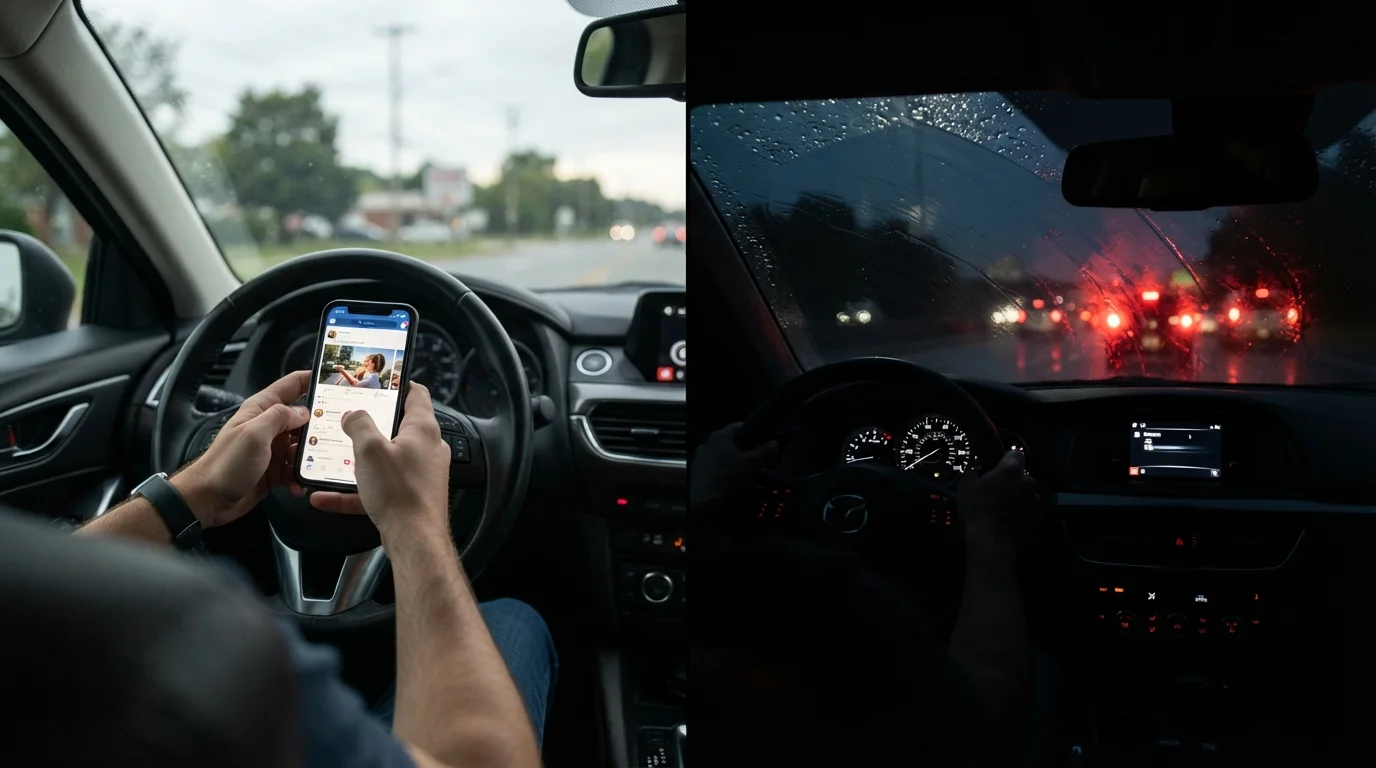
- Distraction: Any activity that takes your eyes, hands, or mind off driving degrades the awareness defensive driving depends on. Phones are the most frequently cited source, but eating, adjusting controls, and passenger conversations all carry risk. See how distraction compares to impairment for a fuller picture.
- Fatigue: Drowsy drivers scan less, respond more slowly, and miss hazards they would otherwise catch. Driver fatigue carries risks many underestimate — including impairment comparable to alcohol at severe levels.
- Overconfidence: Familiarity with a route can breed inattention. Routine drives account for a disproportionate share of crashes precisely because drivers let their guard down.
- Following too closely: Tailgating eliminates the time buffer that makes defensive responses possible. It's one of the highest-risk behaviors on any road.
Don't Let Familiarity Lower Your Guard
Research on crash patterns consistently shows that a high proportion of collisions happen close to home, on routes drivers travel regularly. Familiarity breeds complacency — your brain begins to process the environment on autopilot, reducing active scanning. Treat every trip, including routine ones, as deserving full attention.
Building the Defensive Mindset Over Time
Defensive driving is less a set of techniques and more a sustained mental posture — one that develops with deliberate practice. New drivers benefit from learning it explicitly; experienced drivers benefit from revisiting it to counter complacency.
Formal defensive driving courses, offered by organizations such as the National Safety Council and AAA, provide structured instruction in hazard recognition, space management, and emergency response. Many state DMVs maintain lists of approved programs, and completing one may qualify you for an insurance discount depending on your state and policy.
For drivers building their foundational skill set, the habits that experienced drivers have internalized offer a useful benchmark. Our article on what experienced drivers do differently covers those behaviors in depth.
The goal is not perfection — it's consistency. Each trip is an opportunity to practice scanning, spacing, and situational awareness. Over time, these behaviors become automatic, and that automaticity is precisely when they're most valuable: in the moments when everything happens faster than conscious thought allows.