
How Each Risk Actually Works
Distracted driving and impaired driving both erode a driver's ability to respond safely — but through fundamentally different mechanisms.
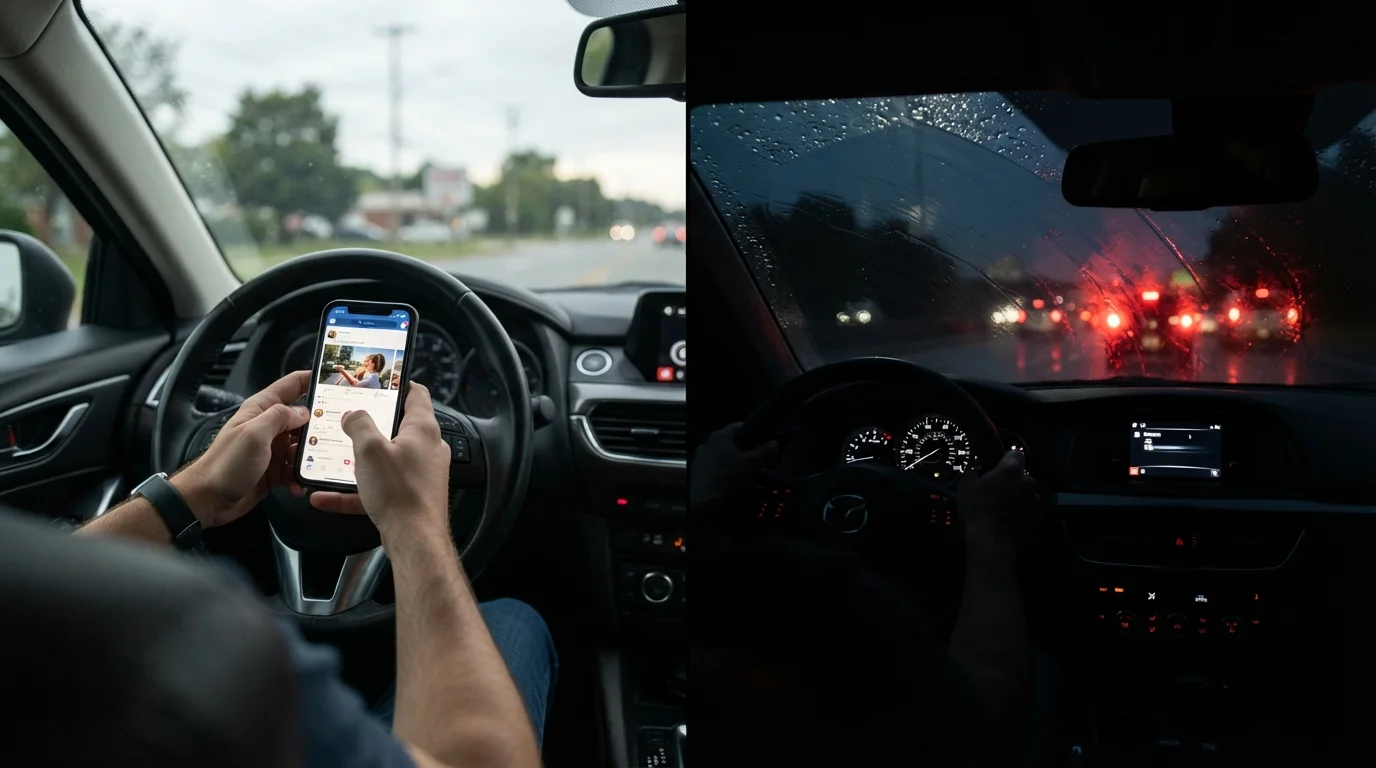
Distracted driving occurs when a driver's attention is diverted from the primary task of operating the vehicle. Researchers typically divide distractions into three categories: visual (eyes off the road), manual (hands off the wheel), and cognitive (mind off the task). Smartphone use is particularly dangerous because it simultaneously triggers all three. According to the National Highway Traffic Safety Administration (NHTSA), sending or reading a text at 55 mph is the equivalent of driving the length of a football field with your eyes closed.
Impaired driving works differently. Alcohol, cannabis, certain prescription medications, and other substances alter how the brain processes sensory input, regulates motor control, and makes decisions. Critically, impairment affects judgment — meaning impaired drivers frequently underestimate their own impairment. This is why blood alcohol concentration (BAC) thresholds exist as legal standards: they remove the unreliable variable of personal perception.
Driver fatigue shares characteristics with both — it reduces cognitive bandwidth like distraction and impairs reaction time similarly to alcohol — making it a compounding factor worth understanding alongside these two risks.
| Criterion | Distracted Driving | Impaired Driving |
|---|---|---|
| Primary cause | Diverted attention (visual, manual, cognitive) | Substance-induced brain impairment |
| Self-detection by driver | Often unrecognized in the moment | Frequently underestimated due to impaired judgment |
| Reaction time impact | Significantly slowed | Significantly slowed |
| Legal classification (typical) | Civil infraction (fines); criminal if harm results | Criminal offense from first incident (DUI/DWI) |
| Common triggers | Phones, passengers, food, navigation | Alcohol, cannabis, prescription/OTC medications |
| Prevention strategy | Pre-trip habit setting; phone silenced or stored | Plan-ahead decisions; designated driver; rideshare |
Legal Consequences: Not the Same Ballpark
While both behaviors are illegal in every U.S. state, the legal frameworks treat them very differently.
Distracted driving laws vary widely by state. Most states ban handheld phone use while driving, and many have added broader restrictions on texting. Penalties are typically civil — fines that range from modest to substantial depending on the state. However, if distracted driving causes injury or death, charges can escalate to reckless driving or vehicular manslaughter.
Impaired driving — commonly charged as DUI or DWI — carries immediate criminal exposure in all 50 states. A first offense can result in license suspension, mandatory fines, court-ordered alcohol education programs, ignition interlock device requirements, and potential jail time. Repeat offenses or crashes involving injury dramatically escalate penalties, including felony charges.
~3,000
U.S. distraction-related traffic deaths annually
NHTSA data consistently shows roughly 3,000 people are killed each year in crashes attributed to distracted driving.
~13,500
Alcohol-impaired driving fatalities per year
According to NHTSA, alcohol-impaired driving crashes account for roughly 37% of all U.S. traffic fatalities annually.
4x
Increased crash risk with handheld phone use
Research cited by the Insurance Institute for Highway Safety indicates drivers using handheld phones are approximately four times more likely to be in a crash.
The asymmetry matters for how drivers should think about risk: impaired driving is treated as a criminal act from the first offense, while distracted driving penalties are largely civil unless harm results. Neither framing, however, reflects how similarly both behaviors raise crash probability.
For a broader look at how experienced drivers navigate these kinds of risk decisions, see safe driving habits that experienced drivers rely on.
What Both Have in Common — and Why That Matters
Despite different mechanisms and legal treatments, distracted and impaired driving share a critical, dangerous trait: drivers engaged in both tend to be poor judges of how compromised they are.
Studies consistently show that drivers using hands-free phones believe they're driving safely while measurably performing worse. Similarly, drivers with a BAC at or slightly below the legal limit often feel confident behind the wheel, even as reaction times and lane-keeping have already degraded.
The Confidence Paradox
One of the most documented findings in driver behavior research is that both distracted and impaired drivers consistently rate their own performance higher than objective measures warrant. This means the feeling of driving 'just fine' is not a reliable safety indicator under either condition. Behavioral safeguards — decisions made before getting in the car — are more effective than in-the-moment self-monitoring.
This shared blind spot is what makes building consistent habits — rather than relying on in-the-moment self-assessment — so important. Decisions like putting the phone in the back seat before starting the car, or designating a driver before an evening out, remove the unreliable variable of self-evaluation entirely.
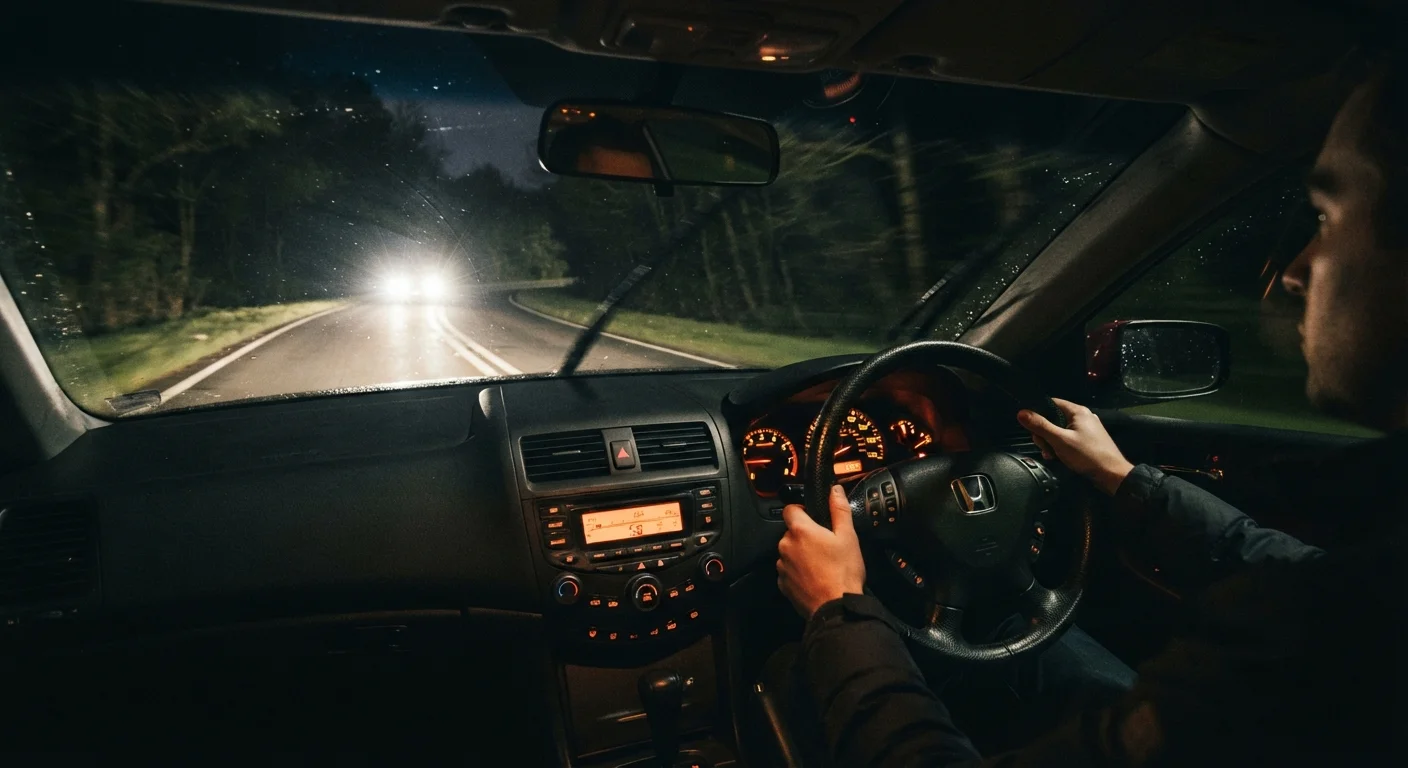
Nighttime driving adds further complexity: reduced visibility and longer stopping distances at night mean the margin for error is already narrower. Any added distraction or impairment in those conditions compounds risk significantly.
Understanding both risks is part of the broader foundation of safe, legal driving. A complete overview of safe driving fundamentals can help drivers at any level see where these behaviors fit within the wider landscape of road risk.