
Why Restaurants Invest So Much in How a Room Feels
Walk into any restaurant and within about 30 seconds your brain has already formed an impression — before you've glanced at the menu or tasted a thing. That snap judgment is entirely intentional. Restaurant designers, owners, and operators spend enormous energy crafting the sensory environment because they know it shapes everything: how hungry you feel, how much you order, how long you stay, and whether you come back.
This isn't guesswork. The field of hospitality design draws on psychology, acoustics, and consumer behavior research to fine-tune the dining experience. Understanding what's being done — and why — makes you a more confident diner, whether you're picking a spot for a first date or a business lunch. It also pairs naturally with knowing the unspoken norms of dining out that shape a smooth restaurant visit.
The Elements Restaurants Control (And What Each One Does)
Lighting
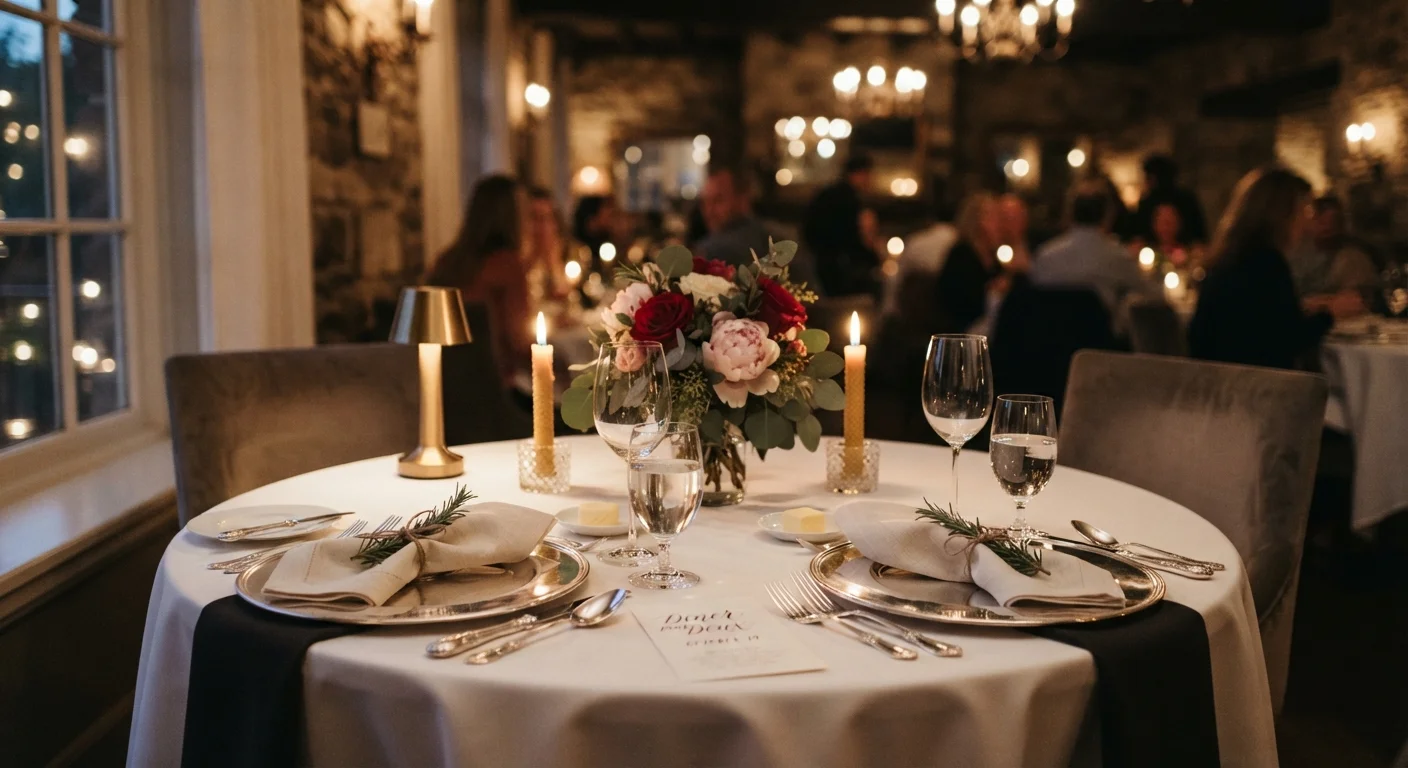
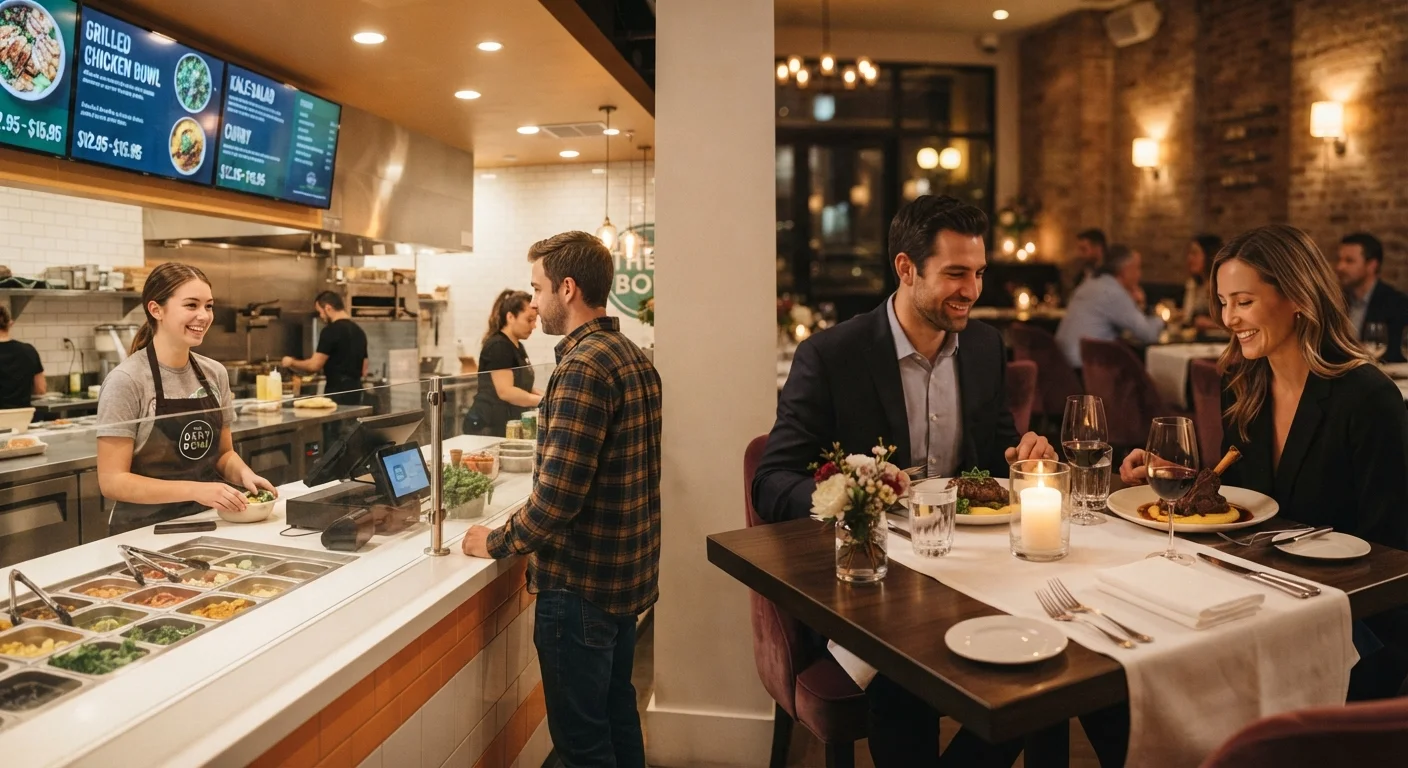
Lighting does more heavy lifting than almost any other design element. Bright, even light — common in fast-casual spots — keeps energy high and signals a quicker dining pace. Warm, low-wattage lighting in fine dining settings tells your nervous system to relax and settle in. Candles go a step further, creating a sense of occasion that's hard to replicate with overhead fixtures.
41%
Diners citing noise as a top complaint
A Zagat dining survey found that excessive noise consistently ranks among the most common complaints diners report about restaurant experiences.
~11%
Increase in alcohol sales with slower music
Research by consumer psychologist Charles Areni found that slower background music in a retail wine setting correlated with higher spend per customer — a finding widely referenced in hospitality design.
Sound and Music
Background music isn't just filler — it's a behavioral lever. Studies in consumer psychology have found that slower music tends to extend how long diners stay at the table, while upbeat tempos can subtly speed up eating pace. Volume matters too: a quietly humming room encourages conversation, while a loud, reverberant space shifts the mood toward energy and group buzz over intimate exchange.
Table Spacing and Layout
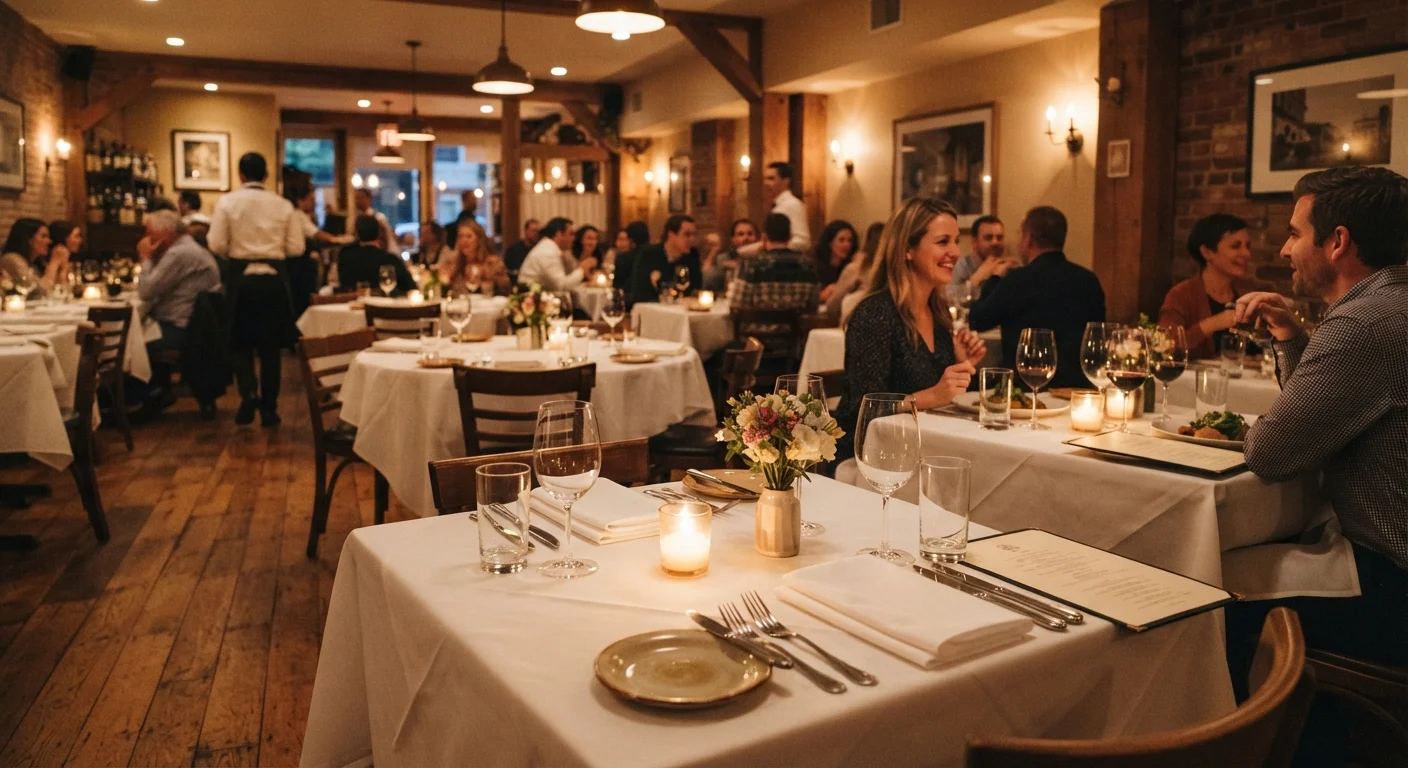
How much real estate you get between you and the next table communicates a lot about a restaurant's identity. Tight spacing maximizes covers (the number of guests served per service) and creates a lively, social atmosphere. Wider spacing trades volume for the feeling of privacy and exclusivity. In fine dining, you might find banquette seating or angled chairs specifically designed so guests aren't making accidental eye contact with strangers.
Acoustics and Surface Materials
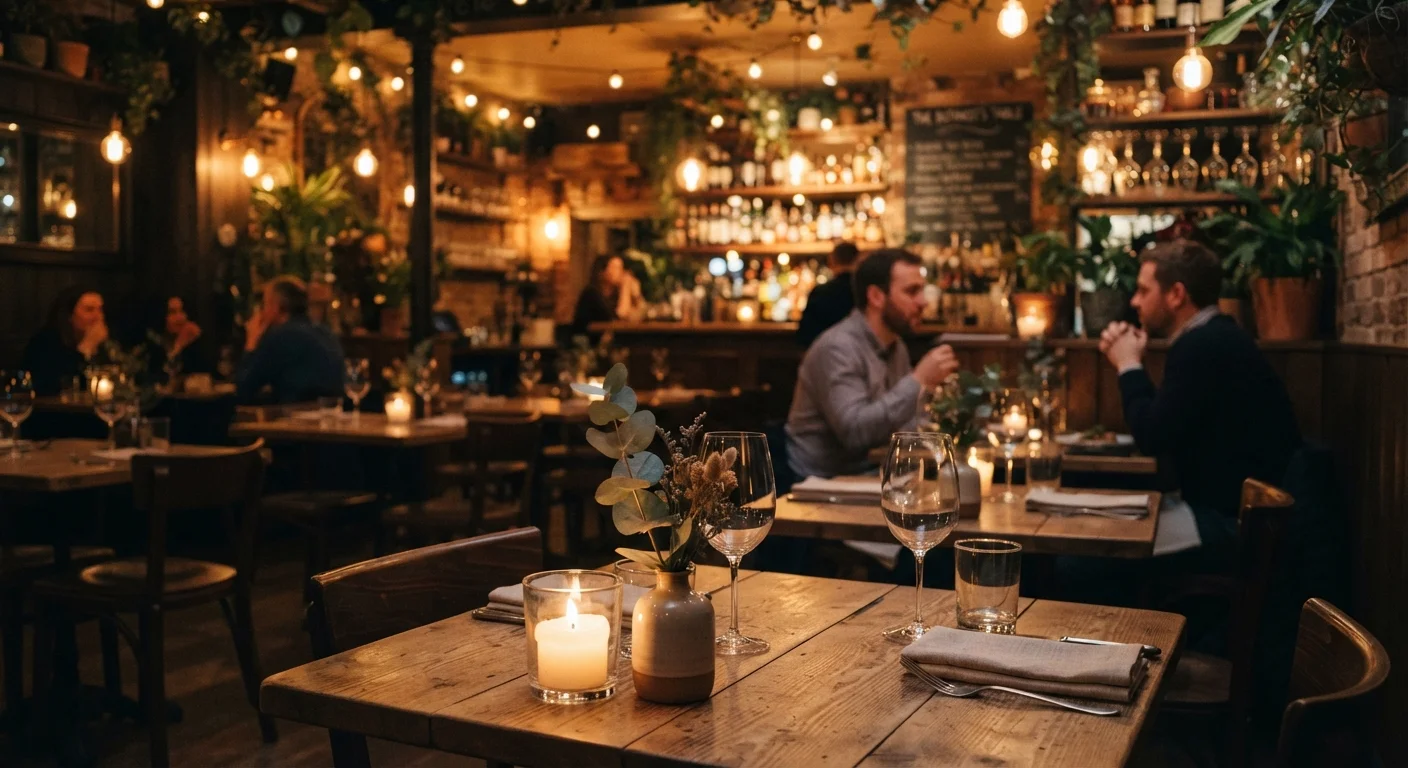
This is the one most diners notice without knowing why. Hard surfaces — polished concrete, tile, exposed brick, glass — reflect sound and create echo. Soft materials — upholstered chairs, heavy curtains, carpets, acoustic panels — absorb it. A restaurant that looks sleek and minimal on Instagram may also be exhaustingly loud in person. That's not accidental: the visual aesthetic was prioritized over acoustic comfort, a trade-off some restaurants knowingly make to project a certain energy.
How to Use This Knowledge When Dining Out
Once you know what to look for, you can read a room before you commit to a reservation. A restaurant with dark walls, low pendant lighting, and upholstered seating is probably designed for a relaxed, lingering dinner. A bright, open space with communal tables and a pulsing playlist is built for energy and throughput — which can be exactly what you want for a casual group outing.
Check Reviews for Noise Level Mentions
Before booking a restaurant for an important conversation or a quiet celebration, search reviews that specifically mention noise or acoustics. Many review platforms let you filter by tags like "good for groups" or "romantic" — those signals often reflect the acoustic environment as much as the food or service.
For a special occasion dinner, it's worth checking photos of the dining room — not just the food — before you book. And if you're ever unsure what kind of experience awaits, the difference between fast-casual and full-service formats is a good starting point. You can also pair this awareness with decoding the menu so you arrive at any restaurant feeling genuinely prepared.