
Why American Friendliness Confuses So Many People
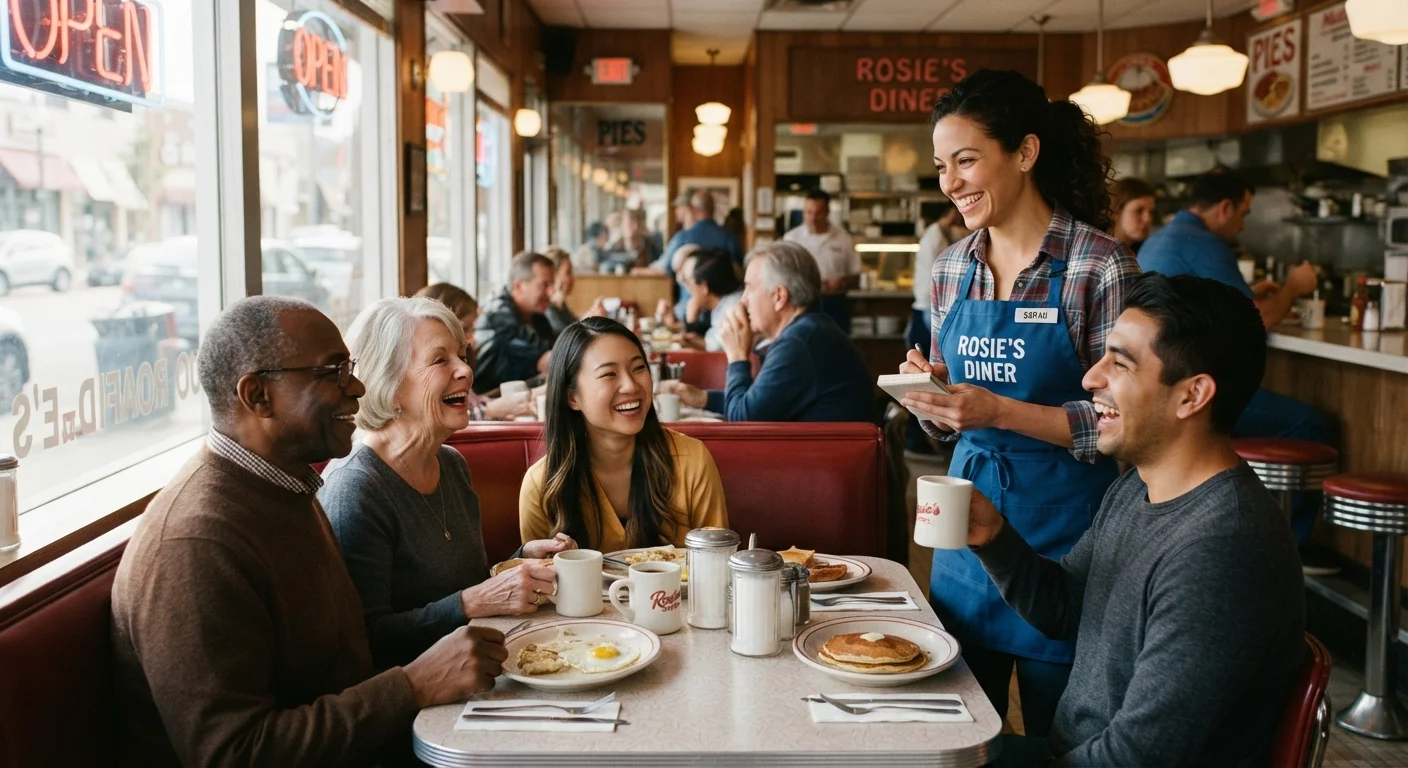
For many visitors and new residents, the first encounter with American social culture is disorienting in the best possible way. Strangers smile at you on the sidewalk. A cashier asks how your day is going. A coworker invites you to hang out sometime. It can feel like you've landed in the most welcoming country on earth — until weeks pass and none of those connections seem to go anywhere.
This gap between warmth and intimacy is one of the most commonly misread features of everyday American life. Understanding it isn't about cynicism; it's about cultural fluency. As researchers who study cross-cultural communication have noted, the U.S. is often described as a "low-context" culture where friendliness is performed openly and broadly, but where deep personal relationships tend to develop slowly and selectively.
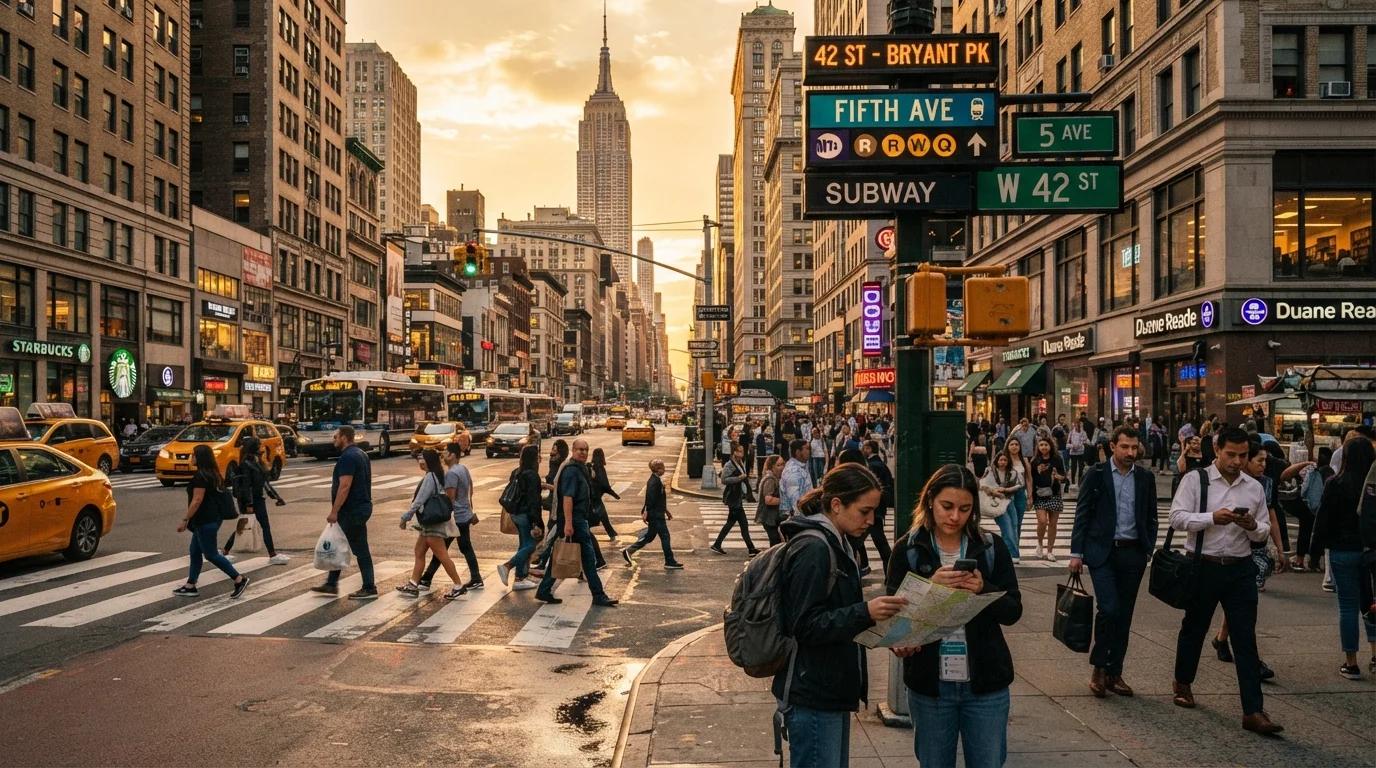
For those navigating an American city for the first time, this guide to orienting yourself can help frame social norms alongside practical logistics.
Myth
When an American says "we should hang out sometime," they're making a real plan.
Fact
This phrase is most often a social pleasantry, not a concrete invitation. It signals goodwill, not a scheduled commitment.
In many cultures, an invitation — even a loose one — carries an implicit obligation to follow through. In mainstream American casual speech, phrases like "we should get together" or "let's do lunch" function more like verbal warm gestures. They communicate that the person likes you and is open to connection, without locking in any actual plan. If someone wants to make a real plan, they'll typically follow up with specifics: a date, a place, a time. The absence of those details is the signal.
Myth
Smiling at strangers or making small talk means someone is personally interested in you.
Fact
In the U.S., smiling at strangers and light conversation with service workers or neighbors is a standard social norm, not a signal of personal interest.
Americans are often socialized from childhood to be pleasant in public spaces — making eye contact, smiling, and exchanging brief pleasantries is considered basic courtesy in many contexts. For visitors from cultures where eye contact with strangers is avoided or where public interaction is more reserved, this can feel significant. It rarely is. A cashier asking "how are you today?" isn't seeking a personal conversation; it's a ritualized social exchange, much like a greeting in any other culture. Context matters: sustained, personal conversation is different from brief pleasantries.
Myth
Americans are shallow or insincere because their friendliness doesn't lead to deep friendships.
Fact
American warmth is genuine — it simply operates at a different social layer than intimacy. Surface friendliness and deep friendship are distinct categories in U.S. culture.
Cross-cultural psychologists sometimes describe this as the difference between sociability and intimacy. Americans tend to score high on sociability — openness, positivity, ease of interaction — but closeness typically requires time, shared experience, and deliberate effort, much as it does anywhere. The misconception arises because the warmth is so visible and immediate that it can feel like a promise of depth. It isn't — but that doesn't make it dishonest. It's a different social grammar, not a lack of sincerity.
Myth
All Americans are friendly in the same way — it's a national characteristic.
Fact
American social norms vary significantly by region, city size, and cultural community. There is no single American style of friendliness.
Generalizing about "Americans" as a uniform social group overlooks enormous internal variation. People in smaller Southern towns often greet strangers with lengthy conversation and genuine hospitality rituals. People in dense Northeastern cities may seem brusque by comparison — but that directness is its own form of respect. Western states carry their own informal, outdoorsy social cultures. Urban and rural norms differ sharply. Immigrant communities within the U.S. add further layers. Anyone trying to understand American friendliness should expect to recalibrate as they move through different parts of the country.
Myth
If an American colleague is warm and chatty at work, they're becoming a close friend.
Fact
Workplace friendliness in the U.S. often stays within professional or semi-professional bounds even when it feels casual and personal.
American workplaces tend to encourage a collegial, informal atmosphere — first names, casual conversation, and social banter are common even between people at different levels of seniority. This can feel like friendship forming. But many Americans draw a distinction between "work friends" and personal friends, and that line isn't always visible from the outside. Sharing weekend plans or laughing together doesn't necessarily mean the relationship will extend beyond the professional context. This isn't coldness — it's a compartmentalization that many Americans navigate naturally without thinking about it explicitly.
What the Research and Real Experiences Tell Us
Sociologists and anthropologists have long studied what sets American social interaction apart. One consistent finding is that Americans tend to have a wide circle of acquaintances and a comparatively smaller inner circle of close friends. This isn't unique to the U.S., but the contrast between surface warmth and that inner boundary is particularly pronounced here.
Frequent relocation plays a role. The U.S. has one of the most geographically mobile populations in the world, and as explored in our piece on why Americans keep moving and what it does to community bonds, this mobility shapes how people build trust and attach meaning to relationships. When you might leave a city in two years, you learn to be warm quickly — and to hold some things lightly.
Regional culture matters enormously too. A New Yorker's clipped but efficient helpfulness and a Texan's effusive hospitality are both genuine expressions of their local culture. Neither is fake, but they follow different scripts. The same regional variation that shows up in holiday traditions runs through everyday social norms as well.
Don't Mistake Cultural Scripts for Personal Rejection
If invitations don't materialize or friendliness doesn't deepen into friendship, it's rarely a personal slight. In most cases, it reflects how American social culture is structured. Interpreting surface warmth as rejection when it doesn't lead to closeness can cause unnecessary frustration and isolation. Adjusting expectations — rather than retreating from social engagement — tends to produce better outcomes for newcomers and visitors alike.
For a broader look at how social trust functions across American communities, the research summarized in our article on social trust in America offers useful context. The data there challenges both overly rosy and overly pessimistic takes on how connected Americans actually are.
Building Real Connections in American Social Culture
None of this means deep friendships are impossible — far from it. It does mean that forming them usually requires a different strategy than in cultures where closeness is offered more readily upfront. Consistency matters: showing up repeatedly in the same context (a neighborhood, a workplace, a community group) tends to be how casual warmth gradually deepens into genuine connection.
Understanding what being a good neighbor looks like in contemporary America is one practical starting point — neighborliness has its own evolving norms that often reflect broader shifts in how Americans relate to one another.
For those coming from cultures with more reserved public behavior, American friendliness can also be instructive in the other direction: it models that warmth doesn't have to wait for formal introduction. That's a genuinely useful social tool, even once you understand its limits.
49%
Americans who say they have few or no close friends
A 2021 Survey Center on American Life report found that nearly half of Americans reported having fewer close friends than they did in earlier periods of their life, suggesting the warmth-closeness gap is widely felt domestically, not just by outsiders.
~11%
Americans who moved in a recent year
U.S. Census Bureau data has consistently shown that roughly one in ten Americans relocates in any given year — a mobility rate that shapes how quickly people build and rebuild social networks.
The bottom line is that American friendliness is real — it just doesn't always mean what outsiders assume it means. Learning to read it accurately makes social life here considerably less confusing and considerably more rewarding.