

Start with a Needs Assessment
Before researching a single product or browsing a single website, take time to define what you actually need. This step sounds obvious, but it's frequently skipped — and skipping it is one of the most reliable ways to end up with a purchase that doesn't fully serve you.
Write down the problem you're solving. Ask: What specific gap or limitation am I addressing? Who will use this, and how often? Are there constraints — space, compatibility, physical requirements — that must be met? This list becomes your filter. When marketing claims start competing for your attention, your documented needs anchor your judgment.
Distinguishing needs from wants is equally important. A want isn't wrong to pursue, but it should be a conscious choice rather than something slipped in by a persuasive product description. Understanding how retail environments are designed to expand what you think you need can help you keep that distinction clear.
Write your must-have criteria on paper and keep it visible while you research. Physical anchors are harder to rationalize away than mental ones when compelling options appear.
Decision-making research consistently shows that externalizing criteria reduces the influence of in-the-moment emotional cues and helps people stay focused on their original intent.
Before finalizing any big purchase, wait at least 48 hours after settling on your choice. This single habit interrupts most impulse decisions while rarely affecting genuinely considered ones.
Behavioral economists refer to this as a 'cooling-off period.' It separates excitement-driven urgency from deliberate decision-making and is endorsed by consumer protection agencies as a general best practice.
Setting a Realistic Budget
For a large purchase, the sticker price is rarely the full cost. A realistic budget accounts for delivery, installation, accessories, maintenance, consumables, and any service contracts. For items like appliances, vehicles, or electronics, the total cost of ownership over two to three years can differ substantially from the day-one price.
Establish your ceiling before you start comparing options — not after. Research consistently shows that anchoring to a price point seen during shopping makes it harder to hold to an original limit. If financing is involved, understand the annual percentage rate (APR) and total interest you'd pay over the loan term, not just the monthly payment. Our budgeting basics hub offers practical frameworks for planning large expenses within your broader spending plan.
74%
Shoppers who exceed their intended budget
A survey by the National Retail Federation found nearly three-quarters of consumers reported spending more than planned on a major purchase at some point.
2–3×
Total cost of ownership vs. purchase price
For appliances and electronics, consumer research groups estimate that operational and maintenance costs over a product's lifespan can be two to three times the original price.
If this purchase is part of a larger financial goal — saving for a home, building an emergency fund — consider how it fits within that picture. The Saving & Goals hub covers strategies for keeping discretionary spending aligned with longer-term priorities.
Evaluating Sources and Information
Not all research is equal. Product pages and sponsored content are designed to sell; independent editorial testing and government consumer resources are designed to inform. Seek out sources with transparent methodologies, no financial stake in your purchase decision, and a track record of accountability.
Look for reviews that describe real-world use over time — not just first-impression impressions. Pay attention to what reviewers say about reliability, customer service experience, and how issues were handled, not only initial performance. Consumer advocacy organizations, university extension resources, and government consumer protection agencies are among the more reliable categories of sources.
“The most powerful thing a consumer can do is slow down. Retailers and product pages are optimized for speed and urgency — your best tool is deliberation.”
— Edgar Dworsky, Consumer advocate and founder of ConsumerWorld.org
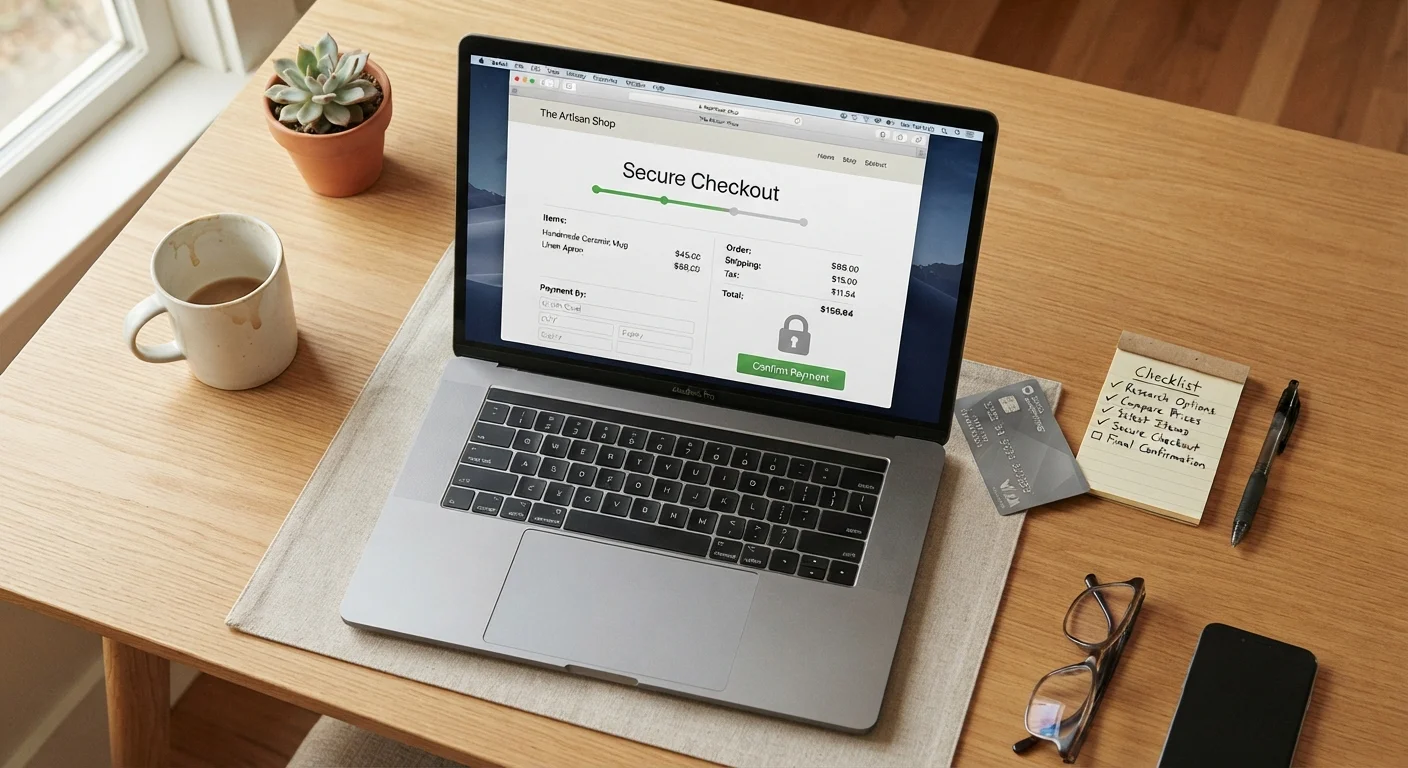
When shopping online, a separate layer of verification applies. Confirm seller credibility, check that payment pages are secure, and review return terms before entering payment information. Our pre-checkout verification checklist walks through each of these steps in a practical, actionable format. Unfamiliar terms in product listings or contracts? The Consumer's Glossary translates common fine-print language into plain English.
Negotiating and Timing Your Purchase
Many consumers assume that listed prices on large purchases are fixed. For categories like furniture, appliances, electronics, and vehicles, that assumption often isn't accurate. Prices on floor models, end-of-season inventory, or items being discontinued are frequently negotiable, particularly in-store where staff have more discretion.
Timing also matters. Retailers frequently mark down specific categories at predictable points in the year — when new model years arrive, when seasonal lines turn over, or at the end of a sales quarter. This isn't a guarantee, but awareness of these patterns gives you a useful reference point.
Ask for the 'Out-the-Door' Total
When negotiating any large purchase, always ask the seller to quote you a full out-the-door price that includes all fees, taxes, delivery, and add-ons. Comparing this number — not individual line items — across sellers gives you a genuinely apples-to-apples view of your options.
When negotiating, focus on the total transaction rather than any single variable. A lower sticker price offset by a costly add-on warranty or higher delivery fee may not represent a genuine saving. Ask whether accessories, installation, or extended service plans can be included, and get any commitments in writing before completing the purchase.
Post-Sale Protection: Warranties, Returns, and Recourse
Your rights as a consumer don't end at checkout. Understanding the protections available — and their limitations — before you buy allows you to act quickly and confidently if something goes wrong.
Return policies vary widely: windows can range from a few days to several months, restocking fees may apply, and some items are designated final sale without clear labeling at point of purchase. Read the return policy in full before completing any large transaction. Our guide to reading return policies explains exactly what to look for, including clauses that often catch buyers off guard.
Extended Warranties: Read Before You Sign
Extended service plans often exclude the failures most likely to occur — such as wear-and-tear or software issues — while covering scenarios that rarely happen. Always read the exclusions section, not just the coverage highlights, before purchasing any service contract.
Manufacturer warranties and extended service contracts are also worth examining carefully. A manufacturer's warranty is typically included at no cost and covers defects in materials or workmanship for a defined period. Extended service plans are sold separately and vary considerably in what they cover and exclude. Review exclusions, claim procedures, and who administers the plan before deciding whether one adds genuine value for your situation.
If a problem arises post-purchase, document everything: keep your receipt, packaging, and any written communications. State consumer protection laws and federal consumer statutes provide recourse in cases of fraud, misrepresentation, or goods that fail to perform as described. Your state attorney general's office and the Federal Trade Commission (FTC) are good starting points for understanding your options.
This article is for general informational and educational purposes only and does not constitute financial, legal, or professional advice. Readers should consult qualified professionals for guidance specific to their personal circumstances.