From passport validity to travel insurance and currency, here's a step-by-step checklist to confirm you've covered every base before departure.
Key Takeaways
Your passport must typically be valid for at least six months beyond your travel dates — check this early.
Many countries require visas for US citizens; requirements vary widely and should be verified with official sources.
Notify your bank before departure to avoid having cards blocked for overseas transactions.
Travel insurance is optional but can protect against significant financial loss from cancellations or medical emergencies.
Register your trip with the US State Department's STEP program for safety alerts and emergency assistance abroad.
Packing essentials — adapters, medications, and key documents — should be double-checked at least 48 hours before departure.
Why a Checklist Matters More for International Travel
Domestic trips are forgiving. Miss something? You can often find a replacement at a nearby store or call someone to ship it. International travel doesn't offer that safety net. A forgotten visa authorization, an expired passport, or a blocked debit card can ground your trip entirely — sometimes without a refund in sight.
This checklist is built for everyday American adults heading abroad, whether it's your first time crossing an ocean or your fifth. If you're still in the early stages of planning, our complete introduction to travel planning from scratch is a great starting point. Once you've got the basics locked in, come back here to run through every pre-departure detail systematically.
Work through these groups roughly in order — documents and entry requirements first, logistics second, and day-of preparation last.
Documents & Entry Requirements
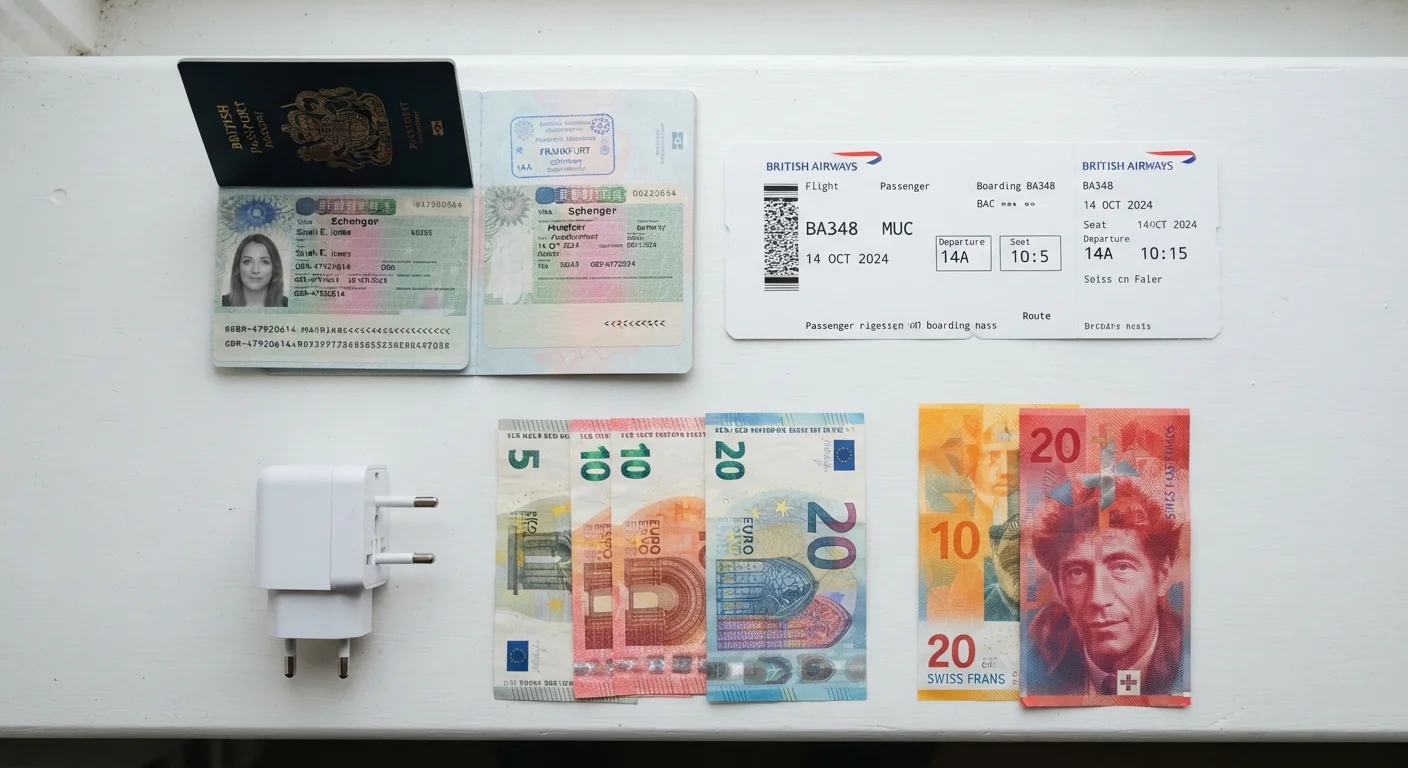
Check your passport expiration date and confirm it remains valid for at least six months beyond your last travel date — many countries enforce this rule strictly.Must
Verify whether your destination requires a visa for US citizens by consulting the official US State Department website or the destination country's embassy site.Must
Apply for or renew any required visas well in advance — processing times can range from days to several weeks depending on the country.Must
Make two photocopies of your passport ID page: leave one with a trusted contact at home and pack one separately from your original.Should
Save a digital photo of your passport, visa, and travel insurance card to a secure cloud folder accessible from your phone.Should
Health & Vaccinations
Check the CDC and State Department travel health pages for your destination to identify any recommended or required vaccinations well before departure.Must
Schedule a travel health consultation with your doctor or a travel medicine clinic at least 4–6 weeks before departure if vaccinations are needed.Must
Pack a sufficient supply of any prescription medications for the full trip duration, plus a few extra days' worth in case of delays.Must
Carry a written list of your medications (including generic names) in case you need medical care abroad or pass through customs.Should
Research whether your destination has any specific health advisories, such as food safety concerns or endemic diseases like malaria or dengue.Should
Money & Finances
Notify your bank and credit card providers of your travel dates and destination countries before you leave to prevent fraud-related card blocks.Must
Carry a small amount of local currency for your destination for immediate needs upon arrival, such as transportation or tips.Should
Identify the foreign transaction fee structure on your cards and consider whether a no-fee travel card makes sense for your trip.Should
Research how ATMs work at your destination — availability, typical fees, and whether they dispense local or US currency.Nice to have
Safety & Emergency Prep
Enroll in the US State Department's Smart Traveler Enrollment Program (STEP) at travel.state.gov so you receive country-specific safety alerts and can be contacted in an emergency.Must
Save the address and phone number of the nearest US embassy or consulate in your destination country to your phone and a printed backup.Must
Review your destination's current travel advisory level on the State Department website and understand what it means for your plans.Should
Share your full itinerary — including flight numbers, accommodation addresses, and contact details — with a trusted person at home.Should
Logistics & Connectivity
Confirm your flight bookings, accommodation reservations, and any pre-booked tours or transfers at least 48 hours before departure.Must
Set up an international phone plan, purchase a local SIM card at your destination, or identify reliable Wi-Fi options so you can stay connected.Should
Pack the correct power adapter for your destination's outlet type and voltage — most countries outside North America use different standards.Should
Download offline maps, translation apps, and any required airline or transit apps before you leave to reduce reliance on live internet access.Nice to have
Tools to Have Ready Before You Start
You don't need anything fancy to work through this checklist — but having the right resources open and ready will make the process significantly faster and more reliable.
Required
US State Department Travel Website (travel.state.gov)
Look up passport and visa requirements, travel advisories, and enroll in the STEP safety program.
Required
CDC Travelers' Health Portal (wwwnc.cdc.gov/travel)
Find destination-specific health notices, vaccination recommendations, and disease outbreak alerts.
Required
Your Bank or Credit Card's Mobile App
Set up travel notifications and check foreign transaction fees before departure.
Optional
Secure Cloud Storage (e.g., any password-protected service you already use)
Store digital copies of your passport, visa, insurance card, and itinerary for access anywhere.
Optional
Offline Maps App
Download destination maps before departure so you can navigate without an active data connection.
Don't Rely Solely on Third-Party Travel Sites
Visa rules, entry requirements, and health advisories can change quickly. Always verify requirements directly with the official US State Department website and your destination country's embassy — not just a travel blog or booking platform. Outdated information is one of the most common reasons travelers face unexpected problems at the border.
Traveling with children adds its own layer of preparation. Minors traveling internationally require their own passports and, in some cases, notarized parental consent letters. See our guide on international travel with kids for the full breakdown.
Travel insurance is not required, but it can cover significant out-of-pocket costs if a flight is cancelled, a medical emergency occurs abroad, or you need emergency evacuation. Policies vary widely in what they cover and exclude — read the policy terms carefully before purchasing. Your existing health insurance may not cover you outside the US, so it's worth checking your current coverage before making any decisions. This is general information; consult a licensed insurance professional for guidance tailored to your situation.
Travel & Destinations Editorial Team is the collective byline for our editorial team and contributor network. Articles published under this byline or an editorial pen name are researched, written, and reviewed according to our editorial standards for clarity, consistency, and independence before publication.
The content on this site is for informational purposes only and is not a substitute for professional advice. Always consult a qualified professional for guidance specific to your situation.