
Orient Yourself Before You Arrive
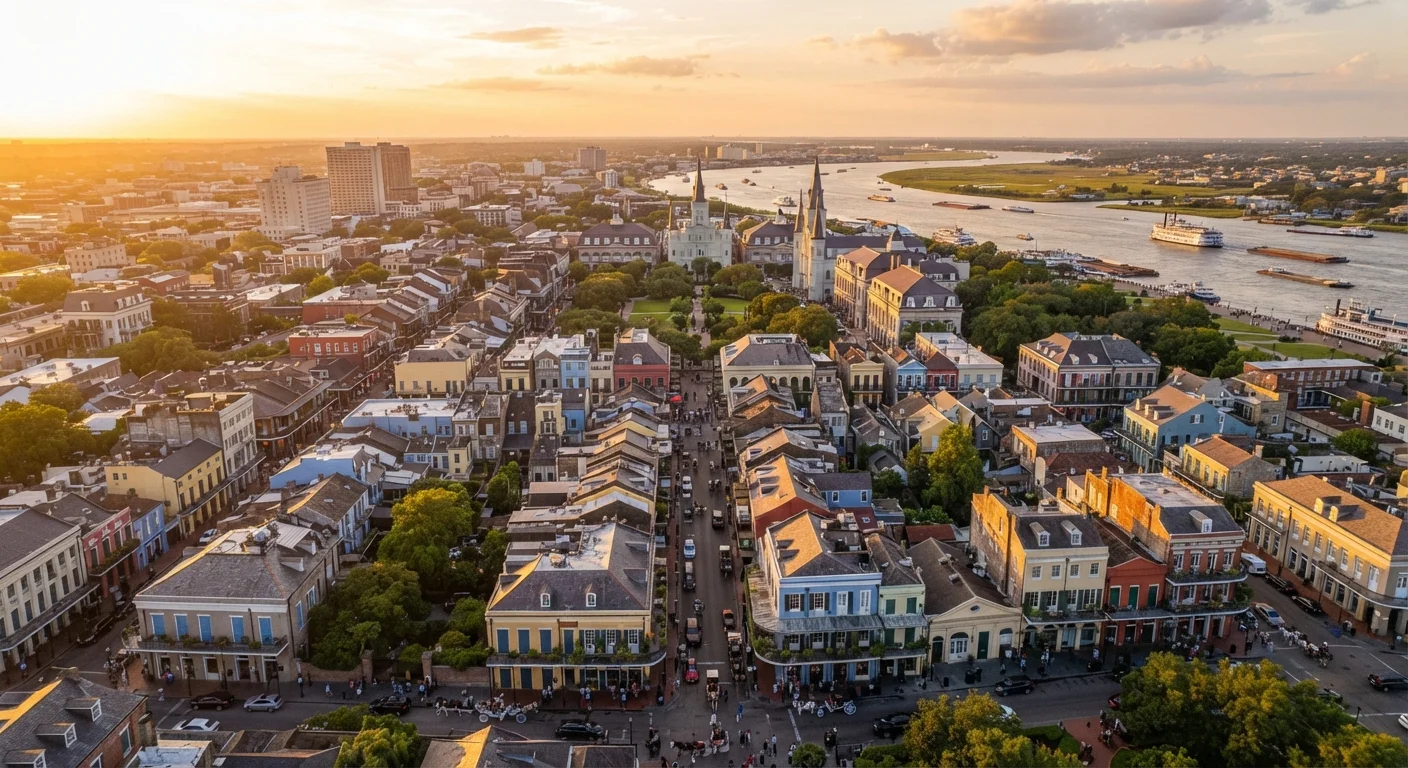
New Orleans is one of America's most geographically compact yet culturally dense cities, and understanding its rough layout before landing saves real time. The city sits in a bend of the Mississippi River, which is why locals use "toward the river" and "toward the lake" instead of cardinal directions. The French Quarter anchors the historic core, but the city fans outward through distinct neighborhoods — each with its own personality.
If this is your first visit to an unfamiliar American city, knowing how to read a new city's layout before you land will make navigation far less stressful once you're there. For New Orleans specifically, download an offline map and note which streetcar lines serve your hotel. The St. Charles line is a genuine workhorse for getting Uptown without a car.
A Note on Safety and Entry Considerations
Like any major American city, New Orleans has neighborhoods that vary significantly in safety, and conditions can change. Before you travel, check current guidance from official city and state tourism sources, and review any relevant advisories. Entry requirements and any event-related closures or permits are subject to change — always verify details directly with official sources before your trip.
Build an Itinerary That Has Room to Breathe
Forty-eight to seventy-two hours sounds like enough time, but New Orleans has a way of slowing you down — and that's the point. Jamming every museum, cemetery tour, and restaurant recommendation into a spreadsheet leaves you exhausted and misses the city's real rhythm. Aim for two or three anchored experiences per day and leave the rest open.
Structuring a flexible daily itinerary is a skill worth applying here: anchor your morning to something specific (a neighborhood walk, a museum), leave afternoon hours loose, and let evenings unfold around wherever the music leads you. A second-line parade could appear on a random Sunday afternoon and completely reframe your day — in the best way.
Prioritize neighborhoods over landmarks when planning your days.
Landmarks are easy to find but neighborhoods reveal the city's living culture. Spending time in Tremé or the Bywater gives you context that no single museum can provide. It also naturally leads you to local restaurants, music venues, and shops.
Follow the music rather than scheduling it rigidly.
New Orleans jazz and brass band culture is participatory and spontaneous. Over-planning your live music experience — booking ticketed shows every night — can actually work against you. The city's informal music scene is just as rich.
Use the streetcar and your feet rather than ride-shares as your default.
The historic core of New Orleans is compact and best understood at walking pace. Ride-shares skip over the details that make the city legible. The streetcar lines are affordable and run through some of the city's most scenic routes.
Mix free and paid experiences deliberately across your visit.
New Orleans offers an unusually wide range of no-cost pleasures — street music, public parks, free museum days, neighborhood festivals — which helps balance a trip that could otherwise lean expensive at restaurants and paid tours.
Check the city's events calendar before finalizing your dates.
New Orleans hosts major festivals, Mardi Gras season, Jazz Fest, and dozens of neighborhood events throughout the year. These can make a visit extraordinary — or make hotels extremely expensive and streets very crowded. Knowing in advance lets you plan accordingly.
Eat Thoughtfully, Not Just Wherever You Land
New Orleans has one of the most distinctive food cultures of any American city, blending Creole, Cajun, West African, French, and Spanish influences into something genuinely unlike anywhere else. That also means tourist-trap restaurants cluster heavily around Bourbon Street. Moving even a few blocks in any direction — or crossing into the Bywater, Tremé, or Mid-City — tends to yield more interesting, better-priced meals.
For a celebratory dinner or a restaurant that requires reservations, planning your high-stakes meal in advance is worth the effort. Many of the city's most sought-after tables book weeks out, especially on weekends. The rest of your meals can be wonderfully spontaneous — a paper-bag lunch from a neighborhood po'boy spot, beignets at the market, or a bowl of red beans and rice on a Monday (a local tradition with deep historical roots).
Go Beyond the Quarter
The French Quarter earns its reputation — the ironwork balconies, the brass bands spilling onto Royal Street, the layered history on every block. But treating it as the whole city would mean missing what makes New Orleans genuinely singular. Spend at least a half-day in the Tremé, widely considered one of the oldest African American neighborhoods in the country and the birthplace of jazz. Walk Magazine Street in the Garden District for locally owned shops and architecture that rivals the Quarter without the crowds. Cross into the Bywater for murals, a thriving arts scene, and quieter cafes.
New Orleans also rewards travelers who appreciate depth over breadth. Compared to high-velocity urban destinations, it's a city that values lingering — which is why it pairs well with a mindset more like cities built for slow travel than a checklist sprint.
72+
Distinct neighborhoods within city limits
New Orleans officially recognizes more than 72 neighborhoods, each with its own character, architecture, and local culture worth exploring.
~10 million
Annual visitors to New Orleans
According to the New Orleans & Company tourism authority, the city attracts roughly 10 million visitors in a typical year, making strategic timing and advance planning worthwhile.
Whatever neighborhoods you explore, keep practical realities in mind: summer heat and humidity are serious, sidewalks in older areas can be uneven, and some blocks transition quickly in character. Check current travel advisories and use common sense about where and when you're walking, particularly at night.
“New Orleans is the only place I know of where you ask someone what they want to be when they grow up, and they might answer, 'A musician,' 'A chef,' or 'A Mardi Gras queen' — and all of those are serious answers.”
— Lolis Eric Elie, New Orleans-born author and food writer