
Why Slow Travel Works Best in Smaller Cities
Americans tend to default to the usual suspects — New York, Chicago, Los Angeles — when planning a city trip. Those are extraordinary places, no question. But the pressure to see everything in a short window can leave you feeling like you speed-ran someone else's highlight reel. Smaller, lesser-known cities offer something different: the space to actually settle in.
Slow travel isn't just a pace — it's a philosophy. It means choosing depth over breadth, eating at the same neighborhood diner twice, wandering without an agenda, and actually talking to people who live there. And it turns out, mid-sized American cities are purpose-built for exactly that kind of trip. Their walkable cores, lower crowds, and distinct local identities make them surprisingly compelling.
If you're new to navigating unfamiliar American cities, our guide to orienting yourself in any US city is a solid starting point. For everyone else, here are seven American cities that genuinely reward slowing down.
Savannah, Georgia
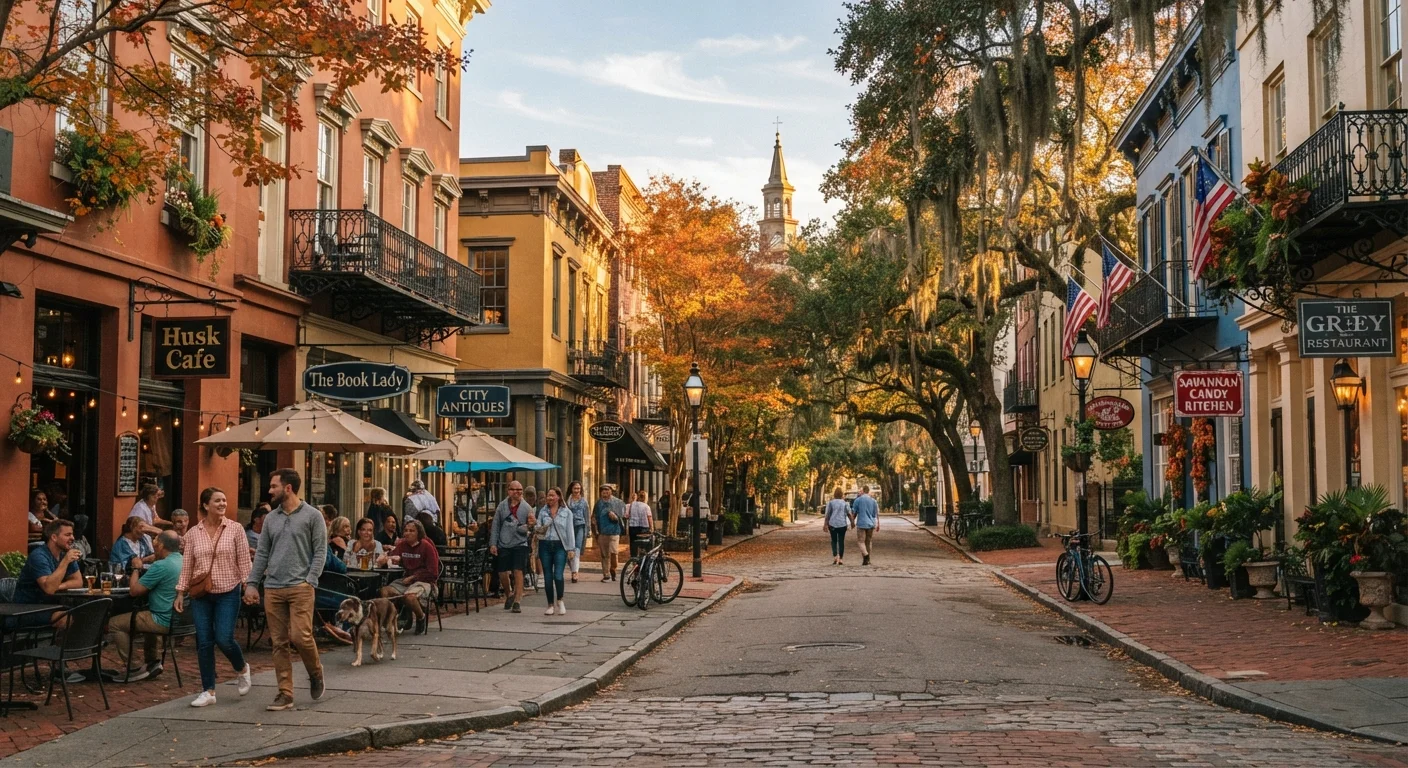
Few American cities are as immediately lovable as Savannah. Its 22 historic squares — shaded by cathedral live oaks dripping with Spanish moss — were designed for wandering, not rushing. The city's walkable downtown grid is compact enough to cover on foot, and its architecture, a preserved mix of antebellum townhouses and Federal-style row homes, gives it a visual consistency that feels almost European.
Beyond the squares, Savannah has a genuinely vibrant arts scene anchored by the Savannah College of Art and Design, whose students and galleries animate the city year-round. The food scene punches well above the city's size, with strong offerings in lowcountry cuisine. Savannah rewards multiple days, not one frantic afternoon.
Savannah's 22 moss-draped historic squares were literally designed for wandering.
Taos, New Mexico
Taos sits at roughly 6,900 feet elevation in northern New Mexico, where the high desert meets the Sangre de Cristo Mountains — and it has been drawing artists to that landscape for well over a century. The historic Taos Pueblo, a UNESCO World Heritage Site and one of the oldest continuously inhabited communities in North America, sits just north of town and offers context no guidebook can fully convey.
The small plaza district is walkable and lined with galleries, craft studios, and restaurants leaning on New Mexican and Indigenous culinary traditions. Taos doesn't have much nightlife or luxury infrastructure, which is precisely the point — it's a place that rewards attention paid to the land and the culture, not entertainment schedules.
Taos has drawn artists to its high-desert light for over a century — and for good reason.
Duluth, Minnesota
Perched at the western tip of Lake Superior, Duluth is a working port city with genuine grit and unexpected charm. Its hillside neighborhoods climb steeply from the waterfront, offering sweeping lake views that feel more Great Lakes than Midwest postcard. The Lakewalk, a paved trail running along the Superior shoreline, is a perfect slow-travel anchor — especially in summer and early fall.
Duluth also has a surprising independent food and brewery scene, a strong live-music culture, and Canal Park's famous lift bridge, which still raises to let massive ore freighters through. History, outdoor access, and an unpretentious local scene make it an underdog worth the trip.
Duluth's Lake Superior waterfront and hillside neighborhoods offer a genuinely distinctive Great Lakes experience.
Asheville, North Carolina
Asheville occupies a narrow but devoted niche in American travel — it's beloved by those who've been and perpetually overlooked by those who haven't. Tucked in the Blue Ridge Mountains, the city combines an acclaimed food scene with one of the highest concentrations of Art Deco architecture in the Southeast, a legacy of a 1920s boom that left behind a remarkable downtown streetscape.
The River Arts District, where working studios occupy old industrial buildings, and the Haywood Road corridor in West Asheville offer hours of browsing without the crowds of better-known arts destinations. Asheville rewards walkers willing to explore beyond the central strip.
Asheville blends Blue Ridge Mountain scenery with an Art Deco downtown and a buzzing arts district.
Galveston, Texas
Galveston often gets lumped in as a beach day-trip from Houston, which severely undersells it. The island city has a dense, walkable historic district — the Strand — filled with Victorian commercial architecture dating to its 19th-century heyday as one of the busiest ports in the country. Its history is layered and at times sobering; the 1900 Galveston hurricane remains one of the deadliest natural disasters in US history, and the city's resilience since then is woven into its identity.
Seafood is the obvious draw for dining, and the city's independent restaurant scene has expanded considerably in recent years. Slow travelers who stay a few nights will find a city that rewards curiosity far beyond the seawall.
Galveston's Victorian Strand district and complex history make it far more than a beach day-trip.
Burlington, Vermont
Vermont's largest city — with a population under 50,000 — sits on a hillside above Lake Champlain with the Adirondacks of New York visible on the opposite shore. Church Street Marketplace, a pedestrian mall in the heart of downtown, is genuinely lively without feeling manufactured, anchored by independent shops, cafes, and street performers rather than chain retail.
Burlington is a university town with an outsized food scene, a farmers market that runs through late fall, and easy access to the lake for kayaking or ferry rides to New York. It's also a natural base for exploring wider Vermont, though the city itself holds up as a destination on its own.
Burlington's Church Street pedestrian core and Lake Champlain waterfront reward leisurely exploration.
Tucson, Arizona
Tucson often lives in Phoenix's shadow, which is a gift for travelers willing to look past that dynamic. The city is surrounded by five mountain ranges and sits in the Sonoran Desert, giving it a landscape drama that rewards time spent simply looking around. Saguaro National Park wraps around the city's edges — east and west units — and both sections are accessible for half-day hikes without elaborate logistics.
Downtown Tucson and the 4th Avenue corridor have genuine character: murals, independent bookstores, Mexican and Sonoran cuisine that reflects the city's deep cross-border cultural ties. Tucson is also one of the more affordable mid-sized cities in the American West, which extends how far a travel budget goes.
Tucson's desert landscape, Sonoran food culture, and affordability make it a standout Western slow-travel destination.
Making the Most of Your Slow Travel Itinerary
The cities above share a few things in common: walkable or bikeable cores, thriving independent restaurant scenes worth exploring (check out our dining out resources for tips on finding great local meals), and enough cultural texture to fill several days without touching a single chain hotel or tourist trap.
Build In at Least Three Nights
One of the most common slow-travel mistakes is giving a small city only one or two nights — just enough time to feel oriented before you have to leave. Aim for at least three nights in any of these destinations. That third day is almost always when the real rhythm of a place reveals itself, and when you start making discoveries that weren't in any itinerary.
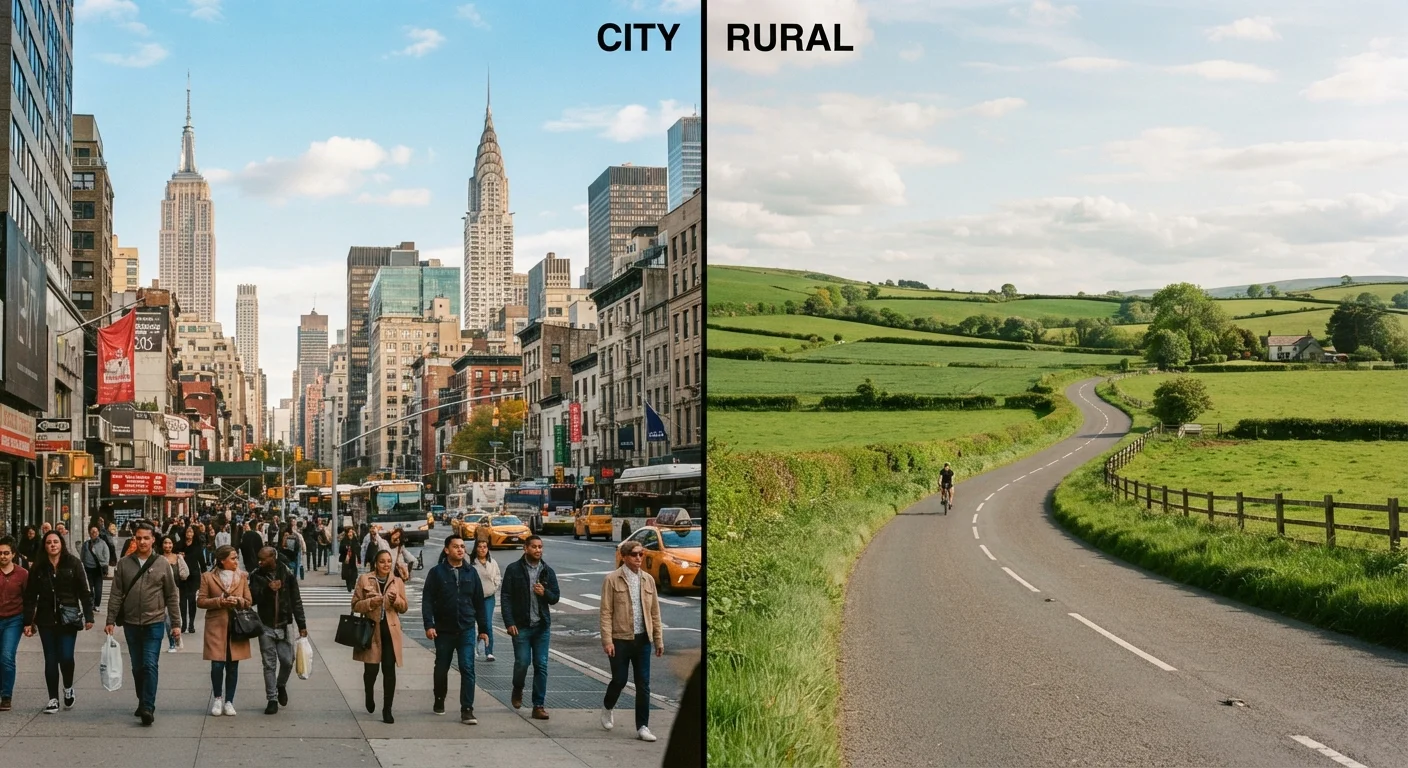
If you've been weighing a domestic trip against an international one, it's worth knowing that slow travel works beautifully either way — but the logistics of a domestic city trip are usually far simpler. For a balanced look at those trade-offs, our piece on urban vs. rural American travel is a useful read. And if you're curious about what you might be missing abroad, regions Americans overlook for international travel might surprise you.
Whatever you choose, the core principle remains: give a place more time than you think it needs. That's when the real discoveries happen.