
Two Very Different Trip Structures
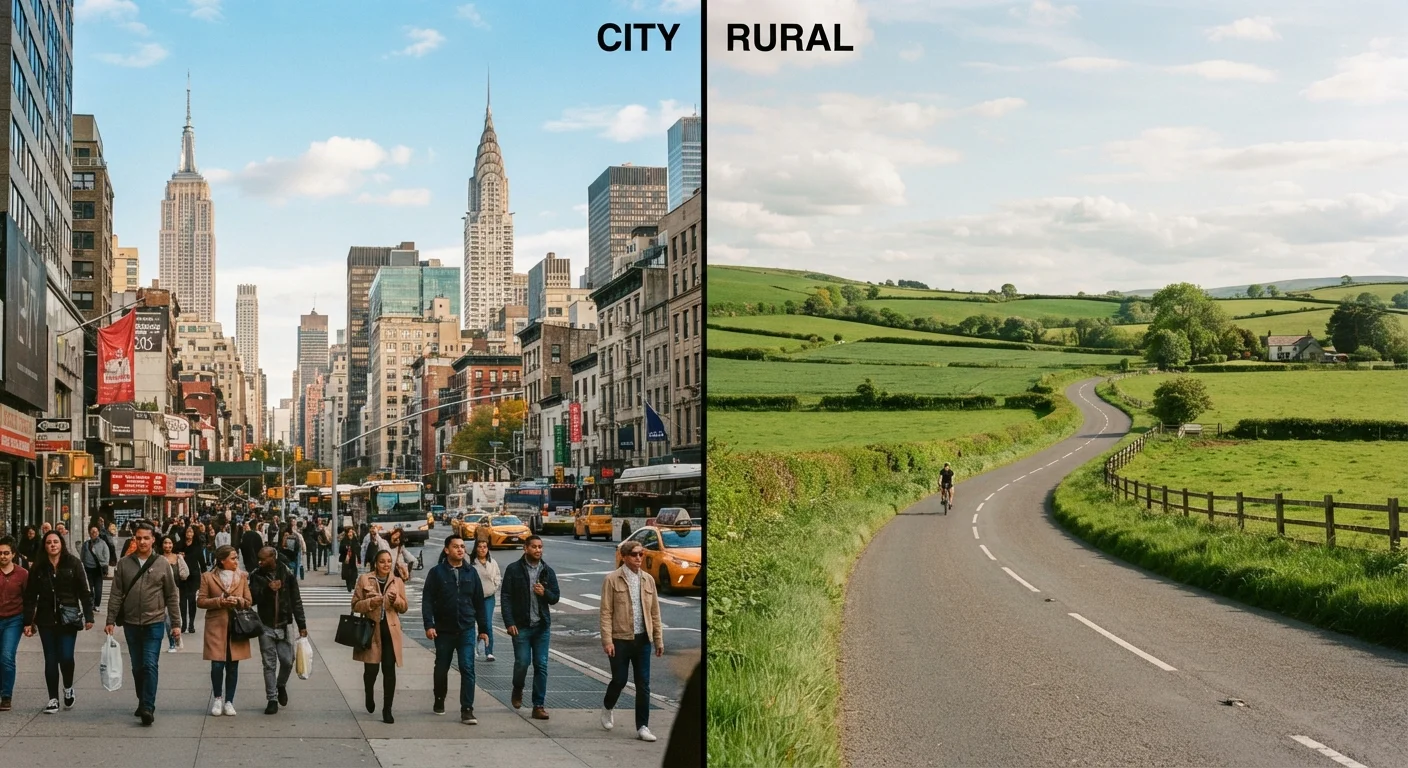
Choosing between a city destination and a rural one isn't just a matter of scenery — it changes almost everything about how a trip works. Urban travel is typically infrastructure-dense: hotels, restaurants, museums, and transit are abundant and competitive. Rural travel inverts that dynamic almost entirely, where convenience gives way to authenticity, and the fewer options you have, the more intentional each one feels.
Understanding this structural difference upfront helps you plan smarter. Check out our trip planning basics hub for guidance on building logistics around any destination type. And if you're weighing whether to stay stateside or head abroad, our comparison of short-haul vs. long-haul international trips can help frame that decision too.
High density of attractions and experiences
Cities pack museums, restaurants, entertainment, and cultural institutions into walkable or easily transited areas, letting you accomplish more in less time.
Strong public transportation options
Many major US cities allow car-free travel, reducing the cost and stress of renting or driving a vehicle, especially in compact downtown areas.
Easy access to diverse dining
Urban food scenes span price ranges and cuisines — a meaningful advantage for travelers who prioritize eating well without locking in reservations weeks ahead.
Flexible, last-minute planning possible
With abundant accommodation and activity options, cities tend to reward spontaneous decisions more than rural destinations where capacity is limited.
Rural travel offers genuine quiet and space
Away from city noise, light pollution, and crowds, rural destinations provide restorative environments that many travelers find difficult to access elsewhere.
Lower daily costs in rural settings
Accommodation, meals, and activities in rural America often cost significantly less than urban equivalents, stretching a travel budget further per day.
The Real Costs: Urban vs. Rural
Cities tend to be expensive — not just for lodging, but for the cumulative cost of meals, attraction tickets, transportation, and parking. A weekend in New York, Chicago, or San Francisco can run two to three times more than a similar-length trip to a rural destination, even accounting for fuel costs if you're driving to the countryside.
Rural areas often offer dramatically lower accommodation prices — think roadside inns, vacation rentals with full kitchens, or campgrounds — but hidden costs like car rental, long drives between points of interest, or limited dining options that push you toward pricier sit-down meals can close the gap. Seasonal timing also affects price differently in each setting: urban hotels spike during conventions and holidays, while rural spots can surge during peak foliage or hunting seasons.
~$300+
Average nightly hotel cost in major US cities
According to data from the American Hotel & Lodging Association, average daily rates in top US urban markets regularly exceed $250–$300, particularly during peak travel periods.
45%
Rural US counties with no public transit service
The US Department of Transportation has noted that nearly half of rural counties in America lack any fixed-route public transportation, making personal vehicles essential for rural travel.
Getting Around: Transit vs. Your Own Wheels
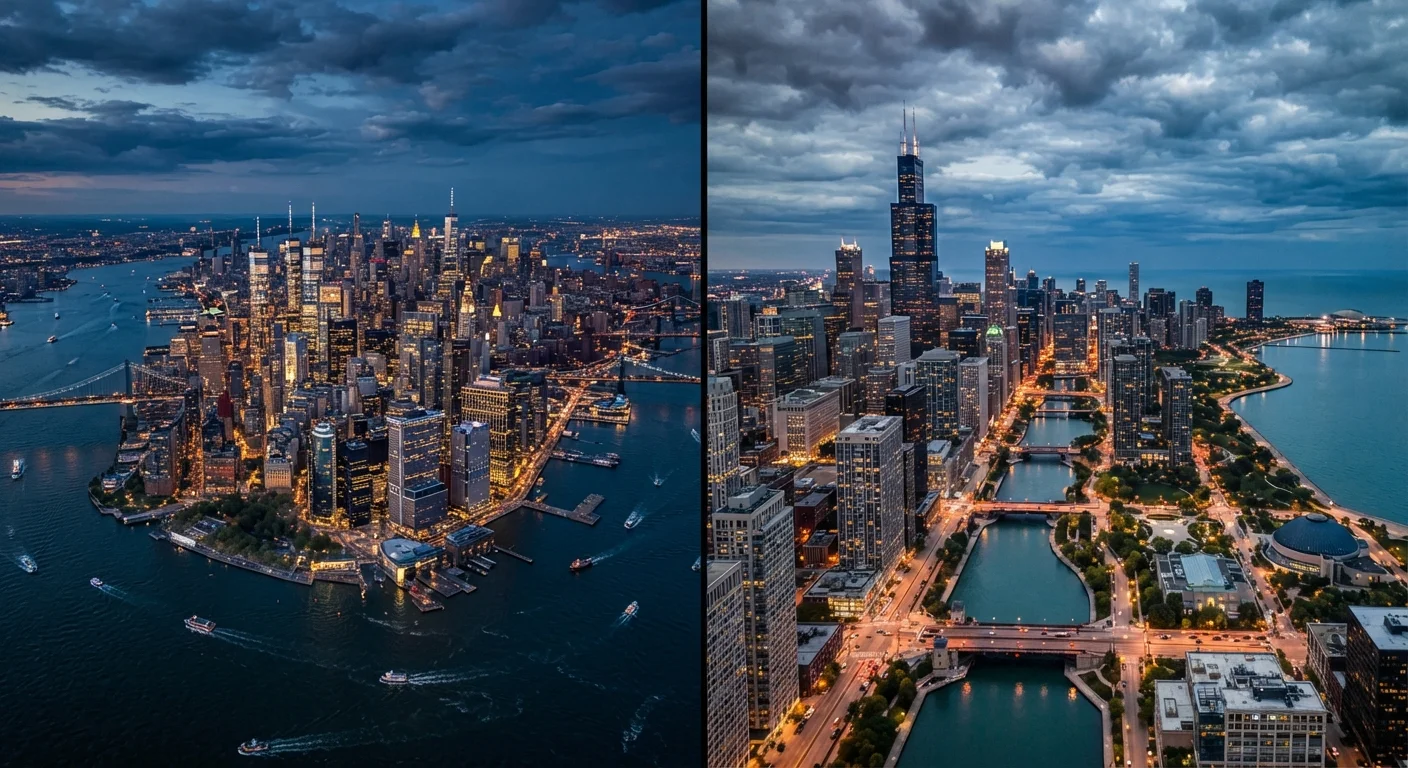
Transportation is where the urban-rural divide is most sharply felt. Major American cities increasingly offer viable public transit — subways, buses, bike shares, and ride-hailing that can make a car-free trip genuinely practical. Compare how two major cities handle this in our look at New York City vs. Chicago.
Rural travel in America almost universally requires a personal vehicle or rental car. National parks, farmland regions, and small-town clusters are rarely served by meaningful public transit. That changes not just logistics but spontaneity — in a city, you can pivot plans on a whim; in the countryside, a detour might mean an extra hour of driving. If car-free or low-car travel matters to you, that's a strong argument for urban destinations.
Urban trips carry higher baseline costs
Lodging, dining, and attractions in major American cities can be substantially more expensive than in rural areas, particularly in gateway cities like New York or San Francisco.
Cities can feel overwhelming and exhausting
Noise, crowds, and the pressure to maximize a packed urban itinerary can lead to travel fatigue, especially on shorter trips where downtime feels like waste.
Rural travel requires a reliable vehicle
Most rural American destinations have no meaningful public transit, meaning a rental car is often non-negotiable — adding cost, planning complexity, and driving time.
Limited dining and lodging options rurally
In smaller towns and countryside areas, restaurants may close early, accommodation may book out quickly in peak season, and last-minute flexibility is often limited.
Urban parking is costly and stressful
Driving to or within a city often means paying for parking garages, navigating one-way streets, or dealing with limited residential parking in dense neighborhoods.
Rural trips can feel isolating without planning
Without advance research into local events, hiking conditions, or hours of operation, rural destinations can feel sparse and disappointing rather than peaceful.
What Each Setting Does Better
Urban destinations excel at density of experience. Within a few walkable blocks you might find world-class art, a dozen restaurant cuisines, live music, and historic architecture. For travelers with limited time who want variety, cities deliver efficiently. Lesser-known US cities can offer that same cultural richness with far smaller crowds and lower prices.
Rural destinations, meanwhile, excel at depth. Spending three days in a single river valley, small farming community, or forested region lets a place reveal itself gradually — something a one-night urban stopover rarely allows. If you're drawn to landscapes, exploring wild America through its rural regions offers experiences cities simply can't replicate. For a structured look at one of America's most iconic rural travel networks, see our guide to what to expect at each type of national park.
The 'Hybrid Trip' Worth Considering
Many US regions make it easy to experience both urban and rural settings in a single trip — flying into a major city and driving out to surrounding countryside within one to two hours. The Pacific Northwest, the Southeast, and the Mountain West all offer strong examples of this urban-to-rural gradient. Planning around that gradient, rather than forcing a choice, often produces the most memorable trips.
Mixing Both in a Single Trip
One underused strategy is building a trip that deliberately combines urban and rural elements. Fly into a city, spend two days using it as a base for museums and restaurants, then rent a car and drive an hour or two into a surrounding rural region for a completely different experience. The contrast often makes both halves more vivid.
This hybrid approach also helps manage some of the biggest drawbacks of each type. Cities can feel relentless; a rural break mid-trip provides breathing room. Rural destinations can feel isolating; bookending them with a city gives structure. Whether you're traveling solo or in a group shapes how this plays out — group travel and solo travel demand different planning approaches, and that's especially true when your itinerary spans two very different environments.