
Scale, Layout, and Getting Around
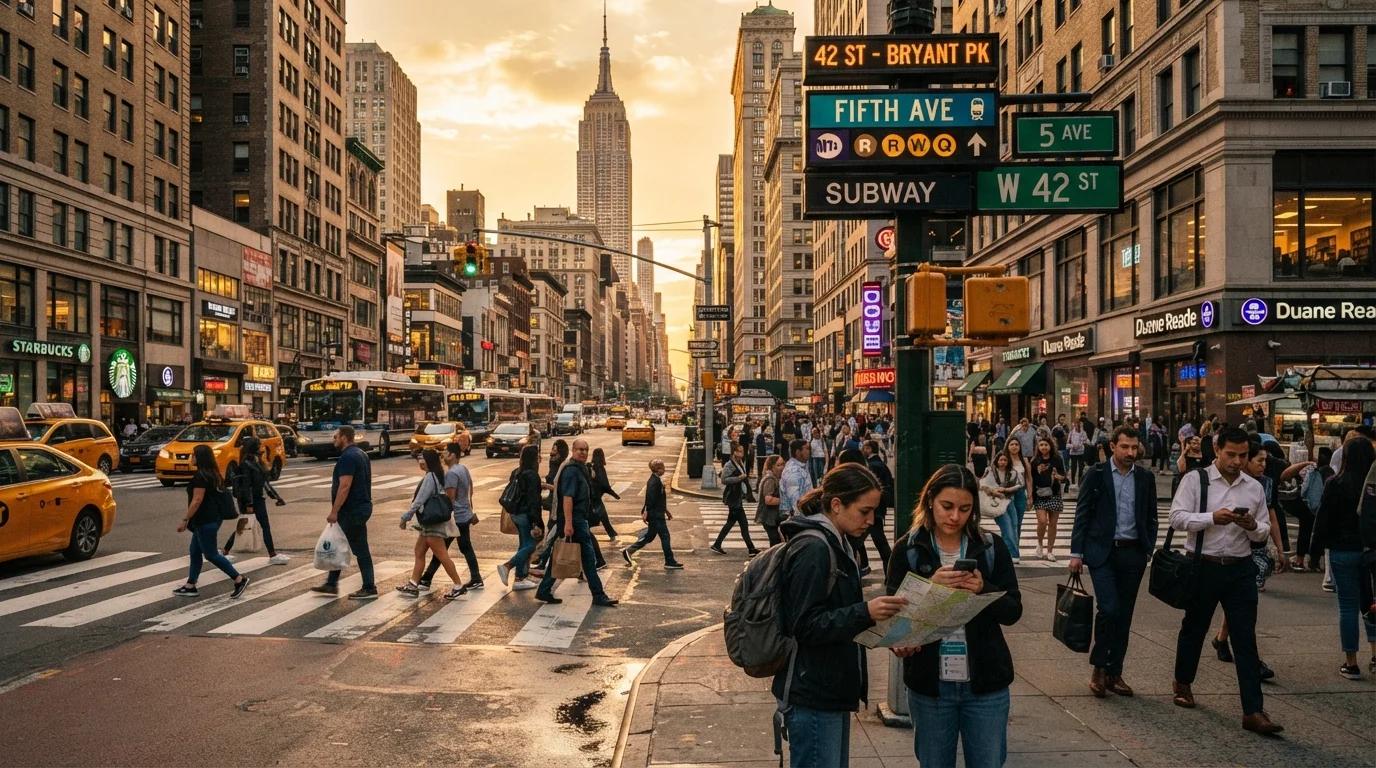
The most immediate difference between these two cities is how they feel to move through. New York City spreads across five boroughs and more than 300 square miles, with a subway system that runs 24 hours a day but can be genuinely confusing for newcomers — especially navigating express vs. local trains and service changes on weekends. If you're planning your first visit to an unfamiliar US city, New York's transit system rewards patience and some advance research.
Chicago, by contrast, is famously easy to read. The city's near-perfect street grid — anchored by the lakefront to the east — means compass directions actually work. The 'L' train system is straightforward, the Loop is a natural hub, and many top attractions sit within walking distance of one another. Most visitors find their footing in Chicago within a day or two. That said, neighborhoods further from downtown do require transit planning; Chicago is a big city even when it feels manageable.
| Criterion | New York City | Chicago |
|---|---|---|
| City size | ~8.3 million residents, 5 boroughs | ~2.7 million residents, compact core |
| Navigation ease | Complex subway, steep learning curve | Grid layout, straightforward 'L' system |
| Hotel costs (general) | Among the highest in the US | Moderate; more options at lower price points |
| Airport access to downtown | JFK/Newark: lengthy, costly | O'Hare/Midway: direct 'L' train |
| Signature food identity | Global breadth, street food diversity | Deep-dish, hot dogs, Italian beef |
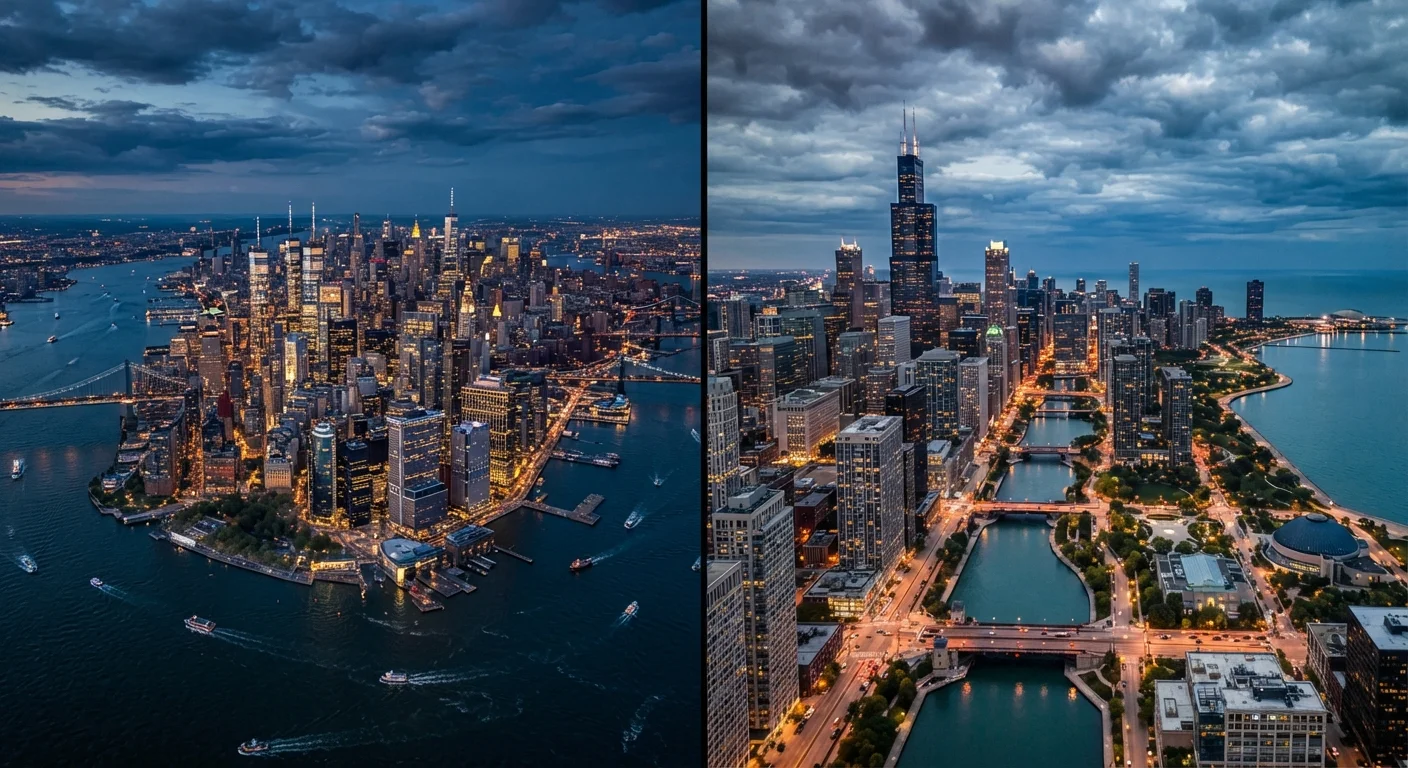
| Architecture draw | Iconic skyline, varied eras | World-renowned; riverside architecture tours |
| Social pace | Fast, efficient, dense | Big-city energy, friendlier reputation |
| Winter severity | Cold but manageable | Harsh wind-chill; plan carefully |
Neighborhoods, Character, and Cultural Identity
New York's neighborhoods are famously distinct — each one feels like a different city within a city. The Lower East Side, Astoria, Crown Heights, and the South Bronx each carry their own history, immigrant community, and local food culture. NYC's diversity is staggering in scope, and that variety is a big part of its appeal. The trade-off is that this same complexity can make it harder to get a coherent sense of the city on a short trip.
Chicago's neighborhoods are equally proud and culturally rich — Pilsen's Mexican-American murals, Bronzeville's jazz history, Andersonville's Scandinavian and LGBTQ+ heritage — but the city is easier to sample on a four- or five-day visit. Understanding how urban community and neighborhood identity work across American settings helps frame why both cities feel so internally varied despite being single municipalities.
New York carries a faster, more transactional social pace — the city's density contributes to a certain efficient guardedness. Chicago has a reputation — backed by many traveler accounts — for being notably friendlier. Neither is better; they simply reflect different urban cultures shaped by history and geography.
~8.3M
New York City population
New York is the most populous city in the United States, according to US Census Bureau estimates.
~2.7M
Chicago population
Chicago is the third most populous US city, per US Census Bureau estimates, after New York and Los Angeles.
Top 5
Art Institute of Chicago global ranking
TripAdvisor's Travelers' Choice Awards have repeatedly placed the Art Institute of Chicago among the top museums in the world.
Food, Arts, and What Each City Does Best
Both cities are serious food destinations, but they're serious in different ways. New York excels at breadth: you can eat your way through a dozen countries without leaving a single borough, and the restaurant scene ranges from $2 street carts to global fine dining. Chicago's food identity is more specific — deep-dish pizza (a tourist staple, though many locals eat thin-crust daily), Chicago-style hot dogs, Italian beef sandwiches, and a thriving James Beard Award–recognized restaurant scene that consistently punches above the city's weight.
Culturally, New York has unrivaled theater (Broadway and off-Broadway), the Metropolitan Museum of Art, and a music scene that spans every genre imaginable. Chicago counters with the Art Institute of Chicago (widely regarded as one of the top art museums in the US), a landmark blues and house music heritage, world-class improv comedy rooted in the Second City tradition, and architecture boat tours along the Chicago River that are genuinely unlike any experience in New York.
If smaller cities with distinct cultural identities appeal to you, our guide to lesser-known US cities that reward slow travel is worth a look for future trip planning.
Seasonal Timing Matters in Both Cities
Chicago's lakefront is spectacular in summer but brutally windswept in winter — locals joke about the city's nickname, 'The Windy City,' for good reason. New York's peak tourist seasons (summer and December) bring larger crowds and higher hotel rates. Both cities tend to offer a more comfortable, less crowded experience in May–June and September–October. Check local event calendars before booking, as major conventions in Chicago and holidays in New York can sharply affect availability and pricing.
Costs, Logistics, and What to Realistically Expect
New York City is one of the most expensive cities in the United States by nearly every measure — accommodation in particular. Budget hotels in Manhattan can be pricey even by major-city standards, and visitors often find more value staying in outer-borough neighborhoods like Long Island City or Williamsburg, accepting a short transit ride into central Manhattan. Chicago's hotel market is competitive, and visitors generally find more room options at lower price points, particularly outside of major convention weekends.
Both cities have excellent airports with connections across the US and internationally, though navigating from JFK or Newark into Manhattan adds significant time and cost compared to Chicago O'Hare or Midway, which connect to downtown via direct 'L' train lines. These are the kinds of practical logistics — transit from airports, neighborhood hotel trade-offs, seasonal weather — that shape the actual experience of a trip far more than any highlight reel suggests. For a broader look at how destination type shapes travel expectations, see our piece on how urban vs. rural travel changes the kind of trip you'll have.
One factor many visitors underestimate: Chicago winters are genuinely severe, with wind-chill temperatures that can make outdoor sightseeing uncomfortable from late November through February. New York winters are cold but generally milder. Both cities are spectacular in fall and late spring — plan accordingly.