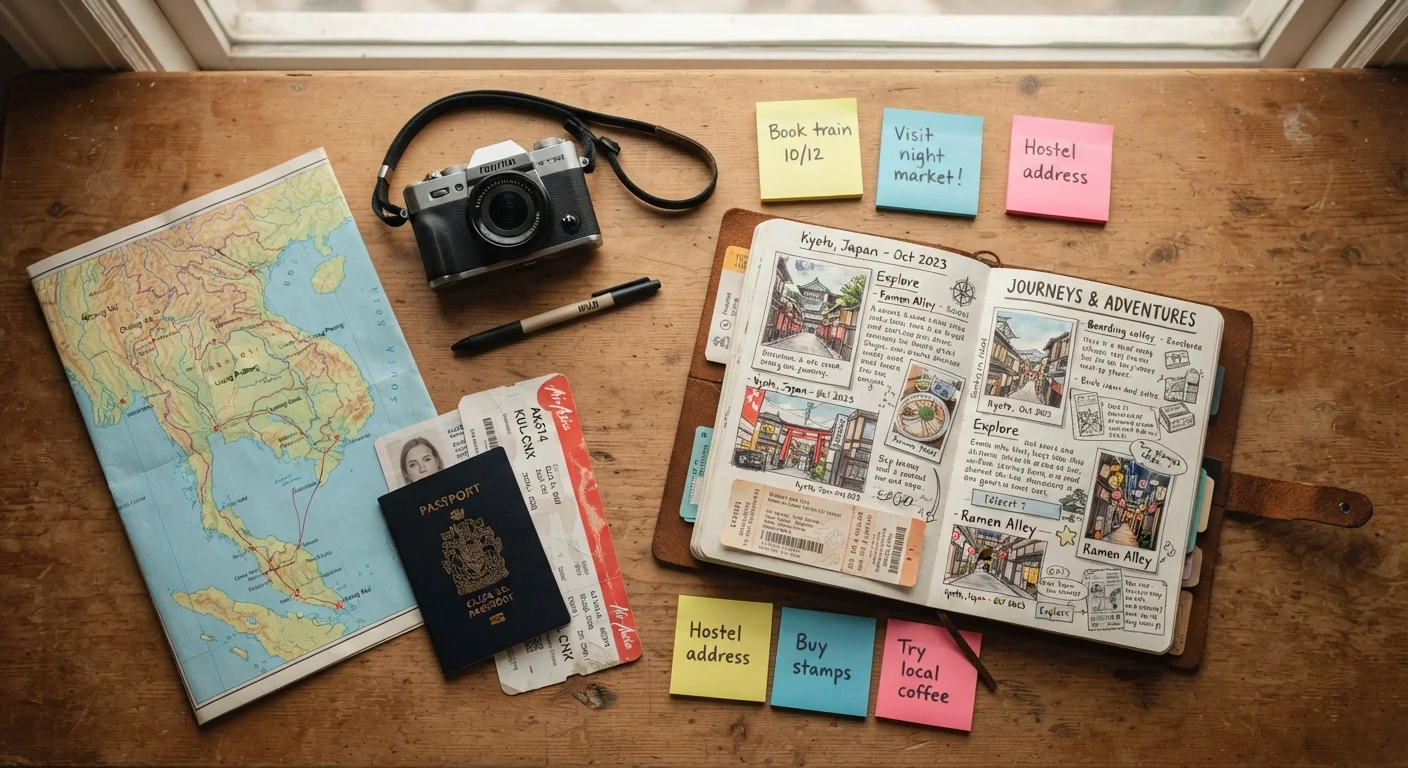


Why Most Itineraries Fail — And What to Do Differently
The average traveler researches a destination for weeks, builds a packed schedule full of enthusiasm, then arrives to find the pace is unsustainable by day two. If you've ever returned from a vacation more tired than when you left, you've experienced the cost of over-planning. If you're new to structuring trips, the complete introduction to travel planning is a helpful starting point before you dive into daily scheduling.
The core problem isn't ambition — it's that most people plan for ideal conditions. No lines, no wrong turns, no lingering over a great meal. Real travel doesn't work that way. A good itinerary accounts for reality: things take longer, you get tired, and sometimes you just want to sit somewhere beautiful and do nothing.
Overscheduling Is the Most Common Trip Mistake
Many travelers pack every hour with activities, then spend the trip feeling rushed and drained rather than refreshed. An itinerary's job is to give your trip structure — not fill every minute. If your schedule has no gaps, it has no room for the unexpected moments that often become your best memories.
The fix isn't to plan less — it's to plan smarter. That means being selective about priorities, building structure without rigidity, and treating your schedule as a guide rather than a contract. The steps below walk you through exactly how to do that.
Printed or Digital City Map
Helps you group geographically close attractions to minimize backtracking and travel fatigue.
Notes App or Travel Journal
Used to draft your day-by-day schedule and jot down backup options for each time slot.
Destination Tourism Website
Provides accurate opening hours, admission costs, and reservation requirements for attractions.
Offline Maps App
Lets you navigate between locations without relying on data coverage in unfamiliar areas.
How to Structure Each Day for Maximum Enjoyment
Before you start slotting activities, gather your prerequisites and tools.
What you will need
Then work through the steps below in order. Each one builds on the last, so resist the temptation to jump ahead to assigning specific days before you've done the clustering work.
List Everything You Want to Do — Then Cut It in Half
Start with a brain-dump: write down every attraction, neighborhood, meal, or experience on your radar. Don't filter yet. Once your list is complete, mark each item as a must-do, a would-like-to, or a nice if time allows. Then ruthlessly protect the must-dos and let the rest become a backup list.
A common rule of thumb is to plan for roughly half of what you think you can fit in a day. If you think you can hit six sights, plan three. This isn't pessimism — it's realistic pacing.
Plot Activities on a Map to Create Geographic Clusters
Before assigning anything to specific days, look at where your activities are physically located. Group nearby attractions together so that each day has a geographic focus — one neighborhood, one district, one region. Zigzagging across a city every day wastes time, money, and energy.
If your destination spans multiple areas, assign each major zone its own day or half-day. This makes travel between spots efficient and keeps the pace feeling natural rather than frantic.
Assign Anchor Activities to Morning, Afternoon, and Evening Slots
Use the three-slot framework: one meaningful activity per time block per day. That's your anchor. Everything else that happens around it — a detour, a street market, a spontaneous coffee — is gravy.
Front-load your most time-sensitive or popular activities (timed-entry museums, iconic landmarks) in the morning when you're freshest and crowds are often thinner. Leave afternoons more flexible, and keep evenings for low-effort enjoyment: dinner, a scenic stroll, or live music.
Build Transition Time Into Every Move
The gap between activities is where trips fall apart. Account for travel time between locations, time to grab food, waiting in lines, and the simple fact that things rarely start exactly on time. For most city travel, add at least 20–30 minutes of buffer between each anchor activity.
If you're relying on public transit, factor in schedules and potential delays. If you're driving, factor in parking. These minutes add up fast, and skipping them is the single most reliable way to turn an itinerary into a stressful race.
Protect at Least One Unscheduled Block Per Day
Leave a minimum of one two-hour window each day with nothing planned. This is your breathing room. Some days you'll use it to revisit a spot you loved. Other days you'll stumble into something unexpected — a street festival, a conversation with a local, a shop that pulls you in. These unplanned moments often end up being highlights.
Resist the urge to fill this block when planning at home. Its value is precisely that it's empty.
Review the Full Schedule for Pacing Before You Go
Read through your complete itinerary from start to finish and ask: does this feel sustainable? Look for back-to-back heavy activity days and insert a lighter day in between. Check that you haven't placed a long travel day immediately before an early-morning commitment. Make sure the trip's overall arc has variety — active days balanced with slower ones.
Share the draft with anyone traveling with you and invite honest feedback. A schedule that works for one person may exhaust another.
Use a Simple Three-Slot Daily Framework
Divide each day into morning, afternoon, and evening slots. Assign one anchor activity to each slot maximum. This forces realistic pacing and naturally creates buffer time between experiences — no spreadsheet required.
As you build your schedule, keep seasonality and crowd patterns in mind — these affect how long activities actually take and whether reservations are required. The guide on how weather and crowds shape a trip covers this well.
Don't Skip Rest Days on Long Trips
On trips of five or more days, plan at least one genuinely low-key day. Skipping rest entirely leads to decision fatigue and makes it harder to enjoy the experiences you actually came for. A slow morning at a neighborhood café can be just as memorable as a packed sightseeing day.
Once your day-by-day structure is set, your itinerary becomes a living document. Update it as you confirm reservations, note early closure dates, or discover a new neighborhood worth exploring. The end-to-end trip planning process can help you integrate this itinerary work into your broader pre-departure checklist, including packing — and for that, the packing principles that hold up across any trip is worth a read before you zip up your bag.