
The Hidden Costs Hiding in Plain Sight
Most Americans use their debit card at home without a second thought — swipe, done. But the moment you cross an international border, that same card activates a set of fees that most travelers only discover when they review their statement back home. The good news: these costs are entirely predictable once you know where to look. See our breakdown of what travel costs travelers actually forget for a broader look at how fees sneak into trip budgets.
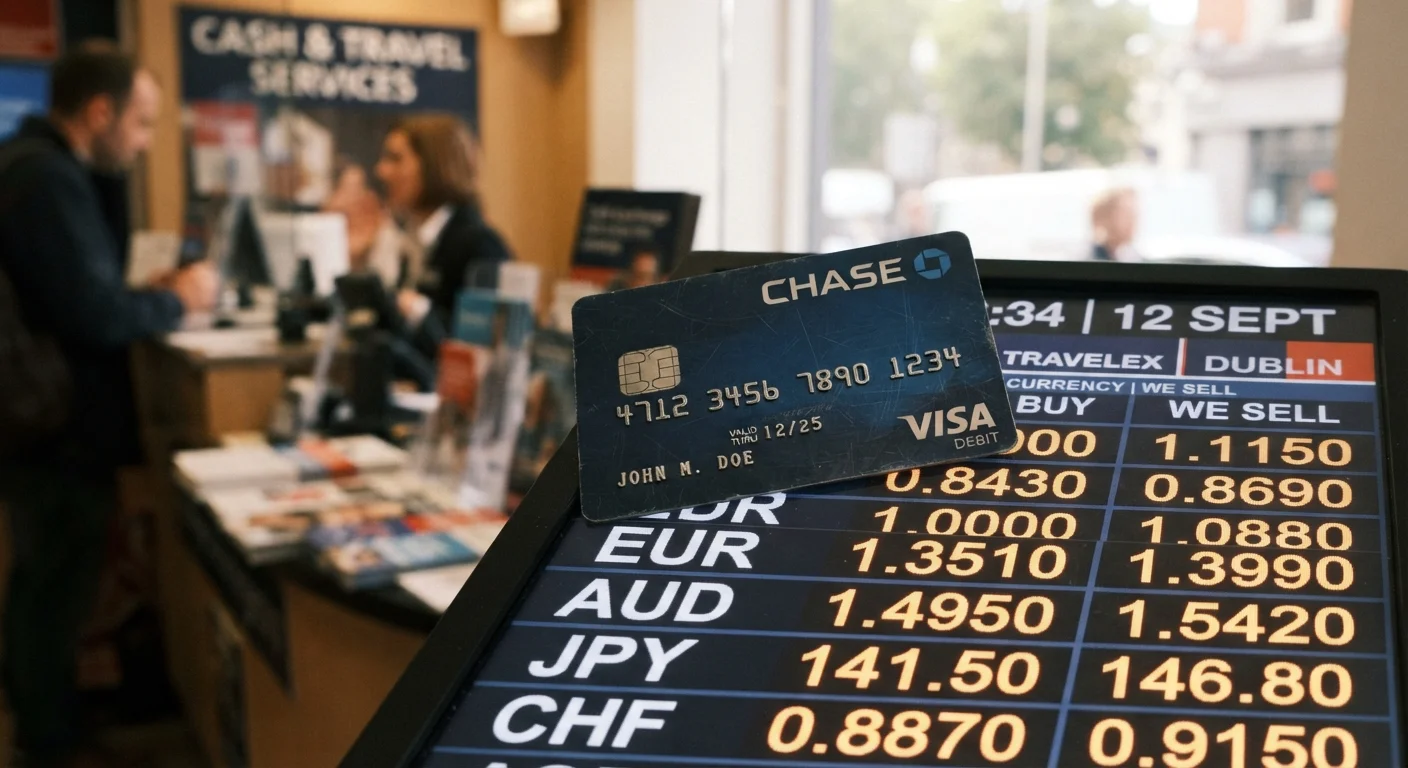
Three charges do the most damage: foreign transaction fees (a percentage cut your bank takes on every international purchase), ATM surcharges (fees from both your home bank and the foreign ATM operator), and dynamic currency conversion (a trap that lets merchants convert your bill into dollars at an inflated exchange rate before charging you). Understanding all three before you leave is part of solid pre-trip prep — which is why it's also covered in the international travel prep checklist every American should run through.
1–3%
Typical foreign transaction fee per purchase
Most major US bank debit cards charge between 1% and 3% on every international transaction, according to commonly published account fee schedules.
$5+
Average US bank international ATM fee
Many large US banks charge a flat fee of $5 or more per foreign ATM withdrawal, on top of any fee charged by the ATM operator itself.
Common Mistakes and How to Avoid Them
The errors travelers make with debit cards abroad are almost universal — not because people are careless, but because the fee structures are deliberately opaque. Here's where things go wrong and what you can do instead.
Paying in US dollars when offered the choice at a foreign terminal or ATM.
Why it happens: Merchants and ATMs frame paying in dollars as a convenience — "Would you like to pay in USD?" — and travelers assume it's a neutral or helpful option.
Not knowing your card's foreign transaction fee before departure.
Why it happens: These fees are buried in account disclosures and almost never appear on your monthly statement as a separate line — they're simply folded into the posted transaction amount.
Making many small ATM withdrawals instead of fewer larger ones.
Why it happens: Travelers often pull out small amounts to avoid carrying too much cash — a reasonable safety instinct — without accounting for fixed per-withdrawal fees stacking up.
Failing to notify your bank or set up travel alerts before leaving the US.
Why it happens: Travelers assume their bank will simply process foreign transactions as normal, not realizing that unusual location-based activity can trigger automatic fraud blocks.
Using airport or hotel currency exchange counters for all cash needs.
Why it happens: These locations are convenient and visible, making them feel like the obvious solution for getting local currency fast.
Standalone ATM Kiosks Carry Extra Risk
Independent ATM kiosks in tourist areas — not affiliated with a recognizable bank — tend to charge higher fees and are more likely to present aggressive dynamic currency conversion prompts. They also carry a higher risk of card skimming. When possible, use ATMs inside or directly attached to established local bank branches.
Building a Smarter Cash Strategy Before You Go
The single most effective move is checking your card's international fee schedule before you leave — not after. Most bank websites list foreign transaction fees in their account disclosures. If your current debit card charges 3% on every transaction and a flat $5 ATM fee, that math adds up fast on a two-week trip with daily spending.
If your card's fees are steep, consider whether a different account — such as one from a credit union or an online bank that reimburses ATM fees — might make sense for travel. This is general information to explore with your own bank; the right choice depends entirely on your specific account and travel habits.
At ATMs abroad, withdraw larger amounts less frequently rather than small amounts daily — this limits how many times you pay the fixed ATM fee. Stick to ATMs attached to established banks rather than standalone kiosks, which often charge higher fees and present more conversion pressure. And always, always choose to pay in the local currency — whether at an ATM or a point-of-sale terminal. That single habit can save you 3–7% on every transaction where dynamic currency conversion is offered.
Finally, carry a backup plan. A debit card from a second account, a travel-oriented credit card with no foreign transaction fees, or a modest amount of local currency acquired before departure all reduce the risk of being caught without access to money if your primary card is blocked. For a fuller picture of pre-trip financial and document prep, see what a US passport actually gets you abroad.