
Water Conditions: Calm Lagoon vs. Open Ocean Energy
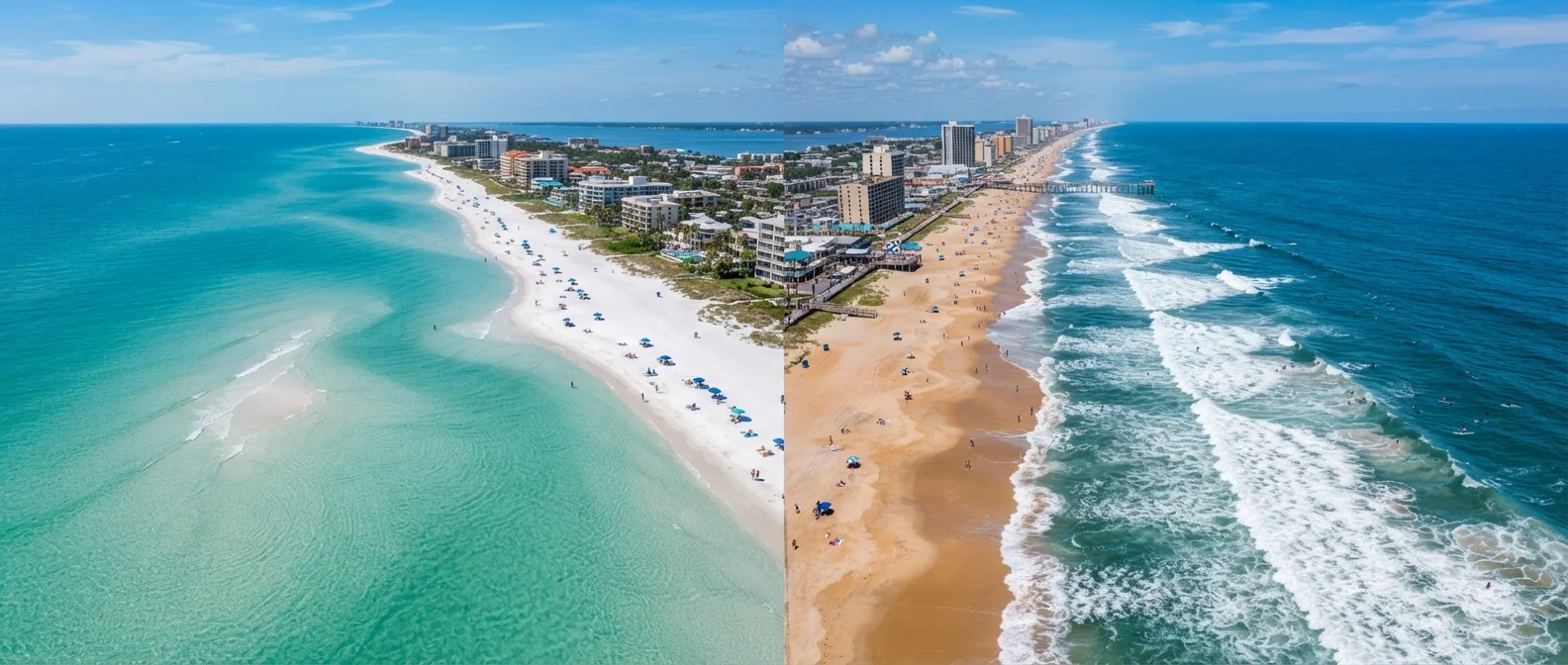
The single biggest difference between these two coastlines is what happens the moment you step into the water. The Gulf of Mexico is a semi-enclosed sea, which means its waters are shallower, warmer, and far gentler than the open Atlantic. Summer water temperatures in the Gulf frequently climb into the low-to-mid 80s°F along Florida's Panhandle and Alabama's coast — warm enough that even young toddlers can splash comfortably. Wave action is typically minimal, and the seafloor drops gradually, making wading safe and easy for non-swimmers.
The Atlantic side tells a different story. Ocean currents, greater depth, and full exposure to open-water swells produce consistent wave action along the Carolinas, Georgia, and Florida's east coast. Summer water temperatures along South Carolina or Outer Banks beaches hover in the mid-to-upper 70s°F — comfortable, but noticeably cooler than the Gulf. For surfers or anyone who wants a more dynamic ocean experience, those rolling waves are a feature, not a flaw.
| Gulf Coast | Atlantic Coast | |
|---|---|---|
| Average summer water temp | Low-to-mid 80s°F | Mid-to-upper 70s°F |
| Wave intensity | Calm, minimal surf | Moderate to strong surf |
| Sand character | Fine white quartz, powdery | Golden to tan, varies by region |
| Family-friendly swimming | Excellent — gradual depth | Good — watch for rip currents |
| Beach-town variety | Mostly relaxed, laid-back towns | Wide range: wild to urban |
| Shoulder season appeal | Strong — warm water into October | Good — cooler but vibrant culture |
| Surfing opportunities | Very limited | Moderate to strong |
Beach Character and Culture: Sleepy vs. Spirited
Gulf Coast destinations like Destin, Pensacola Beach, and Gulf Shores tend toward a relaxed, family-oriented vibe. The famous white quartz sand — some of the palest and finest in the country — feels almost powdery underfoot, and the pace on most Gulf beaches leans unhurried. Towns here often center on seafood shacks, fishing charters, and sunset boat cruises rather than packed boardwalks.
Atlantic Coast beach towns span a much wider cultural spectrum. Myrtle Beach, South Carolina pulses with amusement rides and dense resort strips. The Outer Banks of North Carolina offer windswept, almost wild stretches of barrier island with a strong local identity. Savannah, Georgia sits just inland from Tybee Island and adds a historically rich urban layer to any beach trip. Miami Beach and Fort Lauderdale on Florida's Atlantic side deliver full-on urban beach energy. That variety is one of the Atlantic coast's genuine strengths — different travelers can find wildly different experiences within a few hours' drive of each other. For those curious about how coastal experiences compare beyond the South, America's Great Lakes shorelines offer another distinct set of waterfront personalities worth exploring.
Shoulder Season Is Your Friend on the Gulf
Late September through early November brings dramatically lower accommodation rates along the Gulf Coast while water temperatures remain in the high 70s°F. Crowds thin considerably after Labor Day, and you'll often have stretches of that famous white sand nearly to yourself. If your travel dates are flexible, this window is hard to beat for value and comfort.
Hurricane Season: Understanding Real Risk on Both Coasts
Both coastlines fall within the Atlantic hurricane basin, so neither is immune to storm risk during the official June–November season. That said, patterns do differ. The Gulf Coast — particularly the Florida Panhandle, Louisiana, and Texas — has historically seen some of the most intense Gulf-crossing hurricanes, which can strengthen rapidly over warm, shallow water. The Atlantic Coast faces storms that typically travel up the Eastern Seaboard, sometimes affecting a longer stretch of coastline with wind, rain, and storm surge.
Hurricane Season Travel Requires Flexibility
Booking nonrefundable accommodations or activities during peak hurricane months (August–October) on either coast carries real risk. Travel insurance that includes trip cancellation for weather events is worth understanding before you book. Always monitor NOAA's National Hurricane Center updates as your travel date approaches and follow all local emergency guidance if a storm threatens your destination.
Practically speaking, late summer (August–September) is peak risk for both coasts. Savvy travelers often book shoulder-season trips in May, early June, or October, when prices drop, crowds thin, and the weather remains genuinely pleasant — especially on the Gulf, where October water temperatures are still very swimmable.
85°F
Typical Gulf water temp in August
National Oceanic and Atmospheric Administration (NOAA) buoy data consistently records Gulf of Mexico surface temperatures near the Florida Panhandle in this range during peak summer.
June–Nov
Atlantic hurricane season window
NOAA designates this six-month window as the official Atlantic hurricane season, with peak activity statistically occurring in September.
Planning Your Trip: Which Coast Fits Your Style?
Think about your priorities before booking. If you're traveling with young kids, have mobility considerations that make unpredictable surf a concern, or simply want warm, flat water as your central activity, the Gulf Coast delivers that more reliably. Flights into Pensacola, Panama City Beach, or Mobile can be surprisingly affordable from many Midwestern and Southern cities.
If your group leans active — surfing, kayaking through inlets, cycling barrier island trails, or exploring historic downtown areas between beach days — the Atlantic Coast's variety rewards that energy. Road-tripping the coast from the Florida Keys north through the Carolinas gives you everything from tropical to temperate in a single journey, comparable in scope to the dramatic landscape contrasts you'd find in America's Southwest versus Pacific Northwest. And if the southern coastlines eventually feel familiar, often-overlooked international regions may offer the next horizon worth considering.
Travel conditions, entry requirements, and safety advisories can change. Always verify current information through official government and local tourism sources before finalizing travel plans.