
Why Each Condition Demands a Different Response
Many drivers treat bad weather as a single category and respond the same way to all of it — slowing down slightly and hoping for the best. In reality, rain, snow, and ice each affect your vehicle's traction, braking, and handling in fundamentally different ways. A technique that works on wet pavement can be counterproductive on packed snow, and what's appropriate for snow can be dangerously inadequate on ice.
Understanding the physics behind each surface helps explain why distinct adjustments matter. It also builds the kind of situational awareness that experienced drivers rely on to reduce risk across a wide range of road conditions. Before any adverse weather season, also consider reviewing your vehicle's readiness — see the seasonal car care checklist for what to inspect before conditions deteriorate.
Driving in Rain: Managing Reduced Grip and Visibility
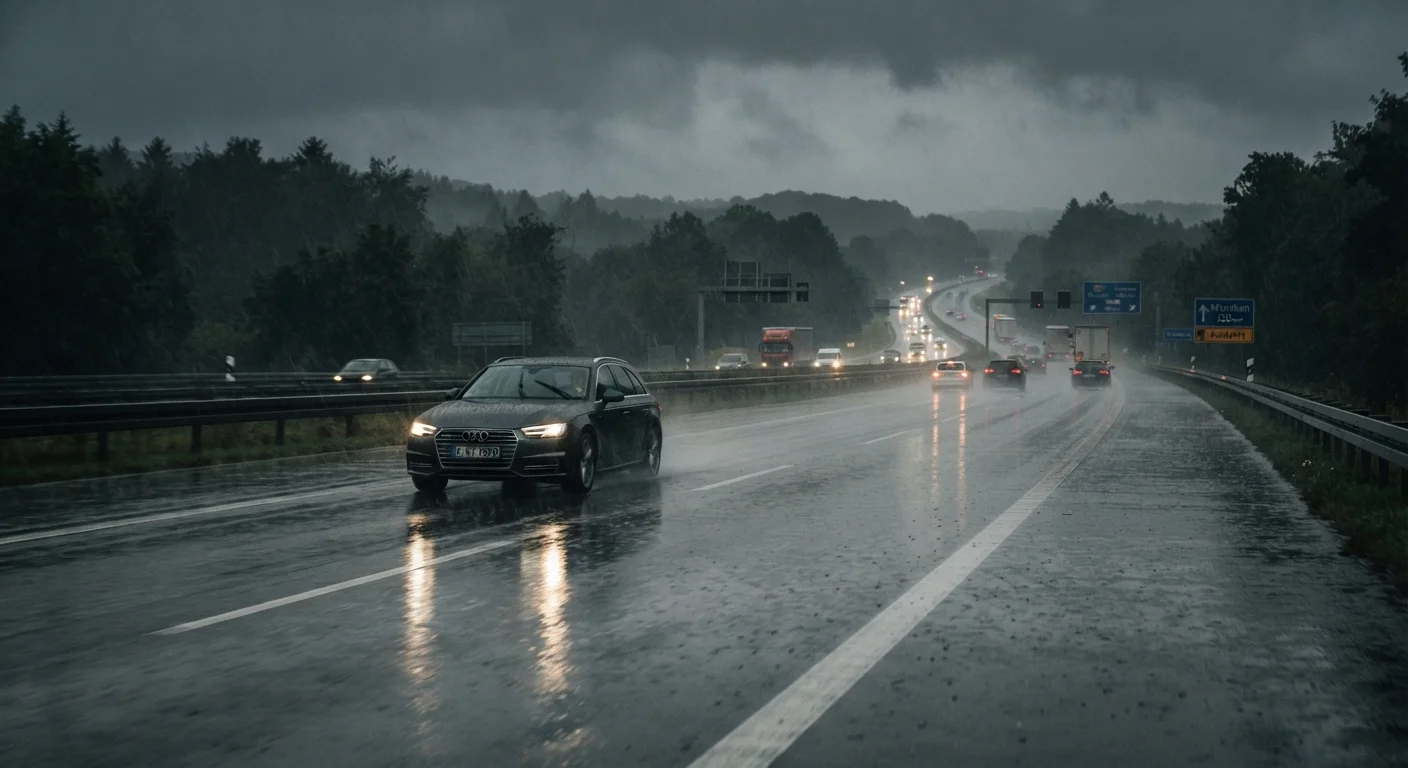
Rain reduces friction between tires and the road surface. At higher speeds, tires can begin to ride on a thin film of water rather than making direct contact with the pavement — a phenomenon called hydroplaning. When hydroplaning occurs, steering and braking become largely ineffective until tires regain contact.
- Reduce speed: Wet roads can extend stopping distances by 50% or more compared to dry pavement. Dropping speed reduces hydroplaning risk and gives more time to react.
- Increase following distance: Maintain at least four to five seconds of following distance rather than the typical two to three seconds on dry roads.
- Use headlights: Turn on low-beam headlights in rain — in most states this is legally required when wipers are in use, and it significantly improves your visibility to other drivers.
- Avoid hard braking: Brake early and gradually. If your vehicle has ABS (Anti-lock Braking System), apply firm, steady pressure rather than pumping the pedal.
- Watch for standing water: Even shallow puddles can trigger hydroplaning at highway speeds. Move to lanes with less pooling when possible.
If You Begin to Hydroplane
If you feel the vehicle begin to hydroplane — the steering suddenly lightens and feels vague — ease off the accelerator gently and steer straight until you feel grip return. Do not brake sharply or make sudden steering inputs, as this can cause the vehicle to spin. Once traction is restored, reduce speed before continuing.
If you feel the vehicle begin to hydroplane — the steering suddenly lightens — ease off the accelerator gently and steer straight until you feel grip return. Do not brake sharply or make sudden steering inputs.
Driving in Snow: Smooth Inputs and the Right Tires
Snow-covered roads present a different challenge: traction is severely reduced, but it's more predictable than ice. The key principle for snow driving is smoothness. Abrupt acceleration, harsh braking, or sharp steering can break the tires loose and cause the vehicle to slide.
| Rain | Snow | Ice | |
|---|---|---|---|
| Primary hazard | Hydroplaning, reduced visibility | Loss of traction, long stopping distance | Near-zero friction, unpredictable slides |
| Recommended speed reduction | Moderate (10–15 mph below limit) | Significant (varies with depth) | Dramatic (as conditions dictate) |
| Following distance | 4–5 seconds | 6–8 seconds | 8–10+ seconds |
| Key tire consideration | Adequate tread depth | Winter tires below 45°F | Winter tires essential |
| Braking technique | Firm, steady ABS pressure | Early, gradual braking | Extremely gentle, early braking |
| Greatest risk location | Standing water, curves | Intersections, hills | Bridges, shaded areas, overpasses |
- Accelerate slowly: Apply the gas gently from a stop to avoid wheelspin. If wheels spin, ease off the accelerator and try again with less input.
- Brake earlier: Stopping distances on snow can be two to ten times longer than on dry pavement, depending on depth and temperature. Begin braking well before intersections and stops.
- Use winter tires: All-season tires lose significant grip below roughly 45°F (7°C). Dedicated winter tires, with softer rubber compounds and deeper tread patterns, make a measurable difference in both braking and cornering.
- Know your drivetrain: Four-wheel drive (4WD) and all-wheel drive (AWD) improve acceleration traction in snow but do not shorten stopping distances. They do not make a vehicle immune to sliding.
- Clear your vehicle: Remove snow from the roof, hood, and all windows before driving. Roof snow can slide onto the windshield during braking, blocking vision suddenly.
Driving on Ice: When Caution Must Reach Its Maximum
Ice — particularly black ice (a thin, nearly transparent layer of ice that blends with the pavement) — is the most hazardous road surface most drivers will encounter. On glare ice, friction coefficients can fall to levels where even slow, careful driving offers little margin for error.
Never Assume AWD Means Safe on Ice
All-wheel drive and four-wheel drive systems improve a vehicle's ability to accelerate on slippery surfaces, but they provide no advantage when braking or cornering on ice. Drivers with AWD vehicles are frequently overrepresented in winter crash statistics because they overestimate their stopping ability. Treat every icy surface with the same caution regardless of your drivetrain.
- Reduce speed dramatically: Safe speeds on ice are often far below posted speed limits. In some conditions, 20–25 mph may already be too fast to maintain control through a turn or stop.
- Maximize following distance: On ice, even experienced drivers can require far greater distances to stop. Following distances of 8–10 seconds or more are not unreasonable.
- Avoid all sudden inputs: Braking, accelerating, and steering must all be done with extraordinary gentleness. Even a small abrupt input can break traction instantly.
- Know how to handle a skid: For a rear-wheel skid, steer in the direction of the skid (toward where the rear of the car is sliding). For a front-wheel skid, ease off the accelerator and allow grip to return before steering.
- Be alert to black ice locations: Bridges, overpasses, and shaded roadway sections freeze first and stay frozen longer than open roads.
Adverse weather driving is part of a broader picture of road awareness. Just as night driving requires specific adjustments, each weather condition requires deliberate adaptation rather than default habits. Staying within the fundamentals of safe, legal driving — proper vehicle preparation, appropriate speed, and attentive observation — remains the foundation under all conditions.