
The System Behind the Signs
Every road sign on a U.S. public road follows standards set by the MUTCD — the Manual on Uniform Traffic Control Devices, published by the Federal Highway Administration. This federal standard specifies shape, color, letter size, and placement so that signs communicate instantly, even at highway speeds or in poor visibility. Understanding that system — not just memorizing individual signs — is what turns a knowledgeable driver into a consistently safe one.
Signs fall into three broad functional categories: regulatory (telling you what you must or must not do), warning (alerting you to road conditions or hazards ahead), and guide (helping you navigate). A fourth category, temporary traffic control, covers construction and work zones. Each category has its own dominant color and shape language, described below.
For a broader foundation in road rules and driving habits, see the complete safe driving overview that covers everything from licensing basics to real-world hazard management.
| Governing Standard | MUTCD (Manual on Uniform Traffic Control Devices) (Federal Highway Administration) |
| Sign Categories | Regulatory, Warning, Guide, Temporary Traffic Control (MUTCD, current edition) |
| Exclusive Octagon Use | STOP signs only — no other U.S. sign uses this shape (MUTCD Section 2B) |
| Work Zone Sign Color | Orange — reserved exclusively for temporary traffic control (MUTCD) |
| School Zone Sign Shape | Pentagon (pointed top) — used for school and school crossing signs (MUTCD Section 2B) |
| Blue Sign Meaning | Motorist services: fuel, food, lodging, medical facilities (MUTCD) |
Shape and Color: The First Layer of Meaning
Before a driver reads a single word, shape and color deliver the core message. The MUTCD assigns shapes deliberately:
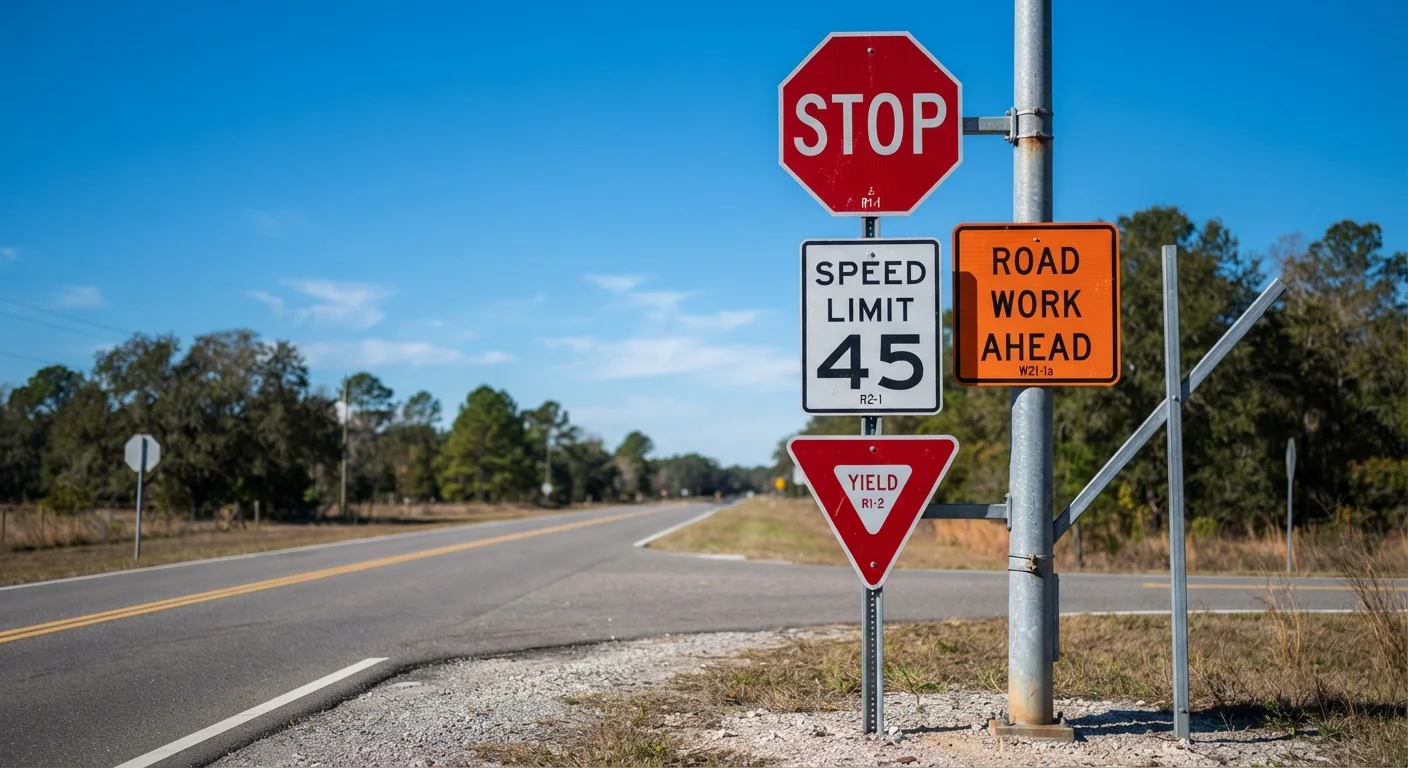
- Octagon (8-sided): Reserved exclusively for STOP signs. No other sign uses this shape in the U.S.
- Equilateral triangle (point down): Yield. Drivers must be prepared to give right-of-way.
- Diamond: Warning signs. A diamond sign means something requires attention ahead — a curve, a merge, a pedestrian crossing.
- Rectangle (vertical): Regulatory signs, such as speed limits, turn restrictions, and lane-use rules.
- Rectangle (horizontal): Guide and informational signs, including street name signs and highway markers.
- Pentagon (pointed top): School zone and school crossing signs only.
- Pennant (pointed right): No Passing Zone warnings, placed on the left side of the road.
Color layers meaning onto shape. Red means prohibition or a mandatory stop condition. Yellow is the standard warning color. Orange is reserved for temporary traffic control — construction and work zones. Green indicates permitted movement or directional guidance. Blue marks motorist services (fuel, food, hospitals). Brown identifies recreational and cultural areas. White backgrounds appear on regulatory signs.
MUTCD
The Manual on Uniform Traffic Control Devices — the federal standard published by the Federal Highway Administration that governs the design, placement, and meaning of all traffic signs, signals, and pavement markings on U.S. public roads.
Regulatory Sign
A sign that communicates a legal requirement or prohibition. Drivers must comply with regulatory signs; violations can result in citations or fines.
Warning Sign
A diamond-shaped sign, typically yellow, that alerts drivers to a road condition or hazard ahead requiring attention or a speed adjustment.
Advisory Speed Plaque
A supplemental yellow plate posted below a warning sign showing the recommended safe speed through the associated hazard, such as a curve or interchange ramp.
Temporary Traffic Control
Orange signs, barriers, and flaggers used to manage traffic through construction, maintenance, or incident zones. These conditions are temporary but carry full legal weight.
Right-of-Way
The legal priority to proceed through an intersection or merge point before other road users. Signs such as STOP and YIELD explicitly assign right-of-way.
Regulatory Signs: What You're Required to Do
Regulatory signs carry the force of law. Ignoring them can result in a traffic citation or contribute to a crash. The most familiar examples:
- STOP: Come to a complete stop behind the stop line. Proceed only when it is safe and legal to do so.
- YIELD: Slow down and give the right-of-way to cross-traffic or merging traffic. Stop if necessary.
- Speed Limit: The maximum legal speed under normal conditions — not a target speed when weather or traffic demands lower speeds.
- Do Not Enter / Wrong Way: These two signs almost always appear together on divided highways and ramps. Both mean you are approaching traffic head-on.
- No Turn on Red: A rectangular white sign that overrides the general permission to turn right on red at signalized intersections.
- One Way: Traffic flows in the indicated direction only.
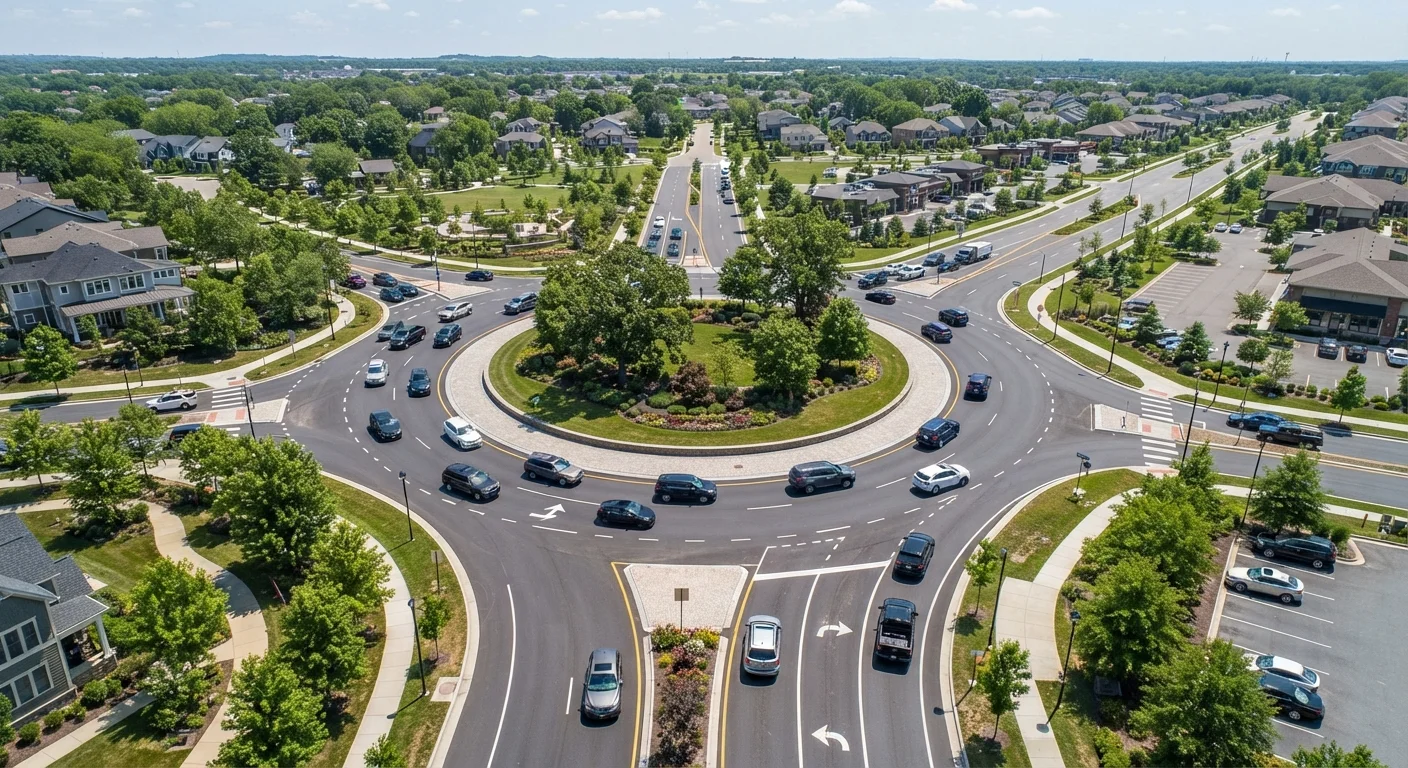
Roundabout signs and markings are a regulatory category that trip up many drivers — painted yield lines, directional arrows, and approach signage all work together to manage right-of-way without traffic signals.
50%+
Of fatal crashes involve a traffic control violation
Research from the Federal Highway Administration consistently links sign noncompliance and traffic control disregard to a substantial share of fatal collisions.
2x
Typical fine multiplier in active work zones
Most U.S. states double standard traffic fines for violations occurring in posted construction work zones when workers are present.
Warning and Work Zone Signs: Reading the Road Ahead
Diamond-shaped yellow warning signs alert drivers to conditions that require a speed or attention adjustment. Common examples include curve and winding road signs, merge and lane-reduction signs, pedestrian and bicycle crossing signs, and advisory speed plaques (a yellow plate below a sign showing the recommended speed through the hazard).
Orange construction signs use the same diamond and rectangle shapes but signal temporary conditions. Fines in work zones are typically doubled in most states when workers are present, and lane patterns can shift daily. Treat orange signs as high-priority warnings, not background information.
Flagger instructions — a person holding a sign reading SLOW or STOP — are legally equivalent to a regulatory sign and must be obeyed. Ignoring a flagger carries the same legal consequences as running a red light in most jurisdictions.
Just as dashboard indicators decode what's happening inside your vehicle, road signs decode the environment outside it. The dashboard warning lights reference applies the same plain-language approach to onboard alerts.
This article is for general informational and educational purposes only. Always consult your state's official driver's manual and applicable traffic laws for the rules that govern driving in your jurisdiction.