
Why Regional Food Culture Still Matters
America's food identity is often flattened into a handful of familiar stereotypes: burgers, barbecue, apple pie. But the real picture is far more textured. The way people eat in coastal South Carolina, northern New Mexico, or the Upper Midwest reflects generations of history — Indigenous foodways, immigrant traditions, available ingredients, and local climate all folded into what ends up on the plate.
For anyone who loves dining out, understanding regional food culture unlocks a richer experience. It helps you spot the real thing, ask the right questions, and move past tourist traps toward genuinely local meals. If you're planning a trip, our US destinations hub is a good place to pair your travel research with your food curiosity. And if you want the broader context of dining in America — customs, costs, tipping norms — The Complete Picture of Dining Out in America covers the full landscape.
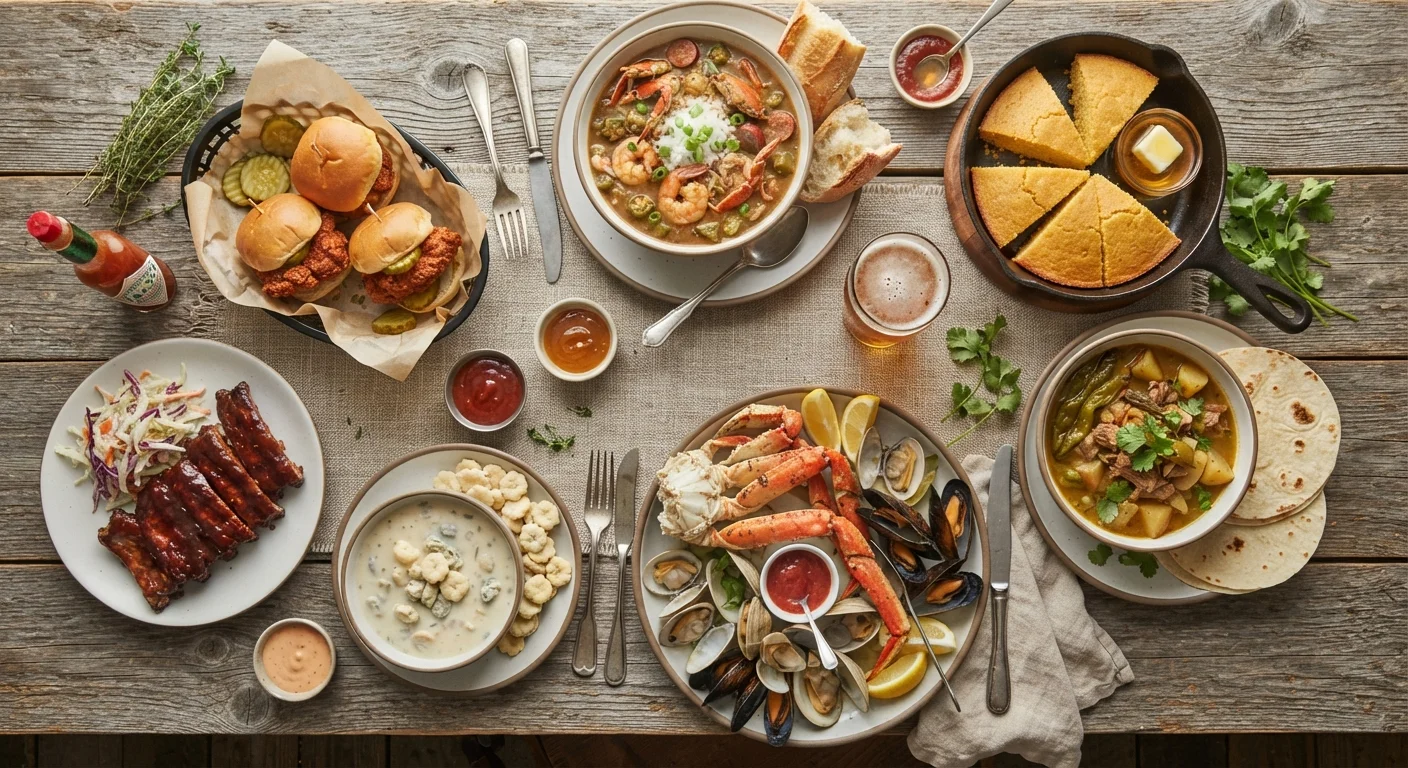
Below is a diner's guide to eight of the country's most distinct food regions — what defines them, what to order, and what to know before you sit down.
The Deep South: Slow, Smoked, and Soulful
Southern food is arguably the most influential regional cuisine in America, built on a foundation that includes West African, Indigenous, and European cooking traditions. Low-and-slow cooking is central — think smoked pork shoulder, collard greens simmered with smoked ham hocks, and fried chicken that's been brined before it ever sees a skillet. Cornbread is not a side dish here; it's a staple. In South Carolina's Lowcountry, the signature is a one-pot seafood boil of shrimp, corn, potatoes, and sausage seasoned with Old Bay and local spice blends. In Louisiana, that shifts to Creole and Cajun traditions: roux-based gumbos, étouffées, red beans and rice on Mondays (a custom dating to washday practicality).
What to order: Fried chicken, biscuits with sawmill gravy, shrimp and grits, gumbo, boudin.
Low-and-slow cooking and African culinary roots make Southern food among America's most influential traditions.
New Mexico and the Southwest: Chile as a Way of Life
No region in the US is more defined by a single ingredient than New Mexico, where the chile pepper — especially the Hatch green chile — shapes everything from breakfast eggs to cheeseburgers. Red or green? is not a casual question at a New Mexico restaurant; it's a declaration of identity. The state's cuisine draws from Pueblo, Spanish colonial, and Mexican traditions, with dishes like posole (a hominy-based stew), red chile enchiladas stacked flat rather than rolled, and sopapillas (puffy fried bread served with honey). Across the broader Southwest, Sonoran-style cuisine from southern Arizona brings flour tortillas, carne asada, and chimichangas into the mix.
What to order: Green chile cheeseburger, stacked red or green enchiladas, posole, sopapillas.
In New Mexico, 'red or green?' is less a menu question and more a cultural ritual tied to regional identity.
The Pacific Northwest: Seafood, Forage, and Farm
The Pacific Northwest has one of the most ingredient-forward food cultures in the country, shaped by access to extraordinary wild seafood — Dungeness crab, Pacific oysters, king salmon — alongside abundant mushrooms, berries, and stone fruit from the surrounding valleys. Chefs here tend to let the ingredient lead, with minimal intervention. The region's proximity to Japan and Southeast Asia has also made Asian culinary traditions deeply embedded in local food culture, particularly in Seattle and Portland. Farm-to-table isn't a marketing phrase in the Northwest; it's the literal supply chain for many restaurants.
What to order: Dungeness crab, fresh oysters on the half shell, salmon prepared simply, teriyaki (a Seattle institution).
Pacific Northwest cuisine lets extraordinary local ingredients lead — wild seafood and foraged foods set the table.
New England: Chowders, Lobster, and Baked Beans
New England's food culture is defined by the cold Atlantic and a certain colonial-era practicality. Clam chowder here is cream-based — the tomato-based Manhattan style is considered a different dish entirely, and locals will tell you so plainly. Lobster is ubiquitous in summer, eaten from paper plates at roadside shacks rather than white-tablecloth restaurants. Boston baked beans (made with navy beans, molasses, and salt pork) gave Boston its oldest nickname. Rhode Island has its own variations on chowder — clear-brothed rather than creamy — and the state's coffee milk is the official state drink, made with coffee syrup stirred into cold milk.
What to order: Steamed whole lobster, clam chowder in a bread bowl, lobster roll (butter-dressed, served warm), Indian pudding.
New England's food is shaped by the cold Atlantic — lobster eaten from paper plates at roadside shacks is the real experience.
Texas Barbecue: A Category of Its Own
Texas barbecue deserves its own entry rather than being grouped into a general Southern category. The state has at least four distinct barbecue traditions: Central Texas (post oak-smoked brisket, no sauce), East Texas (slow-smoked and sauced), South Texas (barbacoa using beef cheeks or head), and West Texas (mesquite-grilled over direct heat). Central Texas brisket — specifically the style associated with Hill Country smokehouse culture — has become arguably the most celebrated barbecue tradition in the country, with certain spots drawing lines that form before sunrise. The meat is the point; sides like white bread, pickles, and raw onion are there to support, not compete.
What to order: Post oak-smoked brisket (fatty end), pork ribs, jalapeño cheddar sausage, beef rib.
Texas has at least four distinct barbecue traditions — Central Texas brisket has become a pilgrimage-worthy national institution.
The Upper Midwest: Comfort, Scandinavian Roots, and Supper Clubs
Midwestern food is often undersold, written off as plain or unremarkable. But the region's food culture has real depth, shaped by German, Scandinavian, Polish, and Eastern European immigration. Wisconsin is dairy country in every sense — cheese curds, Friday night fish fries, and the brandy Old Fashioned cocktail are cultural institutions. Minnesota's Scandinavian heritage surfaces in lefse (a potato flatbread), lutefisk at church suppers, and a strong tradition of hot dish (a casserole format, not a judgment). The supper club — a roadside restaurant serving brandy steak dinners and relish trays since the mid-20th century — is a particularly Wisconsin and Minnesota institution worth seeking out.
What to order: Cheese curds (fresh, not frozen), Friday fish fry, brandy Old Fashioned, prime rib at a supper club.
The Midwestern supper club — brandy drinks, relish trays, and prime rib — is a mid-century institution still worth finding.
Appalachia: Wild Ramps, Dried Beans, and Mountain Tradition
Appalachian food is among the most historically rooted regional cuisines in the country, and also among the least represented in mainstream food media. The region's cooking reflects what could be grown, foraged, or preserved in a mountainous landscape with limited outside supply: dried beans (especially soup beans — pinto beans cooked long with pork fat), ramps (wild onion-leeks that appear briefly each spring and inspire local festivals), poke salad (pokeweed greens, rendered edible through careful preparation), and stack cakes (a dried-apple layer cake traditional at community gatherings). Cornbread is standard, and the region's smoked and cured pork traditions are distinct from Lowcountry or Texas styles.
What to order: Soup beans with cornbread, ramp dishes in spring, stack cake, sorghum with biscuits.
Appalachian food — beans, ramps, and sorghum — reflects centuries of mountain resourcefulness and foraging tradition.
Hawaii: Pacific, Asian, and Indigenous Traditions on One Plate
Hawaii's food culture is genuinely unlike anywhere else in the US, a layered result of Native Hawaiian traditions, Japanese, Filipino, Korean, Portuguese, and Chinese immigration, and the plantation-era labor history that brought those communities together. The plate lunch — two scoops of rice, mac salad, and a protein — is the working-lunch format that defined local food culture for generations. Poke (pronounced poh-kay) is a seasoned raw fish dish that long predates its mainland popularity. The imu, a traditional underground oven used for kālua pig, remains central to celebrations. Shave ice (not snow cone — the texture is meaningfully different) is the island dessert standard.
What to order: Plate lunch, poke bowl with fresh ahi, loco moco (rice, hamburger patty, egg, gravy), shave ice, malasadas.
Hawaii's plate lunch culture is a direct product of its plantation-era history — rice, mac salad, and protein on one tray.
Eating Regionally at Home and on the Road
Regional food is not only a travel experience. Many of these traditions travel well into home kitchens — and exploring them is one of the most satisfying ways to expand your cooking repertoire. Our home cooking section includes practical techniques for recreating dishes from across the country, from proper cornbread to low-and-slow braising.
Ask About the Regional Dish First
When dining somewhere new, skip the menu's familiar sections and ask your server what the restaurant or region is specifically known for. Staff at locally owned spots are often proud to talk about what makes their food distinct. You're more likely to get a memorable meal — and an honest recommendation — by leading with that question.
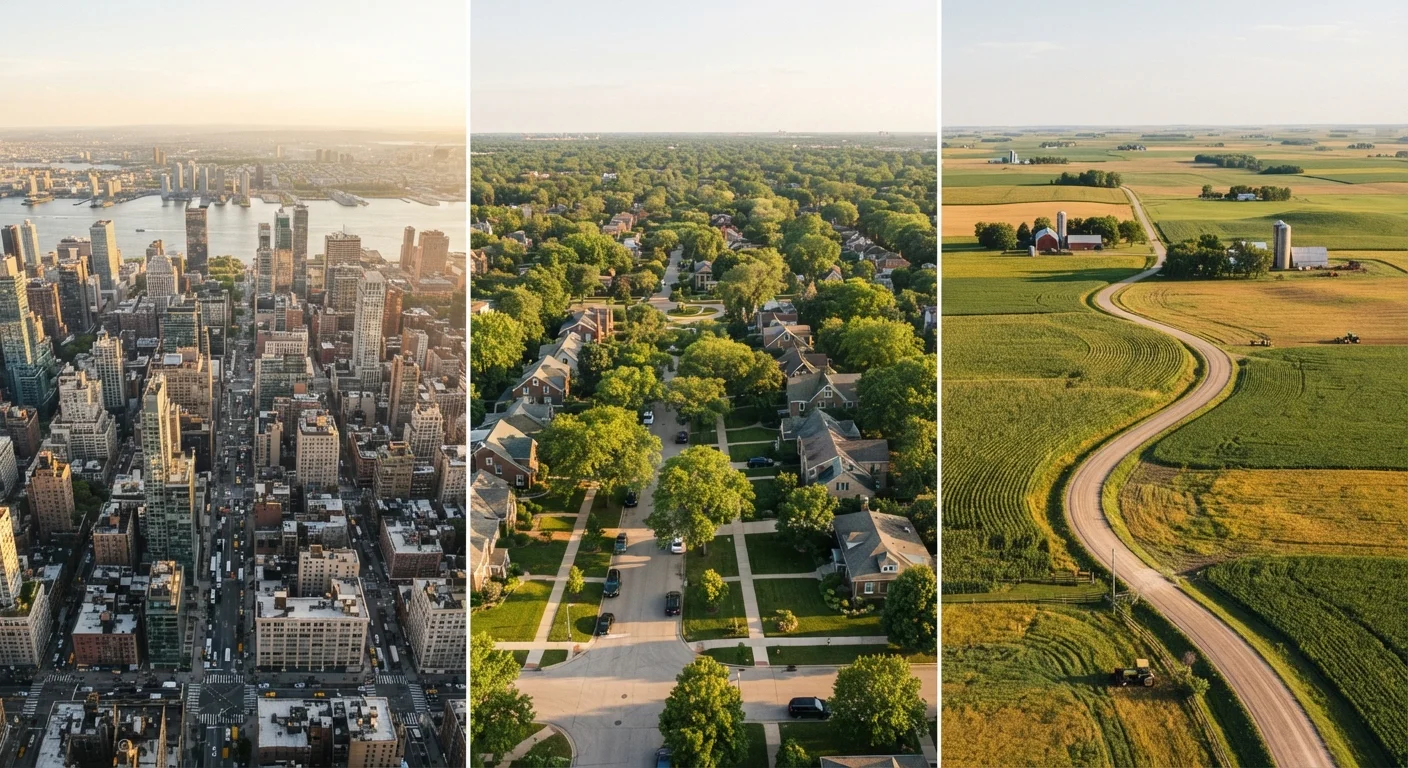
Food culture also reflects the communities that created it, which is worth keeping in mind as you dine. Just as community life looks different across American geographies, so does the table. The best approach to regional dining is genuine curiosity — ask servers about the sourcing, the preparation, or what regulars always order. You'll eat better and leave with a richer sense of place.