
What Each Format Actually Means
If you've ever stared at a menu confused by French phrasing, you're not alone. These two formats represent two fundamentally different ways a restaurant can structure your meal — and understanding them makes dining out a lot less stressful.
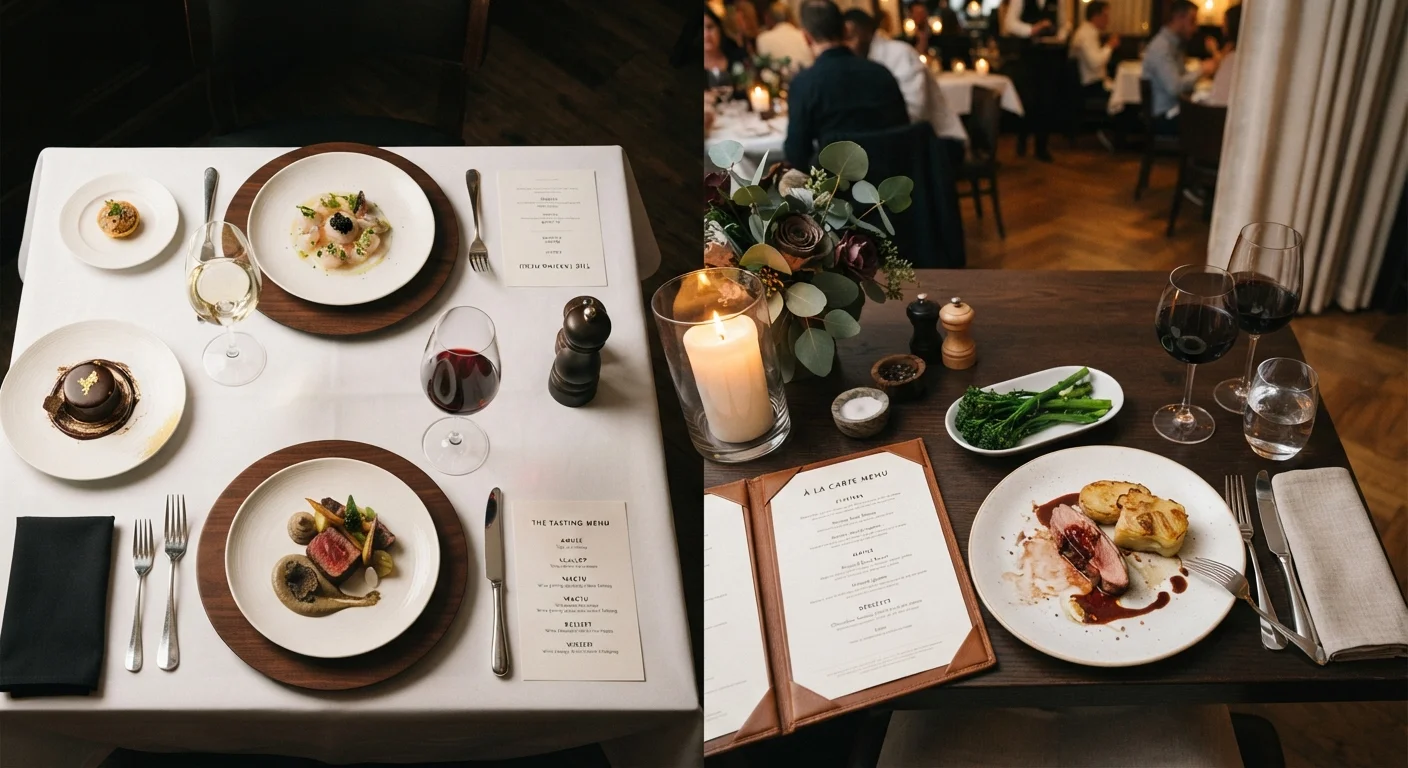
Prix fixe (pronounced "pree feeks," from the French for "fixed price") is a menu format where you pay one set price for a complete meal of a predetermined number of courses. Think three courses — starter, main, dessert — for $65 per person. Higher-end restaurants sometimes extend this into a tasting menu of seven or more courses. The price, the structure, and often the specific dishes are decided in advance, though you may be offered a choice of two or three options per course.
À la carte (French for "according to the menu") means every dish is priced and ordered separately. You choose a starter if you want one, skip it if you don't, pick your entrée, add a side or two, and decide whether dessert sounds worth it. Each item has its own price, and your bill is the sum of whatever you actually ordered.
For a broader look at how restaurant menus are organized and the language behind them, our guide to decoding restaurant menus is a helpful read before your next dinner out.
| Criterion | Prix Fixe | À La Carte |
|---|---|---|
| Pricing structure | One flat price for set courses | Each dish priced separately |
| Cost predictability | High — you know upfront | Variable — depends on choices |
| Flexibility | Low — chef sets the structure | High — you choose everything |
| Typical setting | Fine dining, tasting menus | Most restaurant types |
| Meal pace | Kitchen-controlled rhythm | Diner-controlled pace |
| Best for dietary restrictions | Less flexible | More accommodating |
| Value for big eaters | Often strong value | Can add up quickly |
The Real Differences in Experience and Cost
The format shapes more than just what you eat — it affects how you eat, how long you'll be at the table, and what you'll pay when the bill arrives.
With a prix fixe, you typically know your cost before a single dish appears. That predictability is a genuine advantage for budgeting a night out. However, if you're a light eater or tend to skip certain courses (say, you never order dessert), you may feel like you're paying for something you don't want. Some restaurants also apply a prix fixe minimum to the entire table, meaning everyone must participate — worth confirming when you make your reservation. Hidden charges like these can catch diners off guard if they don't ask ahead.
À la carte bills can be unpredictable. A modest entrée might look affordable until you add a side dish, a glass of wine, and a service charge. On the flip side, if you're genuinely content with just a bowl of pasta and sparkling water, you'll pay exactly that.
3–12
Typical courses in a prix fixe meal
Three-course formats are common at mid-range fine dining; extended tasting menus at destination restaurants can reach a dozen courses or more.
~70%
US diners who prefer menu flexibility
According to the National Restaurant Association's dining trend research, most American diners value the ability to customize their orders.
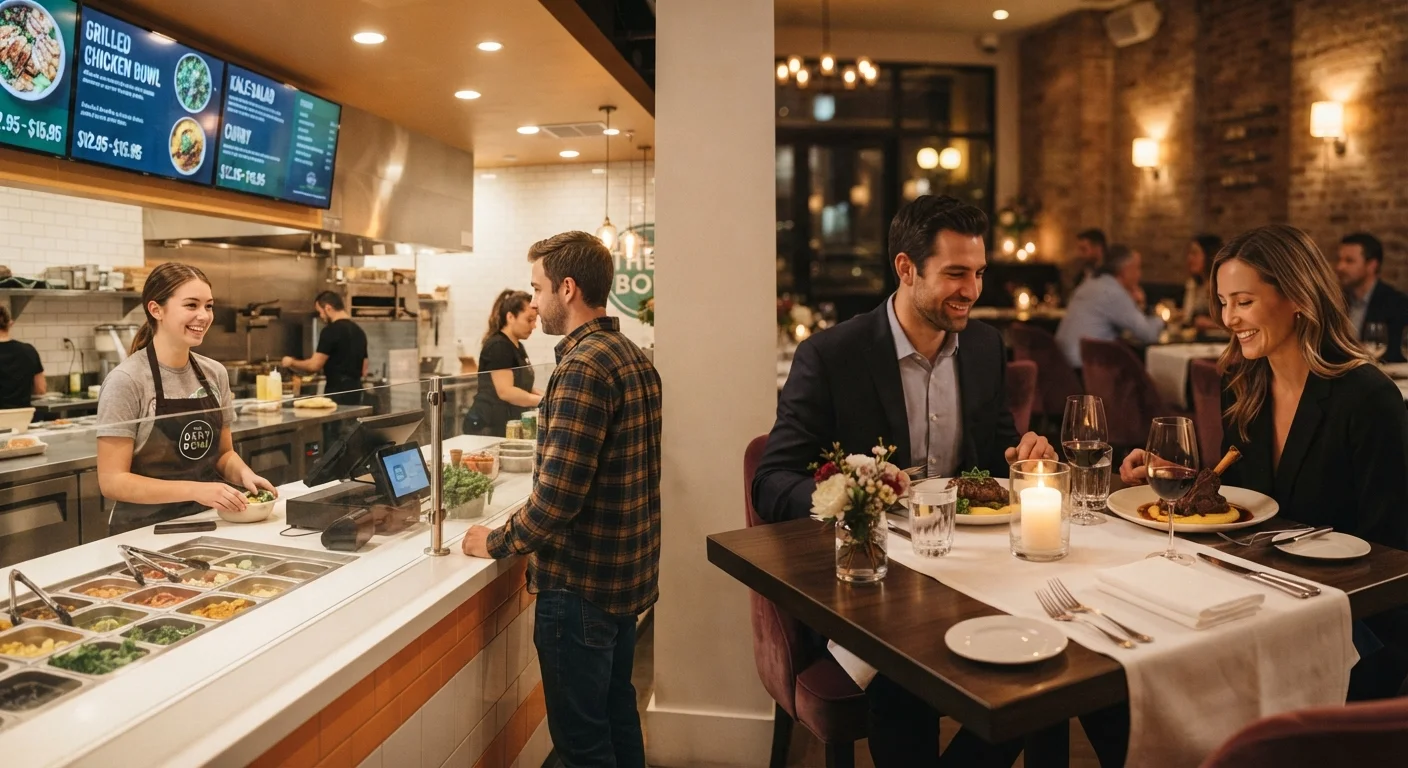
The pace also differs. Prix fixe meals tend to move through a rhythm the kitchen controls — courses arrive at the restaurant's cadence, not yours. À la carte dining is generally more relaxed and self-directed. Neither is better; it depends entirely on what kind of evening you're after. For more on how different restaurant formats shape the overall experience, see how fast casual and full-service dining compare.
How to Decide Which Suits Your Evening
Choosing between prix fixe and à la carte often comes down to three questions: What's the occasion? Who's at the table? And what's your appetite — in both senses of the word?
Prix fixe tends to shine at destination restaurants, tasting-menu spots, and holiday or special-occasion dinners where the full experience is the point. If the restaurant is known for its chef's vision, a prix fixe is often how that vision is best expressed. It's also genuinely easier when you're dining with a group — no one agonizes over the menu for twenty minutes.
À la carte suits almost every other scenario: casual weeknight dinners, restaurants with a broad menu you want to explore selectively, or any time you have a specific appetite or budget in mind. It's also far more accommodating for dietary restrictions, since you're assembling your own meal rather than adapting a pre-set structure.
One practical tip: check the menu format before you go. Many restaurants post their current menus online, and it's worth knowing what you're walking into — especially if you're making a reservation for a special occasion. Some fine-dining spots are prix-fixe only; others offer both formats on different nights.
A Note on Hybrid Menus
Many restaurants blend both formats. You might find a prix fixe that lets you swap one course for an à la carte add-on, or an à la carte menu with a discounted three-course combination offer. When in doubt, ask your server to walk you through the options — most are happy to explain how the menu is structured before you order.