
Why Texture Matters More Than Color
A freshly painted room can still feel flat. Color sets the mood, but texture is what makes a space feel genuinely lived-in and layered — like it evolved naturally rather than being assembled all at once. When light hits different surfaces throughout a room, each material reflects it differently, creating subtle contrast that reads as warmth and depth.
The good news: you don't need to repaint, renovate, or call a contractor to get there. The following approaches rely entirely on furnishings, accents, and soft goods — all of which can be swapped, moved, or taken with you. If you're decorating a rental, this is especially relevant; our guide on decorating a rental without losing your deposit covers even more non-permanent strategies.
Layer Area Rugs for Ground-Level Depth
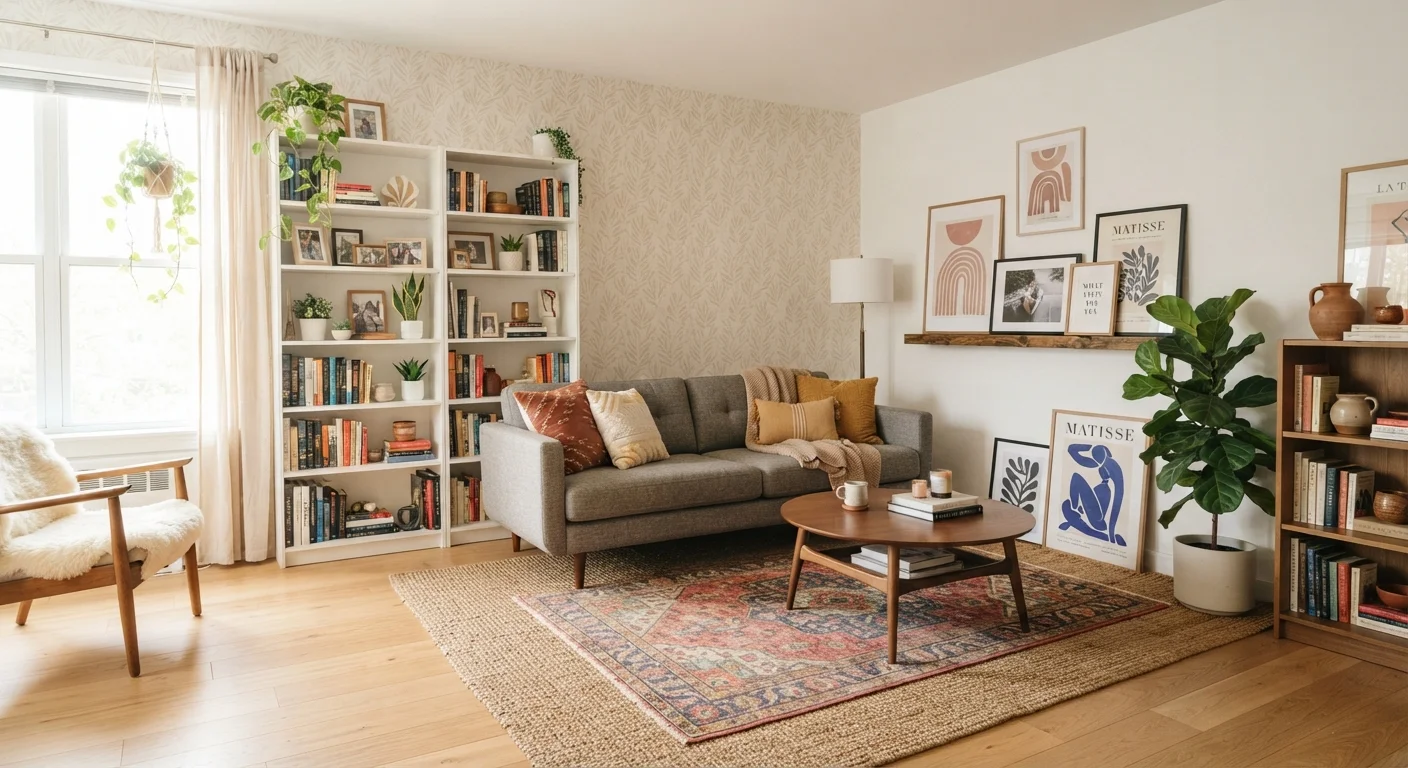
A bare floor — even a beautiful one — reads as a blank canvas. An area rug anchors the furniture arrangement and introduces texture right where the eye naturally lands. For a richer look, try layering a smaller patterned rug over a larger natural-fiber base like jute or sisal. The contrast between the coarser weave underneath and the softer pile on top creates immediate visual interest without competing with the rest of the room.
Natural-fiber rugs in particular offer a lot of tactile variation due to the irregular weave of materials like seagrass, jute, or wool. Even a single well-chosen rug in a flatly furnished room can shift the entire feel of the space.
Layering a patterned rug over a natural-fiber base adds instant ground-level depth to any room.
Swap in Textured Throw Pillows and Blankets
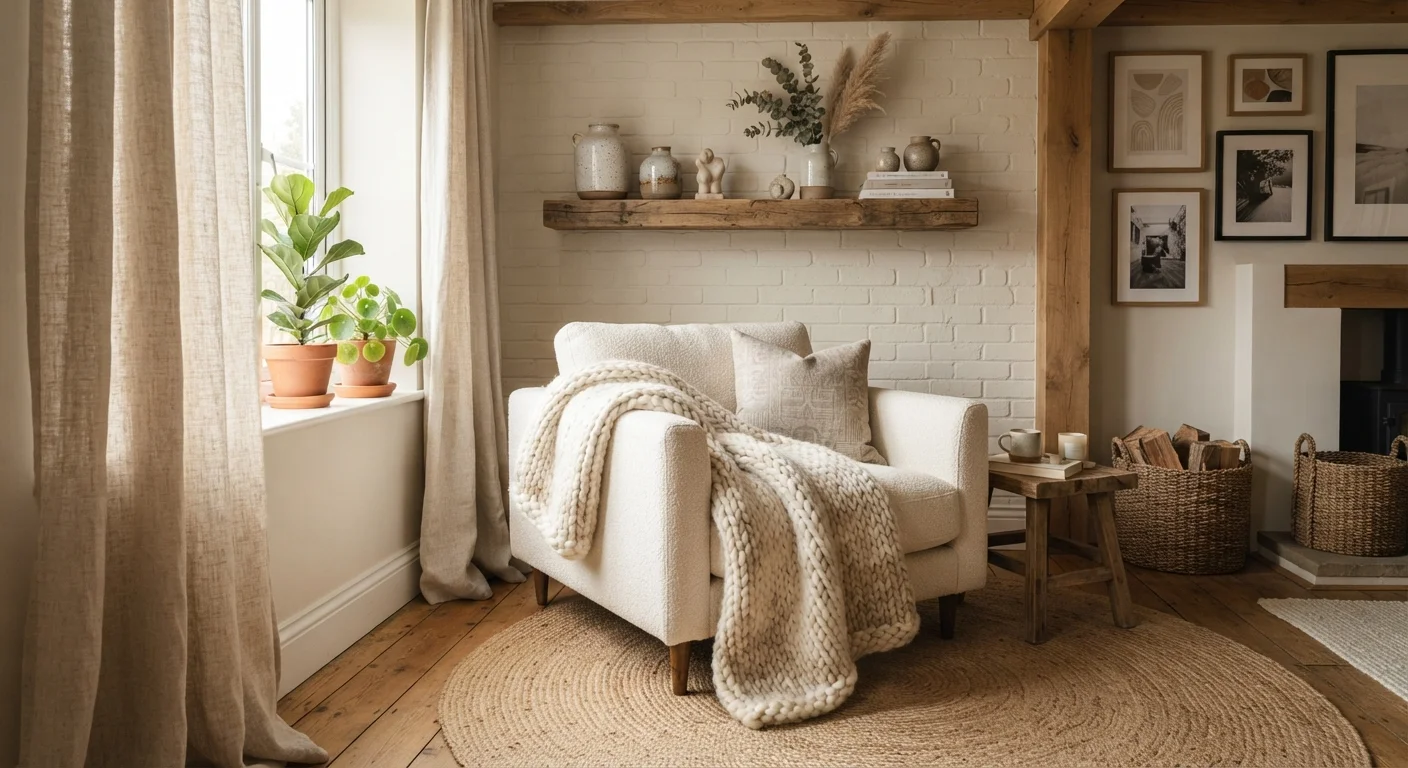
Pillow covers in boucle, linen, velvet, or a loose-weave cotton introduce tactile contrast to sofas and chairs without changing the furniture itself. The key is to vary the surface quality rather than just the pattern — a velvet pillow next to a chunky-knit one creates more dimension than two printed cottons of different designs.
Drape a waffle-knit or woven throw across the arm of a sofa or the foot of a bed to add another tactile layer that feels effortlessly casual. Our room-by-room guide to choosing throw pillows can help you get sizing and quantity right before you shop.
Mixing velvet, linen, and chunky-knit fabrics creates more dimension than varying patterns alone.
Hang Linen or Woven Curtains Instead of Smooth Panels
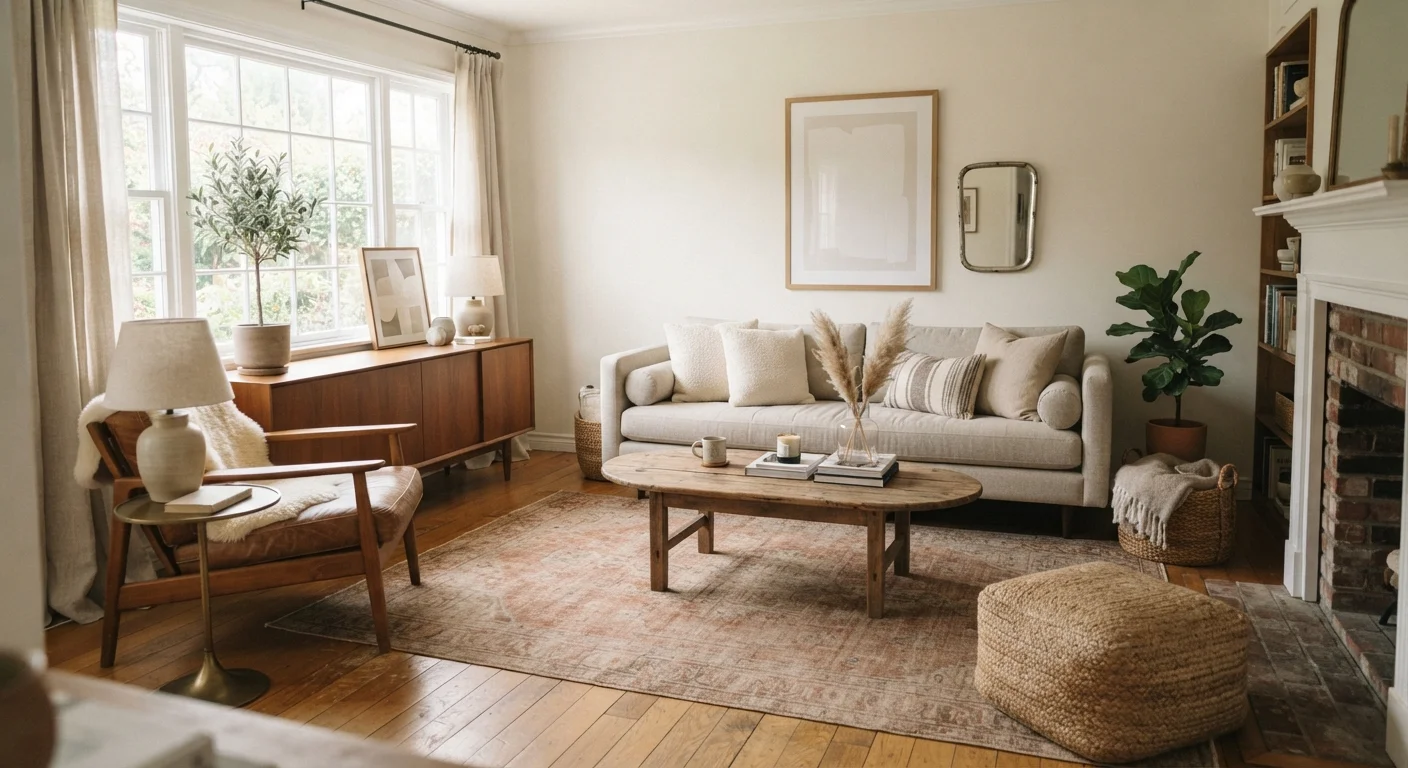
Curtain fabric is one of the most underestimated texture levers in a room. Switching from smooth polyester panels to linen, cotton-linen blends, or even a loose open-weave fabric adds visible grain and drape that changes how a room reads in both daylight and lamplight. Linen in particular wrinkles softly in a way that feels intentional rather than sloppy — that natural rumple is part of what gives it its character.
Floor-to-ceiling linen curtains also make walls feel taller and rooms feel more finished, without touching the paint or the trim.
Linen curtains add visible texture and warmth — and make ceilings feel taller in the process.
Introduce Woven Baskets and Natural Vessels
Wicker, rattan, seagrass, and hand-woven baskets bring an organic, tactile quality that few other objects can match at low cost. Use them as storage on open shelving, as planters for trailing houseplants, or simply as decorative objects grouped on a coffee table or entryway console. The irregular surface of a hand-woven basket catches light differently across its weave, which is part of what makes it feel warm rather than sterile.
Grouping vessels of different heights and materials — say, a tall rattan basket next to a short ceramic pot — creates a simple vignette with inherent texture contrast.
Woven baskets add organic, light-catching texture and serve double duty as functional storage.
Display Ceramic, Stone, or Wood Accents
Hard-surface objects with matte, rough, or organic finishes counterbalance the softness of textiles and add visual weight. A matte ceramic vase, a rough-hewn stone bookend, or a live-edge wooden tray each bring a distinct surface quality that smooth, mass-produced objects often lack. These materials catch and diffuse light rather than reflecting it sharply, which contributes to the layered, collected look that high-texture rooms tend to have.
Mixing a ceramic lamp base with a wooden side table and a linen shade brings multiple material families together without any of them competing. If you're curious how this compares to more structural changes, our piece on accent walls — paint, wallpaper, wood panels, or tile covers the next step up.
Matte ceramic, rough stone, and wood accents diffuse light and anchor a room with visual weight.
Use Wallpaper or Peel-and-Stick Panels on a Single Surface
If you want texture on the walls themselves without committing to a full repaint or renovation, peel-and-stick wallpaper and removable fabric panels are a genuinely useful middle ground. Applied to one wall — a bookshelf back, a narrow entryway wall, or the wall behind a bed — they add pattern and tactile depth without permanent adhesive or professional installation.
Textured options like grasscloth-look or linen-look peel-and-stick papers are particularly effective at mimicking the feel of woven wall coverings. Always check the product's removal instructions before applying, especially in rentals, to avoid adhesive damage.
Removable wallpaper on a single wall adds depth without the commitment of a full renovation.
Building Texture Into Your Space Over Time
You don't have to layer everything at once. In fact, adding texture gradually — starting with a rug or curtains, then building in smaller accents — gives you the chance to see how each element interacts with what's already in the room. A room that feels polished rarely gets there in one shopping trip.
Start With One Anchor Texture
If you're unsure where to begin, choose one dominant texture — a rug, a curtain fabric, or an upholstered piece — and build from there. Contrast it with one hard-surface accent and one soft accent for a balanced, layered effect. This approach prevents the space from feeling cluttered while still delivering visual depth.
If texture-layering starts to feel overwhelming, consider what the room currently lacks in terms of touch and visual weight. A room heavy in smooth, hard surfaces (glass, metal, painted drywall) usually benefits most from soft and organic additions first. Conversely, a room full of soft upholstery may need a ceramic lamp base or a wooden tray to give the eye somewhere firm to land.
Keep proportion in mind, too. A small room can feel cluttered if every surface is busy. Choose two or three dominant textures and let them repeat throughout the space for a cohesive look. For more on pulling varied pieces into a unified feel, see our piece on making secondhand furniture feel cohesive.