
Why Renter-Friendly Decorating Is Worth the Effort
Security deposits — often equivalent to one or two months' rent — represent real money. Losing any portion of it to avoidable damage is frustrating, but so is living in a blank, impersonal space for years because you're afraid to touch anything. The good news is that the gap between those two extremes is wide, and there's a lot of room to make a rental genuinely feel like home.
The key distinction in renter-friendly decorating is the difference between reversible changes and permanent ones. Reversible changes — removable wallpaper, adhesive hooks, area rugs, freestanding furniture — can be undone completely when you move. Permanent changes alter the unit itself: drilling into tile, painting without permission, or modifying fixtures. This guide focuses entirely on the reversible side.
Read Your Lease Before You Start
Every rental lease is different. Some explicitly prohibit painting or drilling; others allow small nail holes or even painting with landlord approval. Review your specific lease terms and, when in doubt, ask your landlord in writing before making any changes. Getting permission documented protects both you and your landlord.
If you're working with a small space and worried about visual scale, the principles in why small rooms feel smaller are directly useful for renters — many of the fixes are furniture and lighting choices that cost nothing to reverse.
Tools and Materials You'll Need
Most renter-friendly decorating requires only a handful of specialized products, alongside everyday items you likely already own. The list below covers what's genuinely useful — skip anything that doesn't apply to your specific project.
Removable adhesive strips or hooks
Hang artwork, mirrors, and lightweight shelving without drilling holes in walls.
Peel-and-stick wallpaper or wall decals
Add pattern, color, or texture to walls and can be fully removed without residue when done correctly.
Freestanding bookshelf or étagère
Creates vertical storage and display space without any wall attachment.
Area rug
Defines zones, adds warmth, and covers worn or unattractive flooring without permanent changes.
Tension rod
Hangs curtains, room dividers, or under-sink storage without drilling into window frames.
Smartphone or camera
Documents the rental's pre-decoration condition thoroughly for deposit protection.
Lean Art Instead of Hanging It
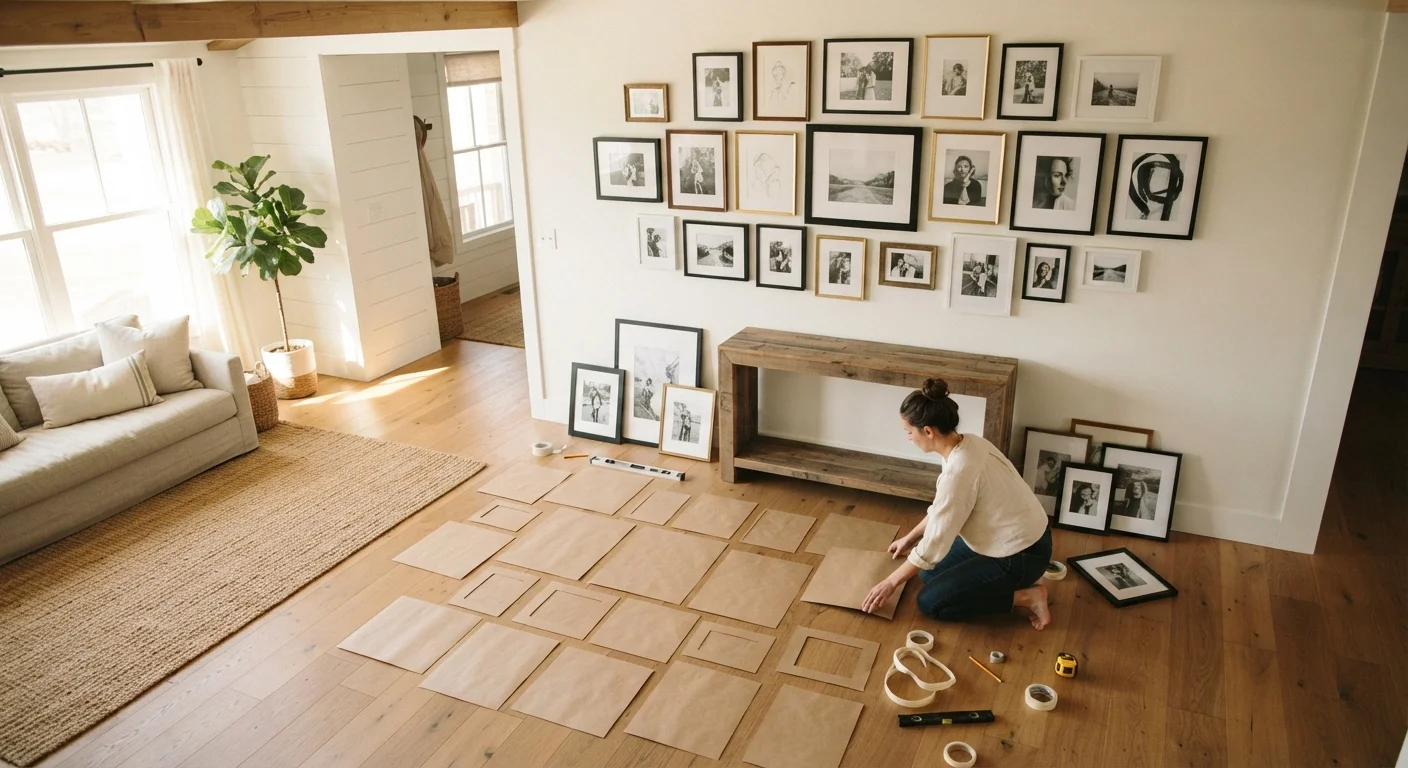
Propping framed pieces on shelves, mantels, or the floor against a wall is a zero-damage gallery option that's also easy to rearrange. Mix sizes and depths for a layered look. See our gallery wall planning guide for layout ideas you can adapt to a no-nail approach.
If you enjoy bold, layered spaces and want to push your rental's personality further, maximalist decorating is achievable in a rental as long as every element remains freestanding or removable.
Step-by-Step: Decorating Your Rental
Follow these steps in order — the documentation step especially should happen before any decorating begins.
Document the Space Before Touching Anything
Walk through every room and photograph existing scuffs, nail holes, stains, and worn paint before you unpack a single box. Store these photos with timestamps in a cloud folder and email them to your landlord so there's a shared record. This single step is your most important deposit protection.
Anchor Your Design With Rugs and Textiles
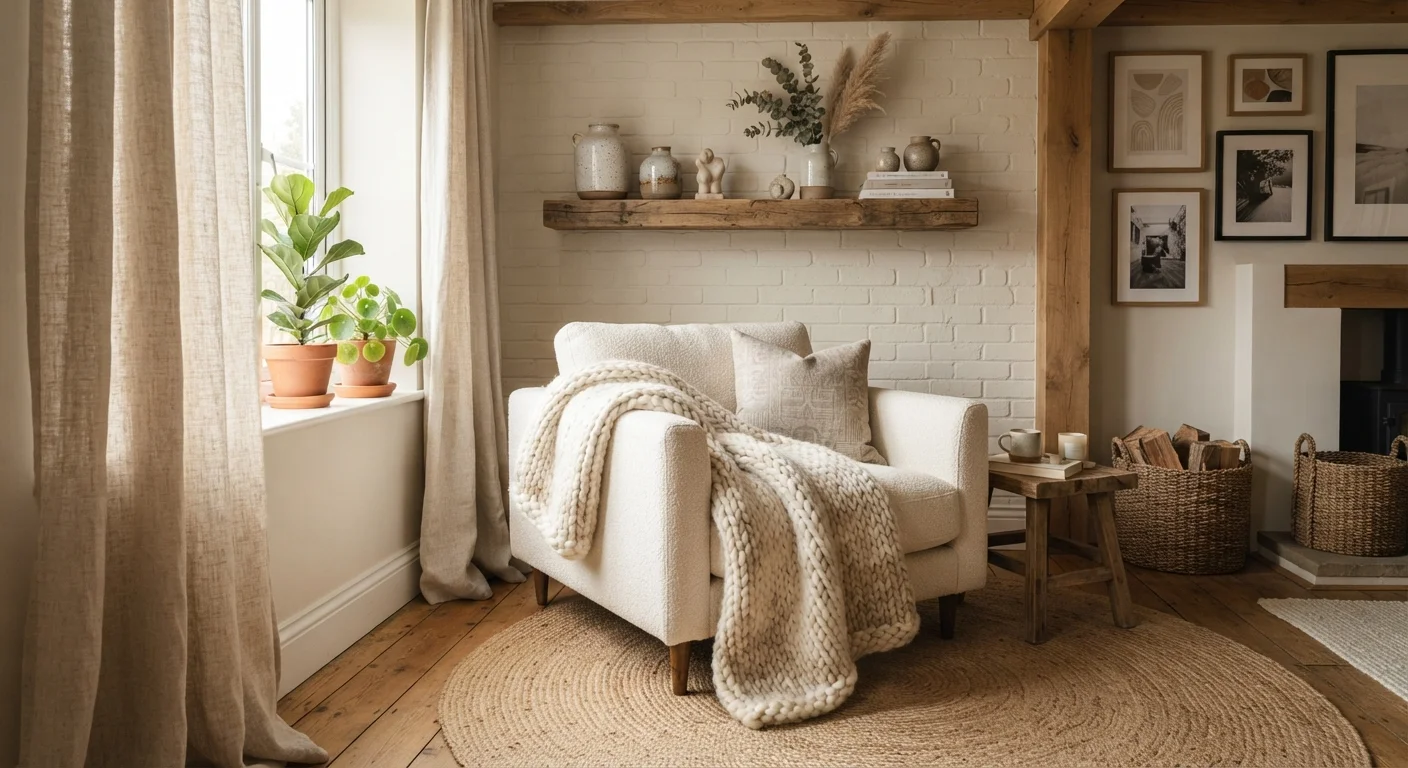
A large area rug is one of the most transformative — and completely reversible — moves in a rental. Choose a rug that defines your seating or dining area and introduces your color palette. Layer in texture with throw pillows, woven blankets, and linen curtains hung on tension rods. These elements do the visual heavy lifting without touching the walls. For ideas on building depth with fabric and materials, see adding texture without renovating.
Use Removable Wallpaper on One Focal Wall
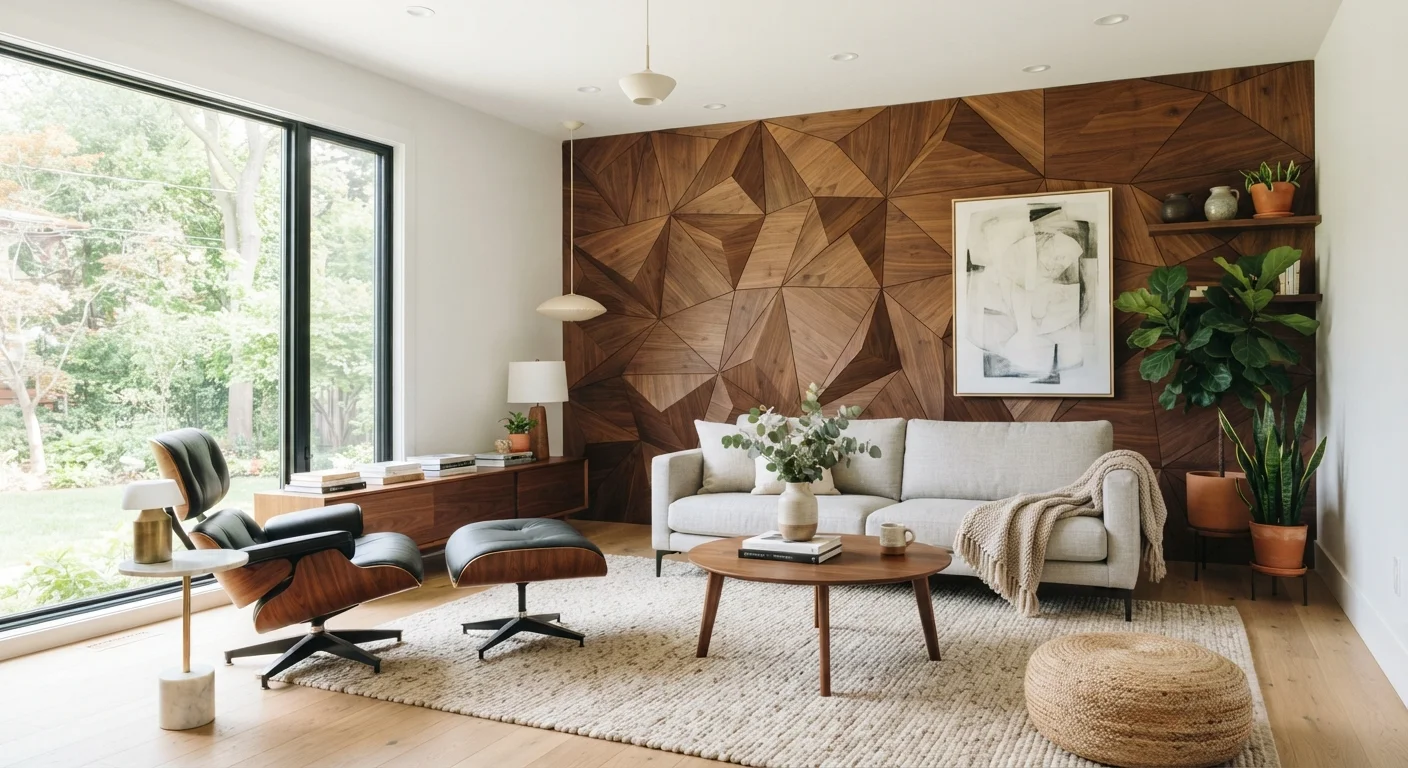
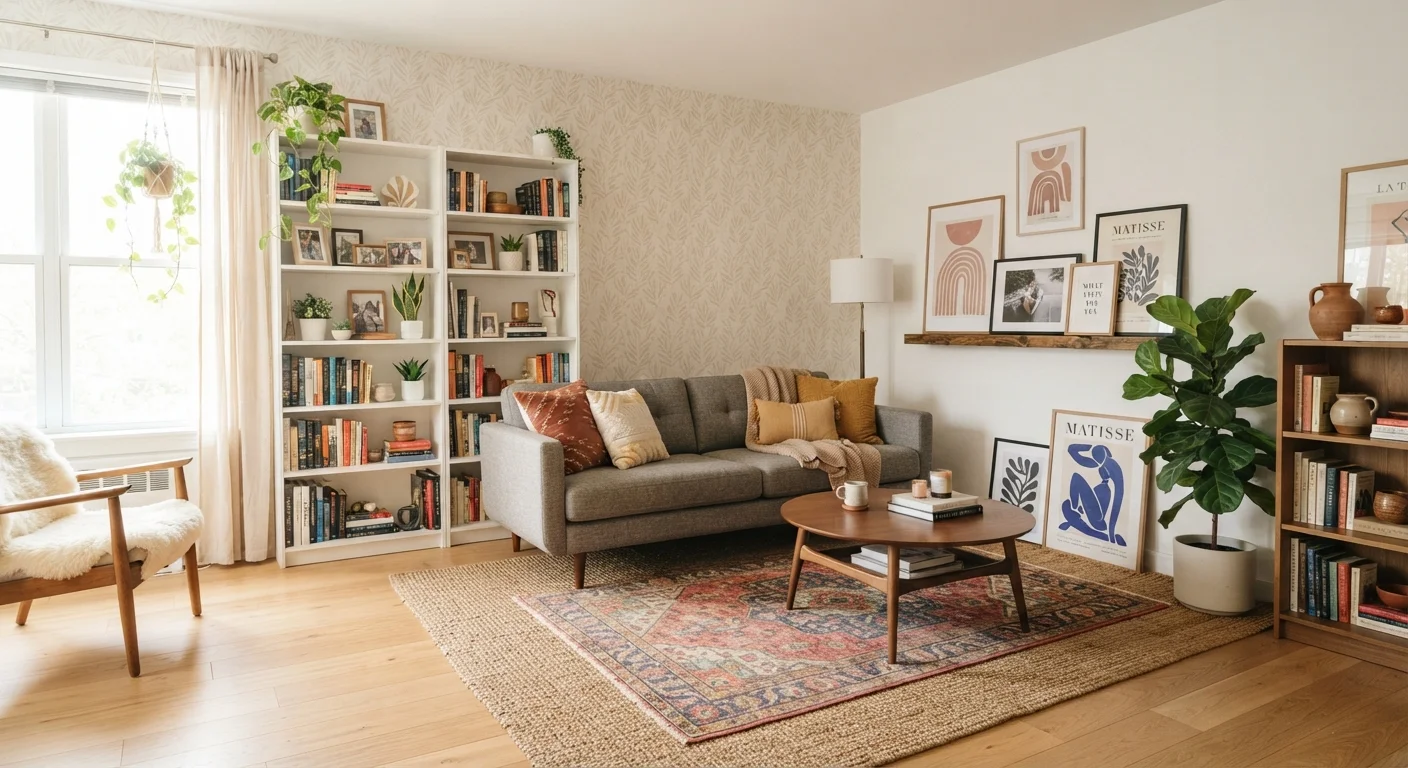
Peel-and-stick wallpaper has improved significantly in quality and variety. Apply it to a single accent wall — behind a bed, sofa, or dining area — rather than an entire room, which keeps the project manageable and the removal straightforward. Measure carefully, cut panels slightly long, and smooth out bubbles as you go. When it's time to move, peel at a slow, low angle and use a hair dryer on low heat to loosen stubborn seams. For a deeper look at accent wall options available to renters, see accent wall materials compared.
Hang Art With Adhesive Strips — Strategically
Modern adhesive picture-hanging strips can hold frames weighing up to several pounds without drilling. Group smaller frames together on a gallery wall, or anchor one large mirror to create the illusion of space. Keep frames away from high-humidity areas like directly above a stove or in a steamy bathroom, where adhesive performance drops. Stay within the weight limits printed on the packaging — going over is how damage happens.
Bring In Freestanding Furniture and Vertical Storage
Floor-to-ceiling bookcases, ladder shelves, and freestanding wardrobes add significant storage and personality without a single screw going into the wall. Position them to define zones in open-plan layouts or to create a reading nook in a bedroom corner. For a rental that feels smaller than it should, see why small rooms feel smaller — many of those principles apply directly here. Mixing secondhand and thrifted pieces is a budget-conscious way to fill out a rental without over-investing in a space you'll eventually leave.
Restore Everything Before Move-Out
Give yourself at least a full day for move-out restoration. Remove adhesive strips slowly following package directions, patch any small nail holes you were permitted to make with lightweight spackling and a damp finger, and wipe walls clean of dust or marks. Return furniture to its original configuration if you moved any built-ins. Do a final walk-through using your move-in photos as a checklist to confirm everything matches.
Common Pitfalls to Avoid
Adhesive Products Aren't Always Safe on Every Surface
"Removable" adhesive strips and peel-and-stick products can still damage older paint, wallpaper, or textured walls if they've been applied for a long time or are removed carelessly. Always test a small, hidden area first, follow manufacturer removal instructions exactly, and remove products slowly at a low angle rather than pulling straight off the wall.
Beyond adhesive issues, the most common deposit mistakes renters make include: mounting heavy items (TVs, large mirrors) on walls without landlord permission, using spray paint or permanent markers for DIY projects, and forgetting to photograph damage they didn't cause. A little caution up front costs nothing; repainting a wall at move-out can cost several hundred dollars.
For renters who want a cohesive look across mismatched or secondhand pieces, making secondhand furniture feel cohesive walks through how to unify different styles visually — no paint or hardware changes required. And if you want throw pillow inspiration for every room, the room-by-room throw pillow guide keeps it all reversible by definition.