
How a Debt Ends Up in Collections
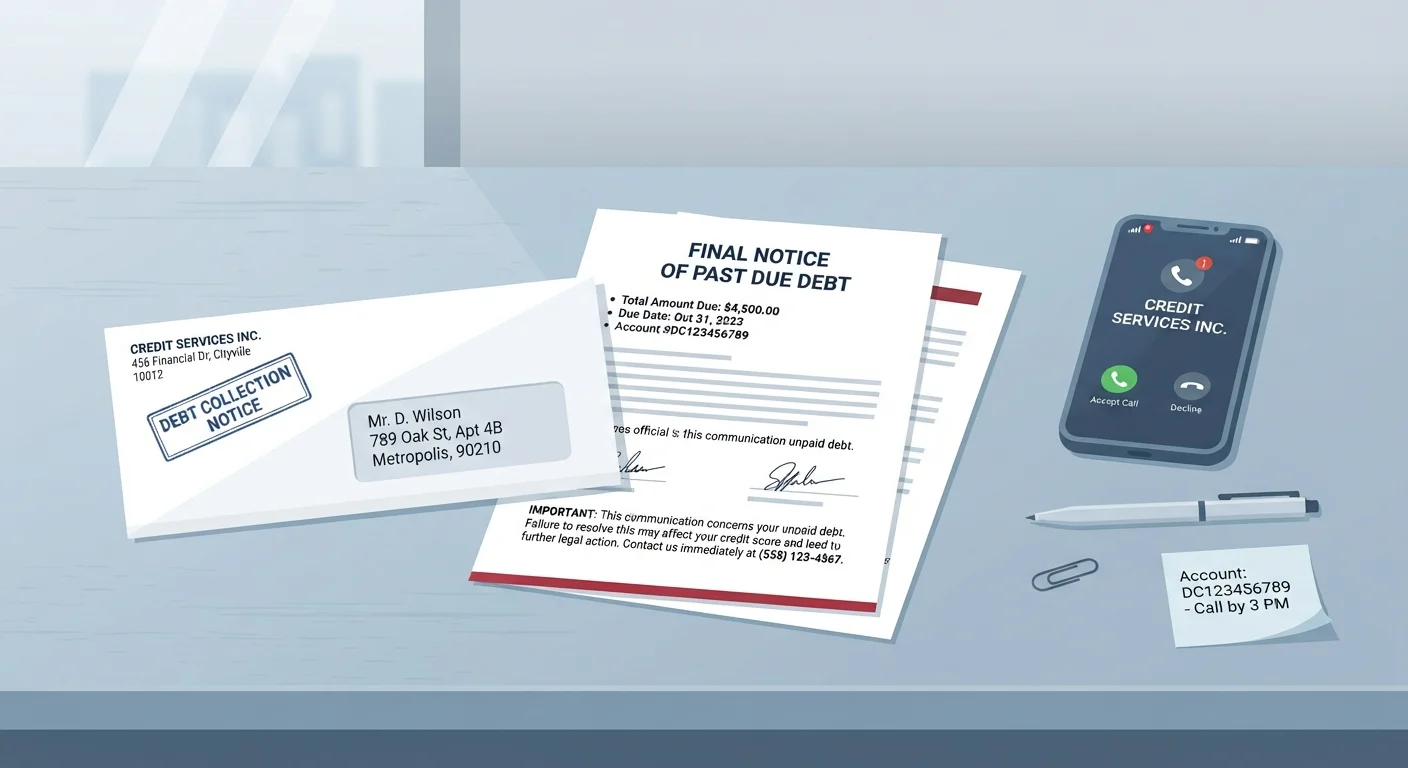
The path to collections typically begins when a payment is 30 to 60 days overdue. At that point, the original creditor—a bank, hospital, or utility company—will usually attempt to contact you directly. If the debt remains unpaid after 90 to 180 days, many creditors choose one of two routes: they hire a third-party collection agency to recover the debt on their behalf, or they sell the debt outright to a debt buyer for a fraction of the original balance.
Once a debt buyer or collection agency acquires the account, they become the party contacting you. This handoff is why you might suddenly hear from an unfamiliar company about an old account—the original creditor is no longer involved. For a broader look at how credit reporting fits into this picture, see The Complete Picture of Credit and Debt in America.
1 in 3
Americans contacted by debt collectors
According to CFPB research, roughly one in three Americans with a credit file has been contacted by a debt collector at some point.
$88B+
Debt bought by collection agencies annually
The debt buying industry purchases billions of dollars in charged-off consumer debt each year, often for pennies on the dollar, according to FTC reports on the debt collection market.
7 years
How long a collection account stays on your credit report
Under the Fair Credit Reporting Act, most negative items—including collection accounts—can remain on your credit report for up to seven years from the original delinquency date.
What Collectors Can and Cannot Do
The Fair Debt Collection Practices Act (FDCPA), enforced by the Federal Trade Commission (FTC) and the Consumer Financial Protection Bureau (CFPB), places firm limits on collector behavior. Understanding these limits is the core of knowing your rights.
What collectors are allowed to do:
- Contact you by phone, mail, email, or text (within regulatory limits)
- Call between 8 a.m. and 9 p.m. in your local time zone
- Contact third parties solely to obtain your location information
- Report accurate information about the debt to credit bureaus
- File a lawsuit if the debt is within the statute of limitations
What collectors are prohibited from doing:
- Threatening violence or using obscene language
- Misrepresenting the amount owed or claiming to be an attorney or government official
- Threatening arrest or criminal prosecution for unpaid civil debts
- Calling repeatedly with the intent to harass
- Discussing your debt with unauthorized third parties
“Consumers have more legal protections against abusive debt collection than many realize. The law is quite clear: harassment, false statements, and unfair practices are not just unethical—they're illegal.”
— Consumer Financial Protection Bureau, Federal agency responsible for enforcing the Fair Debt Collection Practices Act
Your Rights in Practice: What You Can Do
Knowing your rights matters only if you know how to use them. Here are the most actionable steps available to you under federal law.
Request written debt verification
Within five days of first contact, a collector must send you a written notice stating the amount owed and the name of the creditor. You then have 30 days to send a written dispute. Until the collector provides verification, all collection activity must stop. Always dispute in writing and use certified mail so you have proof of delivery.
Send a cease-and-desist letter
You have the right to instruct a collector to stop contacting you entirely. Once the collector receives your written request, it may only contact you to confirm it will stop or to notify you of a specific action—like filing a lawsuit. Note that this does not erase the debt; it only stops the calls.
File a complaint
If a collector violates the FDCPA, you can file a complaint with the CFPB at consumerfinance.gov or the FTC at ftc.gov. You also have the right to sue a collector in federal or state court within one year of the violation. If you win, you may be entitled to damages and attorney's fees.
Always Communicate in Writing
Verbal agreements with collectors carry very little weight if a dispute arises later. Keep records of every interaction—dates, times, and what was said. Send important requests, like debt verification demands or cease-contact letters, via certified mail with return receipt so you have documented proof the collector received them.
For more on how consumer protection laws apply beyond debt, see Consumer Rights 101.
Moving Forward: Managing the Debt Itself
Understanding your rights gives you a foundation—but the underlying debt still needs a plan. If you can verify the debt is legitimate, consider your options carefully before agreeing to any payment arrangement. Some collectors will negotiate a settlement for less than the full balance, though any forgiven amount over $600 may be reported as taxable income by the IRS.
If you have multiple debts in collections, a structured payoff strategy can help you work through them systematically. Debt Avalanche vs. Debt Snowball: Choosing a Payoff Path covers two proven methods for deciding which balance to tackle first. You may also find it helpful to review common misconceptions about how debt affects your credit by reading Credit Cards and Debt: Separating Myth from Reality.
If your situation feels overwhelming, a nonprofit credit counselor—such as one certified through the National Foundation for Credit Counseling (NFCC)—can help you assess your options without a sales agenda. An attorney experienced in consumer law can also advise you on whether a particular collector's actions warrant legal action.
This article is for general informational and educational purposes only and does not constitute legal or financial advice. For guidance specific to your circumstances, consult a licensed financial adviser or qualified attorney.