
Why 'Shoulder Season' Isn't One-Size-Fits-All
You've probably heard the advice: "Travel in the shoulder season to avoid the crowds." It sounds simple enough — but the term doesn't mean the same thing at every destination. At a Gulf Coast beach town, shoulder season might be April. At a Utah national park, it might be October. At a Vermont ski resort, it could be that awkward stretch in late April when the snow is gone but summer hikers haven't arrived yet.
Understanding what shoulder season actually looks like — for the specific place you're planning to visit — is one of the most practical skills a traveler can develop. For a deeper look at how timing affects your overall trip, see our guide to planning around seasons.
2–3x
Typical crowd increase at peak versus shoulder periods
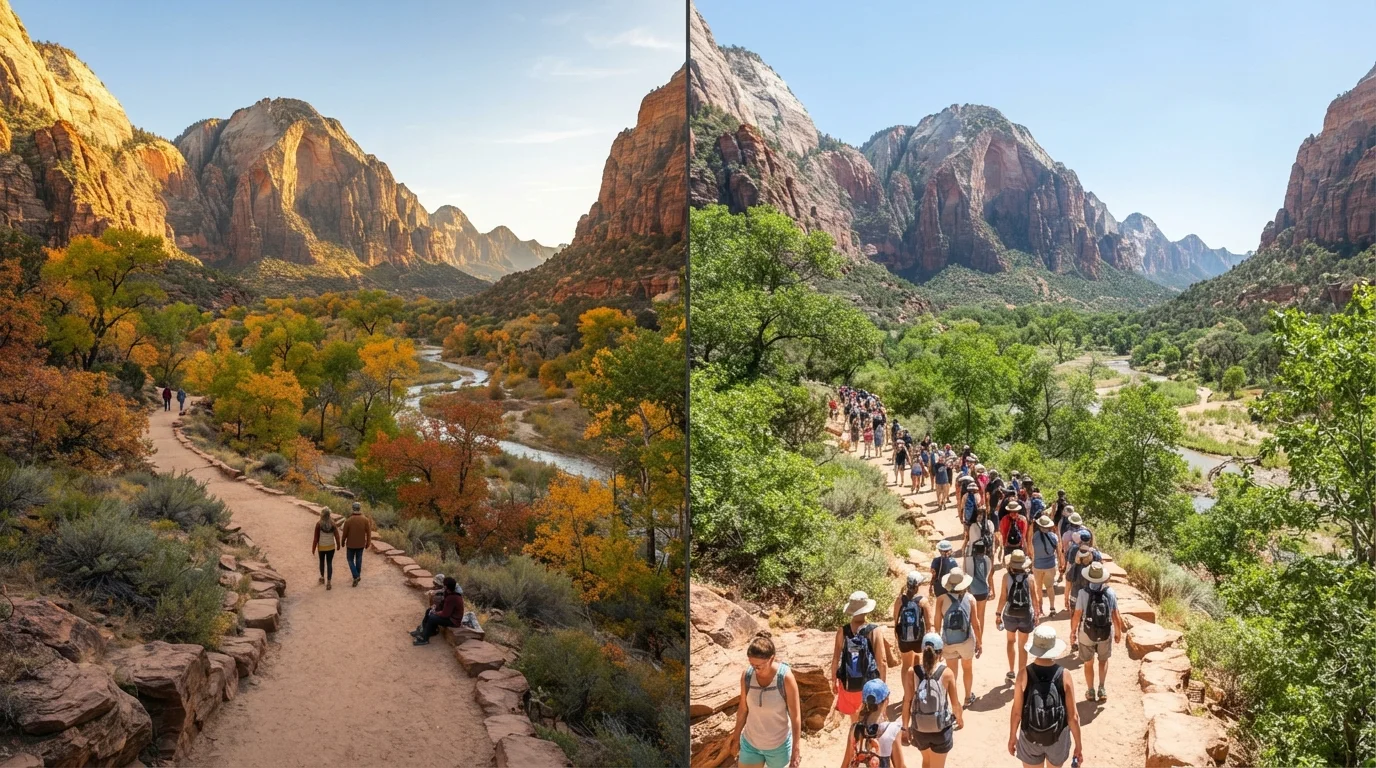
Visitation data from the National Park Service shows many parks see visitor counts more than double between shoulder and peak summer months at top-tier destinations.
63 million
Annual visits to America's top 10 national parks
According to National Park Service data, the ten most-visited parks collectively draw tens of millions of visitors, with the majority arriving June through August.
~6 weeks
Typical length of a beach town's peak season
Most US coastal resort towns concentrate the majority of their annual visitor traffic into roughly six weeks surrounding the Fourth of July holiday.
How Shoulder Season Plays Out by Destination Type
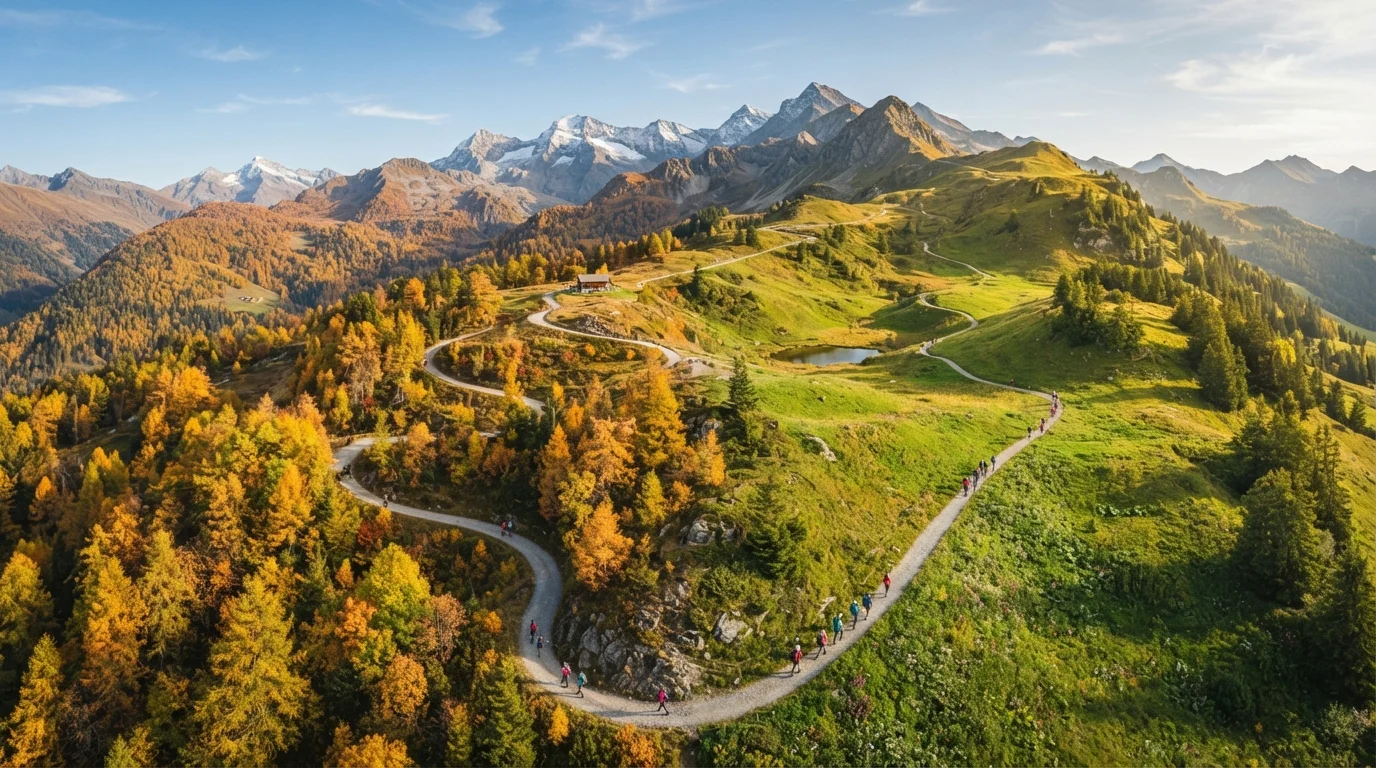
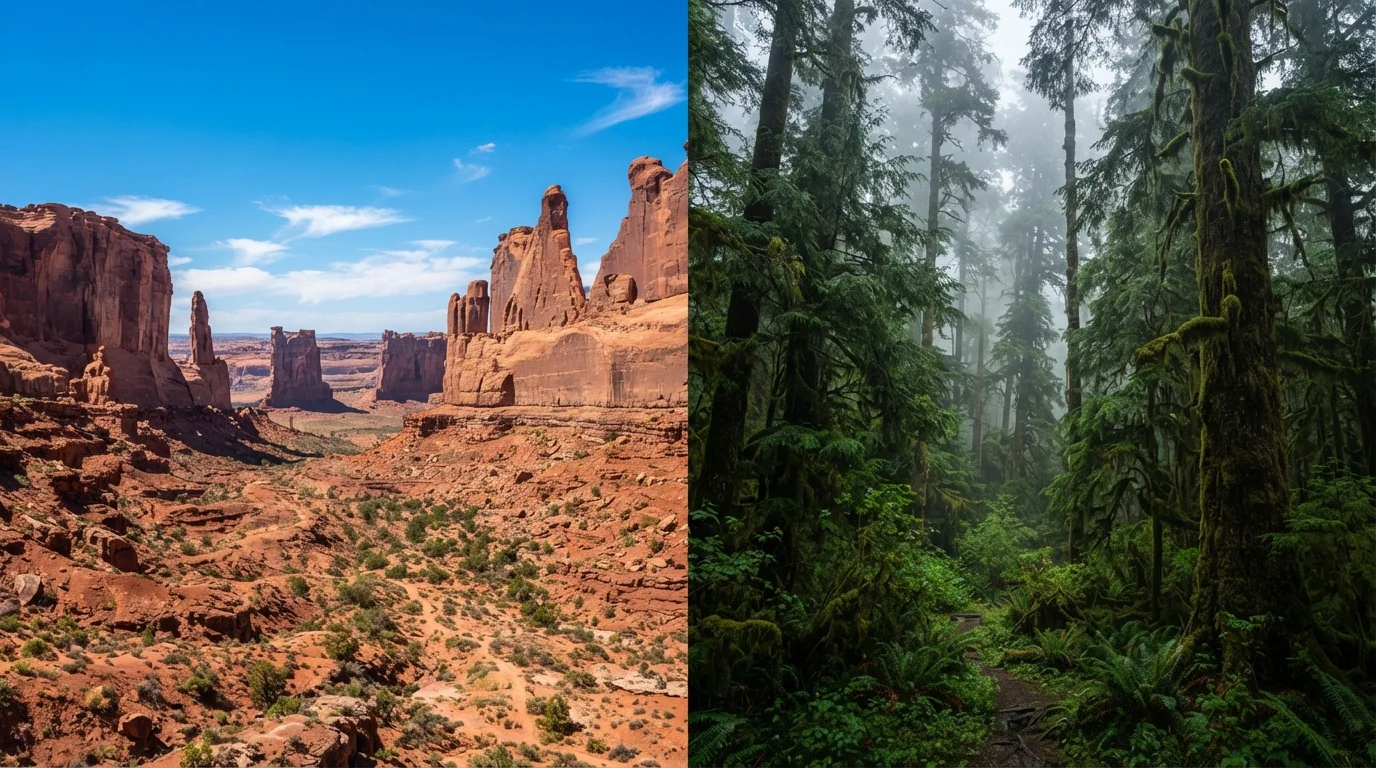
National Parks and Natural Areas: These often have two distinct shoulder windows — spring (late April through May) and fall (September through October). Summer is almost universally peak season due to school breaks and vacation scheduling. Shoulder periods offer genuine trade-offs: wildflowers and waterfalls in spring may come with muddy trails and unpredictable snow at elevation. Fall offers stunning foliage and cooler temperatures, but some visitor services begin winding down. The American Southwest and Pacific Northwest each have their own distinct shoulder windows shaped by their very different climates.
Beach Destinations: For coastal towns along the Atlantic and Gulf coasts, peak season is summer — Memorial Day through Labor Day. Shoulder season typically runs from mid-April through late May and again in September and October. Ocean temperatures may still be cool in spring, and some seasonal businesses haven't fully opened. By late September, the water is often warmer than in June, and the beaches are noticeably quieter.
Mountain and Ski Resorts: Ski towns have two very clear shoulder periods: late spring (when snow melts and ski lifts stop) and early fall (before ski season opens and before foliage peaks). Many mountain towns actively develop summer tourism to fill these gaps, but expect some restaurants and shops to keep limited hours or close entirely during the transitions.
Cities: Urban destinations don't have a traditional seasonal pattern in the same way. Demand spikes around major holidays, conventions, and local events — which vary widely by city. A city hosting a major sporting event or festival can flip a normally quiet week into a premium-priced period. Knowing the local calendar matters more than knowing the month.
The Real Trade-Offs Worth Knowing Before You Book
Shoulder season isn't a free lunch — it's a set of genuine trade-offs. The potential benefits include fewer people competing for parking, trail space, or restaurant tables, and the possibility (not guarantee) of lower demand-driven pricing on accommodations. The downsides are real: reduced operating hours at attractions, a higher chance of weather disruption, and some of the "nice to have" experiences — seasonal food stalls, boat tours, ranger programs — not running at full capacity.
Check the Local Calendar, Not Just the Month
Before assuming a particular month is "shoulder season," look up the destination's specific event calendar. A regional festival, a school break unique to that state, or a holiday weekend can shift demand significantly. State tourism websites and local visitor bureaus are good starting points for this research.
It's also worth noting that regional American events and holidays can punch unexpected holes in what you'd expect to be a quiet shoulder period. A major regional festival or a school break that doesn't align with the national calendar can bring in large local crowds even when out-of-state tourism is light. For context on how American holiday timing varies by region, our article on how Americans celebrate holidays differently by region offers useful perspective.
The smartest approach: research the specific calendar of your chosen destination, not just the general concept of "shoulder season." Check which visitor services operate year-round versus seasonally, look at historical weather data rather than relying on assumptions, and verify entry requirements or reservation systems — many national parks now require timed-entry permits regardless of season. Always confirm details directly with parks, local tourism offices, or official government sources before you travel, as conditions and policies change.
“The best time to visit a place is when it suits your priorities — whether that's the weather, the experience, or the crowds. 'Shoulder season' is a useful framework, but it's a starting point for research, not a guaranteed formula.”
— Travel & Destinations Editorial Team, Multi-vertical editorial staff, US travel coverage