
Why Small Spaces Deserve a Real Garden
A patio measured in square feet, a narrow side yard, or a high-rise balcony might not look like gardening territory — but those constraints are more manageable than they appear. Small-space gardening is less about what you lack and more about how you arrange what you have. With intentional plant selection and a few smart structural choices, compact outdoor areas can yield fresh herbs, colorful blooms, and even vegetables season after season.
The strategies below work whether you're starting from scratch or trying to breathe life into a neglected corner. If you're also thinking about growing edibles, our beginner's guide to vegetable gardening pairs well with these small-space techniques.
Go Vertical With Trellises and Wall Planters
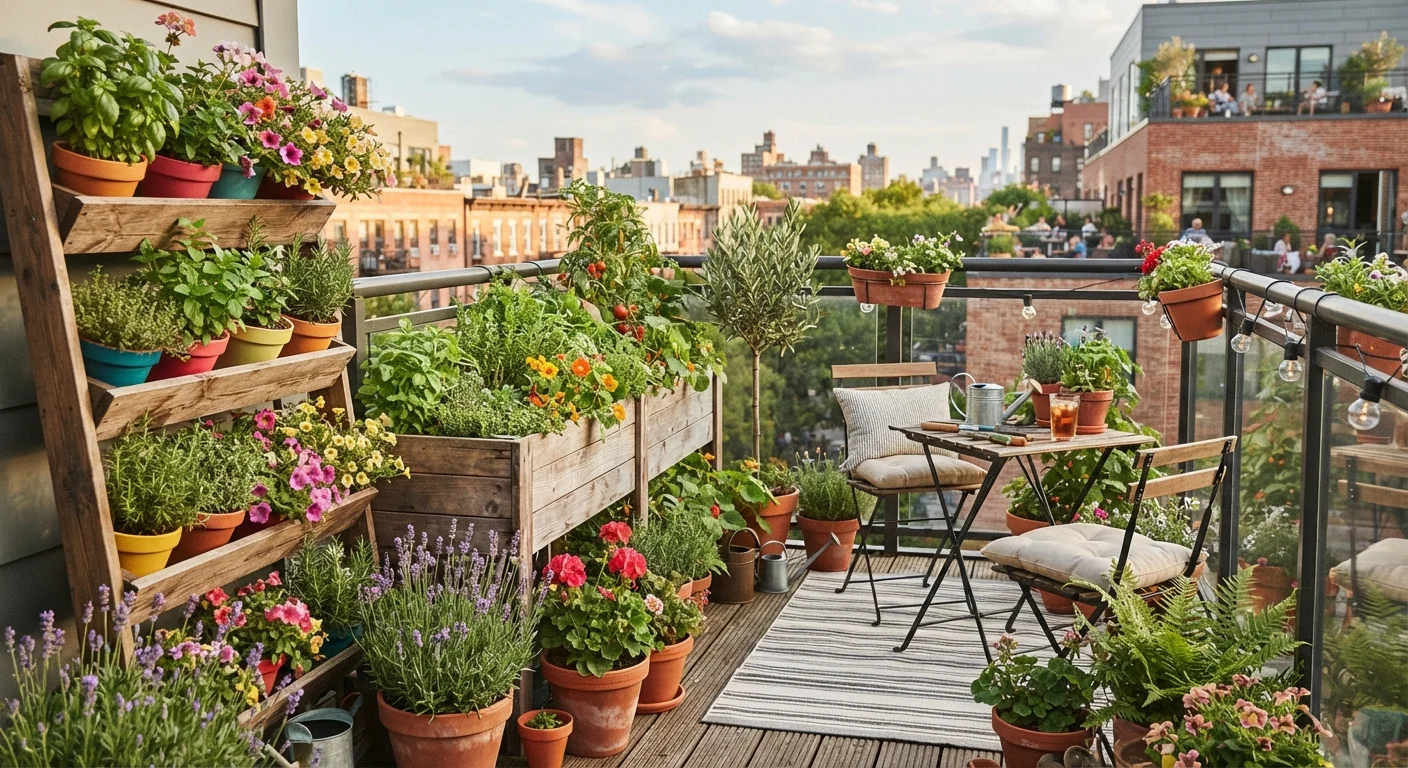
Floor space is finite; wall space often goes completely unused. Mounting a trellis, pegboard planter, or pocket-style wall organizer turns a bare fence or exterior wall into productive growing area. Climbing plants like pole beans, cucumbers, and climbing nasturtiums thrive on a trellis and take up almost no ground footprint once established.
Wall-mounted planter systems work especially well for herbs, strawberries, and small succulents. Before mounting anything on a balcony railing or wall, confirm that the attachment method is appropriate for your surface and that the combined weight of containers, soil, and water is within safe limits for the structure.
Wall space is some of the most overlooked real estate in a small garden.
Choose Compact and Dwarf Plant Varieties
Standard vegetable and shrub varieties are bred for open-ground gardens with generous spacing. In containers and tight quarters, compact or dwarf cultivars — those bred specifically for smaller growth habits — perform far better without becoming root-bound or overcrowded.
Look for terms like bush, patio, dwarf, or compact on seed packets and plant tags. Patio tomatoes, bush zucchini, and dwarf pepper varieties, for example, produce well in large pots without sprawling beyond their boundaries. The same principle applies to ornamentals: columnar or fastigiate shrubs grow tall and narrow, adding height without spreading wide.
Compact and dwarf varieties are purpose-bred for the conditions a small garden actually provides.
Invest in High-Quality Potting Mix
Container plants depend entirely on what you put in the pot. Garden soil is too dense for containers — it compacts under repeated watering, restricts root growth, and drains poorly. A quality potting mix that includes perlite or vermiculite holds moisture while still draining freely, giving roots the air and water balance they need.
For edible plants, a mix formulated for vegetables or amended with slow-release granular fertilizer gives plants a nutritional head start. Refresh or top-dress container soil each season, since nutrients deplete faster in pots than in the ground. If you've started composting at home, working a small amount of finished compost into your potting mix is a cost-effective way to boost organic matter.
The soil in your containers does all the heavy lifting — it's worth choosing carefully.
Use Container Size Strategically
One of the most common beginner mistakes in container gardening is planting in pots that are too small. Undersized containers dry out quickly, restrict root development, and stunt plant growth. As a general rule, most vegetables and larger herbs need at least a 12-inch-diameter pot, while tomatoes and peppers benefit from containers holding 15 to 20 gallons.
On the other end, using very large containers for small plants is wasteful and heavy. Match container size to mature plant size, and consider weight when choosing materials — fabric grow bags and lightweight resin containers are easier to move and reposition than ceramic or concrete, which is especially helpful on balconies with weight restrictions.
Matching pot size to the plant's mature root system is one of the most impactful decisions you'll make.
Arrange Pots in Clusters for Visual Impact and Efficiency
Scattering individual pots across a small space tends to look sparse and makes watering and care more time-consuming. Grouping containers in clusters of three or more — varying heights with plant stands, overturned pots, or tiered shelving — creates a layered, lush effect that visually fills the space and makes the garden feel intentional rather than improvised.
Clustering also has a practical benefit: grouped pots create a slightly more humid microclimate around plants, which can reduce moisture stress on hot days. This approach mirrors the design logic discussed in our guide to small-space decor — layering elements of varying heights and scales makes any area feel more dynamic and complete.
Grouping containers creates a lush, cohesive garden and simplifies your care routine.
Plan for Watering Before Plants Go In
Containers dry out significantly faster than in-ground plantings, particularly in warm weather or on sun-exposed balconies. Before you plant, think through how you'll water consistently. A hose with a long wand attachment, a watering can, or a simple drip irrigation system connected to an outdoor spigot can all work well depending on your setup.
Self-watering containers with built-in reservoirs are a practical option for anyone who travels or finds daily watering difficult to maintain. Checking soil moisture by pressing a finger an inch into the potting mix is more reliable than watering on a fixed schedule — water when the top inch feels dry, not on a rigid calendar. Consistent moisture management is especially important during establishment, when new roots are still spreading.
A reliable watering plan set up before planting prevents the most common cause of container plant failure.
Putting It All Together
Small-space gardening rewards a little planning up front. Sketch your space, note where sunlight falls at different times of day, and build your plant list around those conditions. Mixing perennials and annuals lets you maintain a reliable structure while swapping in seasonal color without redesigning the whole space each year.
Start With Three or Four Key Plants
New small-space gardeners often try to grow too much at once, leading to overcrowded containers and inconsistent care. Start with three or four plants you're genuinely excited to grow — one herb, one edible, one ornamental — and expand once you've found your watering and feeding rhythm. A small garden managed well will always outperform a large one that's neglected.
If water access is a concern — especially on upper-level balconies — explore drought-tolerant plant choices that thrive on less frequent irrigation. And once you're composting kitchen scraps, even a small worm bin or countertop composter can supply nutrient-rich material for your containers; see our composting guide for details. With the right habits in place, a small garden is surprisingly low-maintenance — and deeply satisfying.