
What the Rule of Three Actually Means
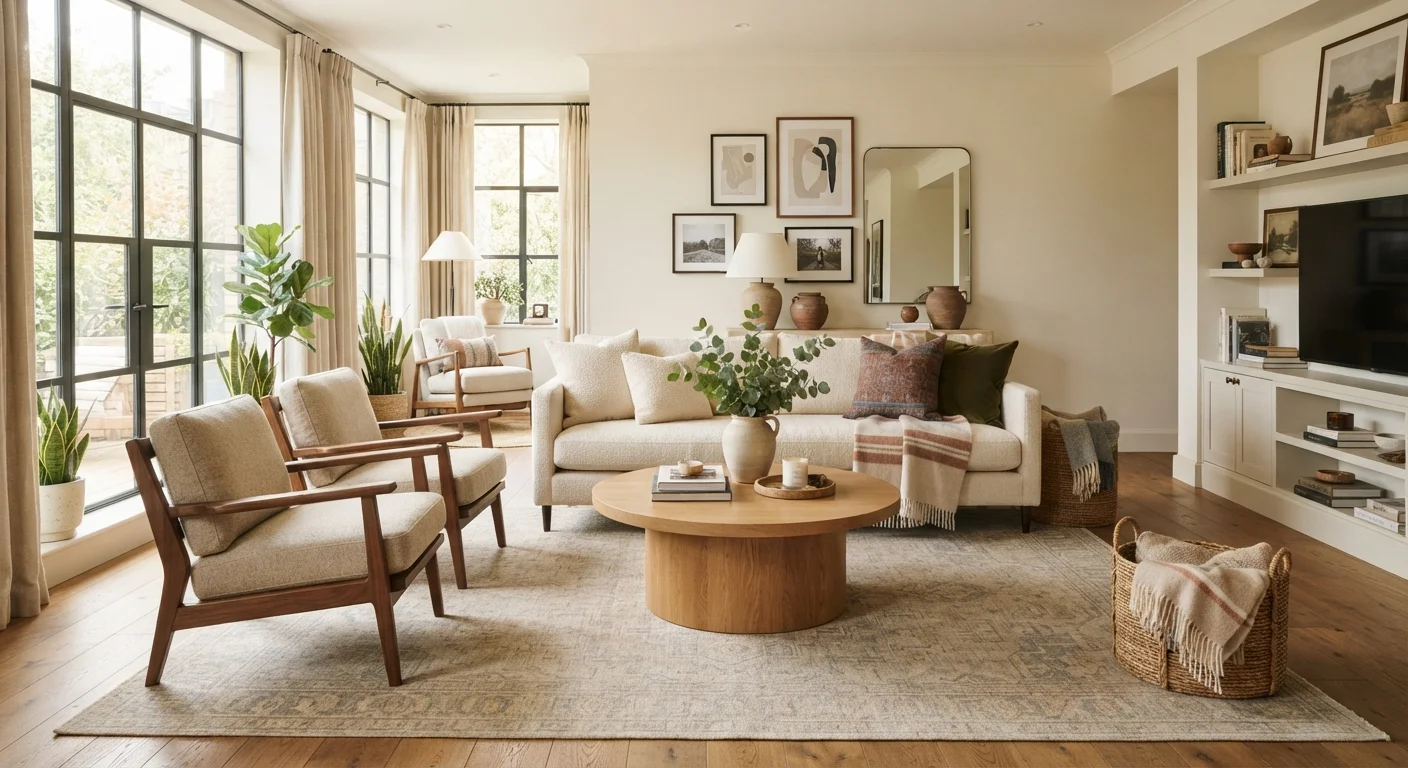
Walk into any well-styled room and you'll likely find it at work without even noticing: a candle, a small plant, and a stack of books on a side table. A tall lamp, a medium mirror, and a shorter piece of art anchoring a console. Three throw pillows on a sofa instead of two or four. This is the rule of three — a principle that decorators reach for instinctively because it reliably produces arrangements that feel considered rather than accidental.
The underlying logic is straightforward. When you place two objects together, the eye bounces back and forth between them with nowhere to land. Four objects tend to split into two pairs, which can feel static. Three objects, especially when varied in height or scale, create a triangular visual path. Your eye travels, pauses, and travels again — which reads as interesting rather than repetitive.
It's worth noting this isn't a rigid rule with a scientific basis so much as a well-tested design heuristic. Interior designers use it as a starting framework, not a formula to follow without thinking.
When to Break the Rule
The rule of three is a guideline, not a requirement. Very large surfaces — an expansive dining table, a wide built-in bookcase — may call for larger groupings or multiple clusters of three. Trust your eye: if a grouping of five or seven looks better in your specific space, go with it. The goal is a result that feels intentional, not strict adherence to a number.
How to Apply It in Your Own Home
The rule of three works across almost every surface in a home. Here's how to put it into practice in common spaces:
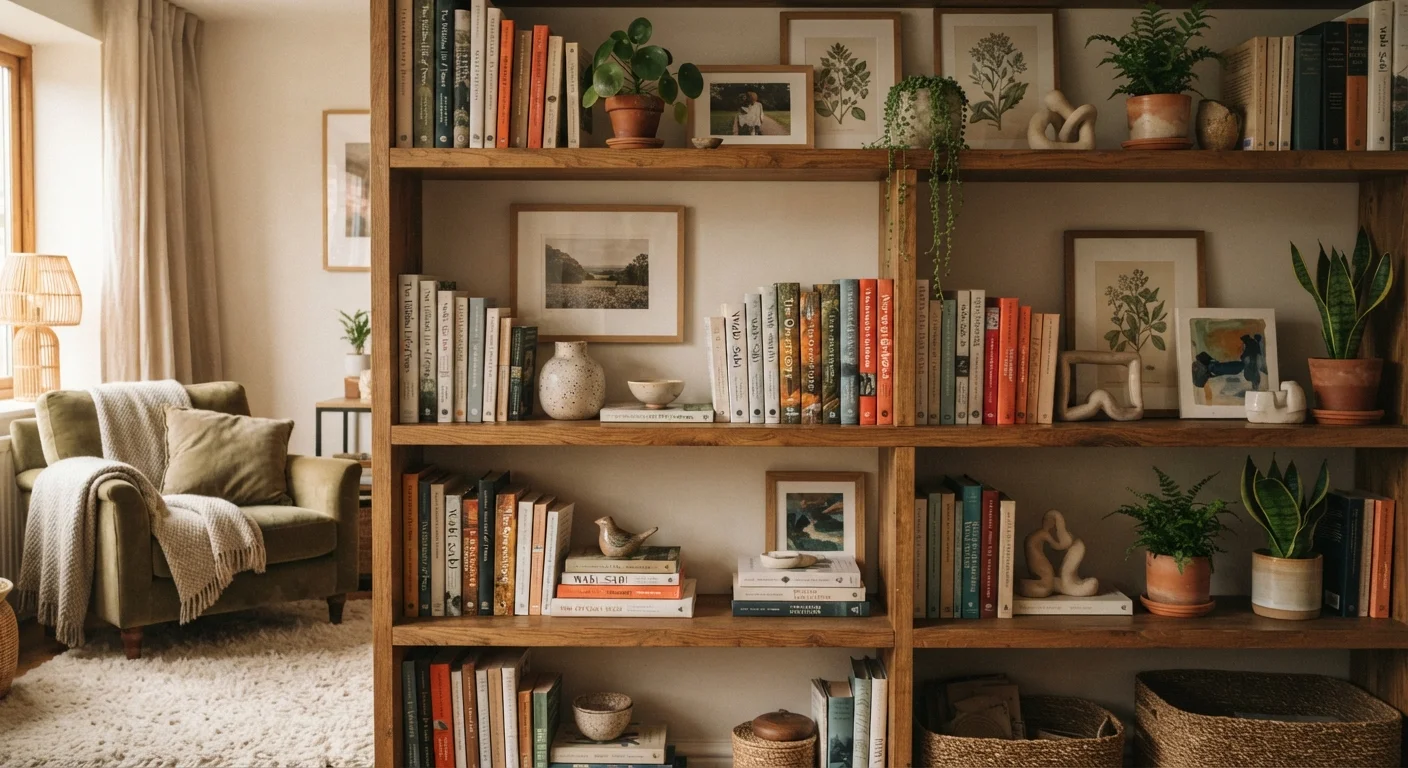
- Shelves: Group objects in trios, varying height so the tallest sits at one end or in the center. Mix materials — say, a ceramic piece, a wood object, and something with reflective texture. For a deeper dive, our guide on styling bookshelves walks through how to balance books, objects, and empty space together.
- Coffee and side tables: A tray, a small plant, and a candle or decorative object is a classic trio. The tray acts as a visual anchor that unifies the other two elements.
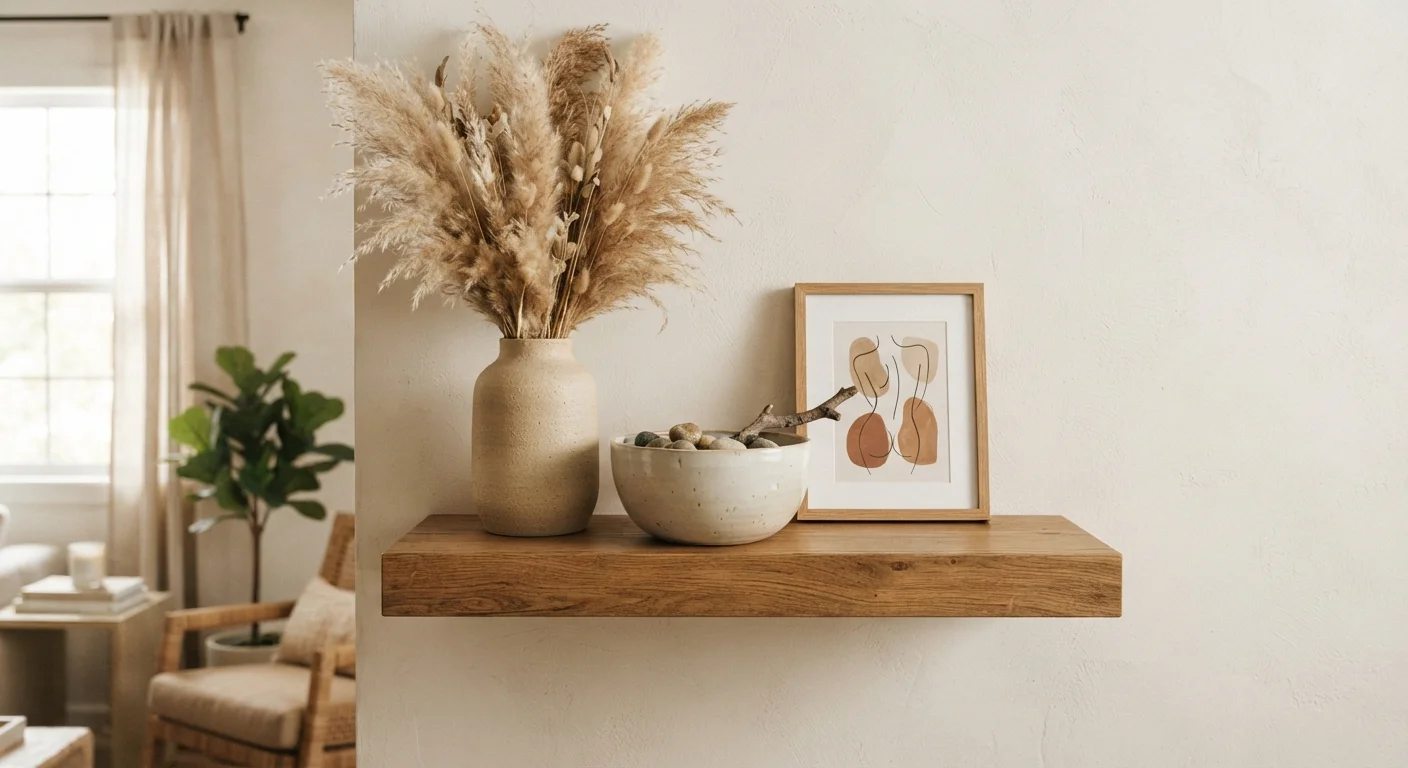
- Mantels and consoles: Think tall-medium-short when placing objects across a horizontal surface. You don't need three separate pieces — a stack of books counts as one element.
- Throw pillows: Three pillows on a sofa — two matching and one contrasting — tends to feel more relaxed and layered than two identical pillows on either side.
- Outdoor planters: Grouping three planters of different heights on a porch or patio creates the same visual rhythm outdoors as it does inside.
Start With What You Already Own
Before purchasing anything, walk through your home and collect items that share a color, material, or theme. Group them in threes on a surface you want to refresh. This zero-cost experiment often reveals that you already have everything you need — objects just weren't arranged to their advantage.
If you're working with items you already own, try pulling three pieces from different spots in your home and arranging them together before buying anything new. Rearranging is free, and it's the best way to experiment without commitment.
Choosing Objects That Work Together
The rule of three doesn't mean three identical items — that would produce repetition, not rhythm. The most effective groupings share one unifying quality while differing in at least one other. Some approaches that work well:
3
Objects in the classic styling trio
Interior designers consistently cite groupings of three as the most versatile and forgiving arrangement for tabletops, shelves, and mantels.
Odd > Even
Groupings preferred by most designers
Design educators widely teach that odd-numbered arrangements create more dynamic visual flow than even-numbered ones in asymmetrical styling contexts.
- Same color family, different textures: Three neutral objects in linen, ceramic, and wood feel cohesive but not matchy.
- Same material, different sizes: Three terracotta pots of varying heights read as a family without being uniform.
- Same theme, different forms: Three botanical elements — a plant, a dried stem arrangement, and a nature-print frame — create a loose visual story.
When styling thrifted or inherited pieces, the rule of three is especially useful for making mismatched items feel intentional. Our article on making secondhand furniture feel cohesive covers how to pull disparate pieces into a unified look — the same logic applies to decorative objects.
Color also plays a role in how groupings read. If you want help thinking through how tones interact, our plain-language guide to color theory for non-designers is a useful companion.